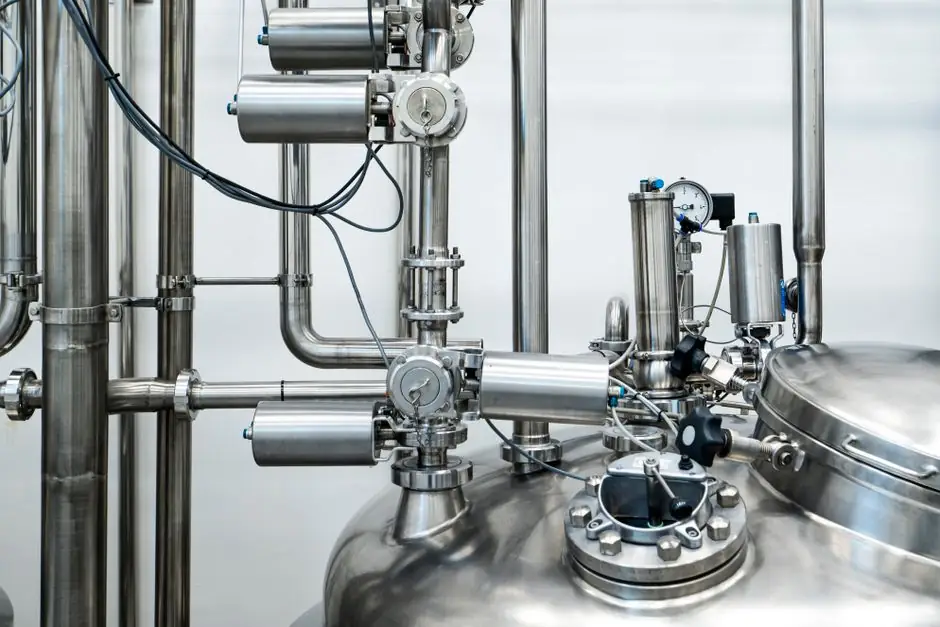
Use a valve limit switch box to confirm open and closed travel on quarter-turn isolation valves, with enclosure, contacts, and certification selected for seawater service.
Desalination plants combine RO, MSF, or MED equipment with seawater pretreatment, high-pressure membrane systems, and aggressive brine; the switch box must report actual valve state without becoming a corrosion or washdown failure point.
What the Limit Switch Box Must Confirm
A limit switch box is a sealed enclosure mounted on an actuator shaft that converts mechanical rotation into discrete electrical signals for a DCS, PLC, or local panel. It normally provides separate open and closed indications, allowing the control system to distinguish a completed stroke from an actuator that has stalled partway [S1].
The limit switch box converts mechanical rotation into discrete electrical signals that a DCS, PLC, or local panel can read. For a modulating control valve that needs 4–20 mA position feedback, specify a valve positioner with a transmitter output or a separate position transmitter [S1].
Typical desalination duties include isolation, flow regulation, backflow prevention, pump protection, and switching between operating conditions [S4]. A limit switch box is appropriate where logic needs to know whether a valve is open, closed, or in transition; it is not a substitute for analog control, travel calibration, or actuator sizing.
Desalination Service Conditions Drive the Specification
Seawater contains high chloride concentrations that promote pitting and crevice corrosion, while flow turbulence and throttling can produce cavitation and erosion. These conditions also challenge the switch-box enclosure, cable entries, fixings, indicator mechanism, and internal contacts [S4].
Valve materials commonly considered for seawater include stainless steel 304/316, duplex stainless steel 2205, super duplex 2507, and titanium. The research material states that seawater's high salinity and corrosiveness require careful material selection and identifies stainless steel and titanium as corrosion-resistant options.
For the valve itself, corrosion-resistant alloys such as nickel alloys and titanium are also relevant, but the limit switch box must have its own compatible housing, stem, cam or magnetic target, fasteners, and cable-entry specification. A 316 stainless steel enclosure should not be assumed to be adequate merely because it is labelled stainless steel.
Desalination installations may include pretreatment, RO, post-treatment, remineralisation, and brine-management areas [S2]. Specify the actual chemical, chloride, temperature, cleaning, and washdown conditions for each location rather than applying one marine grade throughout the plant.
Compare the Main Sensing Types

Do not select the mainstream mechanical box solely for its low purchase cost. It is a poor default when the duty is high-cycle, exposed to vibration, or requires a sealed washdown construction and a verified hazardous-area scope.
Enclosure, Electrical, and Certification Checks
First confirm the actuator interface: the box must match the shaft or mounting arrangement of the selected quarter-turn actuator, and it must not interfere with manual override, travel stops, or the actuator’s own switch mechanism [S1]. For pneumatic installations, the selection interfaces with the pneumatic valve actuator and its stroke, travel, and fail-action arrangement.
Then define the electrical output. Confirm the number of independent switches, normally open or normally closed contact arrangement, contact voltage and current, terminal type, and whether the field device will drive relay coils, a PLC input, or an intrinsically safe circuit. The contacts must be rated for the actual load, including the inrush current of relay coils [S1].
For hazardous areas, the certified configuration of the complete assembly matters: sensor type, switch arrangement, terminal block, cable gland, separation distances, and the applicable zone and gas or dust group must all be considered.
Also request local visual indication. A dome or beacon can show valve state without relying on a radio call to the control room [S1].
Use Cases and Failure Modes
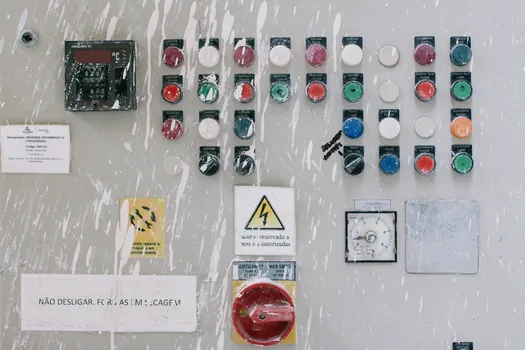
The most defensible use is an isolation valve that must prove open or closed status to a pump-start permissive, a sequencing interlock, or a safety-related logic. The limit switch box confirms valve state for interlocks that depend on a confirmed closed state.
Travel time also provides a diagnostic signal. A longer interval between command and limit confirmation can indicate seat wear, packing friction, low air supply, or actuator degradation, provided the DCS trend is configured for that comparison [S1].
The principal failure modes are corrosion of fixings and cable entries, water or salt ingress, mechanical wear, false contact transfer, insufficient contact capacity, and certification mismatch. Continuous desalination operation magnifies maintenance and reliability costs, so actuator mount condition, enclosure condition, and terminal sealing should be included in the preventive-maintenance route [S3][S4].
Do not use a limit switch box as proof that a modulating valve has reached an exact intermediate position. For that duty, continuous feedback requires a positioner, and smart positioning functions may justify the added smart valve positioner.
Procurement Checklist and Shortlist Logic
Require the supplier to identify the actuator model and shaft size, valve type, open and closed travel, action type, electrical load, supply voltage, cable-entry type, enclosure material, ingress-protection rating, corrosion requirement, hazardous-area classification, and the required certifications. Also require a wiring diagram showing every terminal, switch state, indicator, and fail-safe arrangement. [S1]
For a standard indoor application with low shock and infrequent switching, a cam-operated mechanical box with suitable contact capacity can be the economical choice. For outdoor, high-cycle, or washdown service, compare a sealed magnetic box against an inductive box with a compatible power and interface arrangement [S1].
For a desalination valve adjacent to seawater equipment, the shortlist is usually the enclosure and cable-entry material first, then the sensing method, then the switch rating. In hazardous areas, exclude every candidate that lacks a verified certification scope for the installed configuration.
Specify a 4–20 mA positioner or separate transmitter for modulating control, but reserve the limit switch box for discrete open and closed confirmation. That division of duty is the cleanest way to avoid false confidence in valve position [S1].