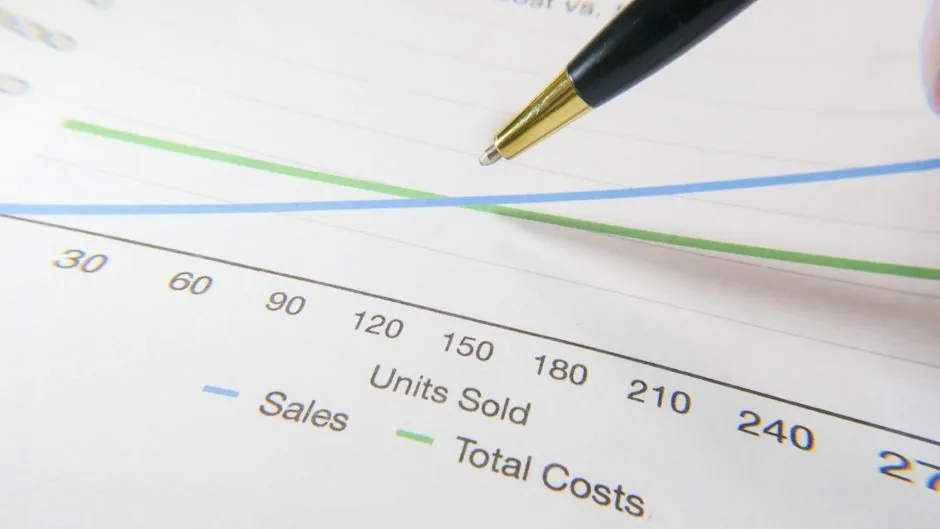
Positioner lifecycle cost on a throttling control valve is dominated by 10-30 years of compressed air, 2-3 positioner replacements, and 2-3 loop performance events, not the unit purchase price, per the 2026 valve life-cycle cost breakdown [S1].
Sticker price on a new electro-pneumatic unit starts around US$1,600-2,500 FOB China for entry-level models and runs US$3,500-6,500 for a digital HART or Foundation Fieldbus unit, while the same 20-year window can quietly burn £5,000-50,000 per process upset if control quality drifts [S1][S3]. A valve positioner is therefore bought on a cost-per-steady-state-hour metric, not on a per-piece basis.
The Four Cost Buckets That Actually Move the Number
The 2026 buying-guide economics split positioner TCO into four buckets: acquisition, installation and commissioning, operating expense (compressed air, calibration, signature trending), and end-of-life replacement triggered by wear or corrosion [S3]. Acquisition is the smallest line; compressed air, typically 0.25 SCFM (≈0.42 Nm³/h) per running unit on a standard spool, is the largest single recurring line, and it scales 24/7 across the asset base [S2].
Smart digital positioners with piezo pilots drop steady-state air consumption to below 0.024 Nm³/h, roughly an order of magnitude below the pneumatic and electro-pneumatic benchmark, and that is the line item most often recovered inside the first 18-24 months on a continuously modulating service valve [S4]. Replacement is the second recurring line: positioner wear, packing friction, and ambient-temperature drift drive 2-3 positioner swaps over a typical valve service life, each carrying roughly £200 in parts plus 2 hours of craft labour, or £1,000-1,500 per valve lifetime [S1].
Acquisition Cost by Family: Pneumatic vs Electro-Pneumatic vs Digital
The 2026 procurement split runs three families, and each carries a different cost curve. Pneumatic positioners (3-15 psi / 0.2-1.0 bar) sit at the bottom of the price stack and stay dominant on legacy throttling and offshore topsides where intrinsic-safety simplicity beats diagnostics [S3].
Electro-pneumatic positioners (4-20 mA with an I/P converter) occupy the workhorse tier at roughly US$1,600-2,500 per piece for Chinese-supplied entry-level units, with brand-name equivalents priced higher [S3][S7]. A representative Azbil AVP100 with 4-20 mA input, 130-700 kPa air supply, and -40 °C to +80 °C ambient runs about US$1,000-1,200 per set in the 1-piece MOQ tier [S6].
Digital positioners with HART 7, Foundation Fieldbus, or PROFIBUS PA are the premium tier at US$3,500-6,500 list, but they are the only family that supports partial-stroke testing, valve-signature trending, and remote calibration from a DCS or AMS workstation, which is where the operating-cost offset comes from [S3]. A 4-20 mA HART smart valve positioner typically costs 30-50% more than an analog equivalent yet reduces unplanned trips through friction trend, stroke-time monitoring, and cycle counting [S5].
Operating Cost: Compressed Air, Calibration, and Lost-Loop Events
Compressed air is the single largest 20-year operating cost on any continuously modulating positioner, and the gap between pneumatic and digital is large enough to flip a TCO ranking. A standard-flow pneumatic SVF V Series positioner consumes 0.25 SCFM (≈0.42 Nm³/h) at 80 psig steady state; the maximum-flow spool rises to 0.45 SCFM (≈0.76 Nm³/h) [S2]. A piezo-driven digital unit such as the SUPCON CVP2000-1 holds steady-state consumption below 0.024 Nm³/h, and at a typical US$0.02-0.04 per Nm³ industrial compressed-air tariff that delta is several hundred to over a thousand dollars per valve per year on a 24/7 modulating service [S4].
Calibration and signature-trending cost is the second operating line. An analog electro-pneumatic unit typically re-zeroes once a year during plant turnaround, with two craft hours plus instrument-air; a digital unit with HART 7, Foundation Fieldbus, or PROFIBUS PA pulls valve signature, friction trend, and cycle count through the DCS without a man-down visit, cutting that line to near zero on units that already host an asset-management host [S3][S5].
Lost-loop cost is the third and most volatile line: 2-3 loop performance issues per decade per valve, with poor loop performance reducing product quality or causing process upsets worth £5,000-50,000 per event, which is the line that justifies the 30-50% smart-positioner premium on critical loops [S1][S5]. For non-critical loops (cooling water, utility air, instrument-air manifolds) the math flips and a ±1.0% F.S. analog unit is the correct economic answer [S5].
Standards, Materials, and the Hidden Cost of Getting Them Wrong
Hazardous-area and material compliance drive a step change in unit price that is rarely visible on a first quote. ATEX 2014/34/EU category 2 (zone 1) or category 3 (zone 2) marking, backed by IEC 60079-x intrinsic-safety or flameproof design, is the European baseline, and IECEx covers the international equivalent; North American sites default to NEC class/div with UL or FM listed enclosures [S3]. TÜV SIL2 on a compact intrinsically safe platform such as the CVP2000-1 is a separate certification pass that adds cost but unlocks safety-instrumented-function service [S4].
Materials of construction matter when the positioner sits in sour service or coastal air. Standard aluminum housing with epoxy coating is fine for non-sour, non-marine; 316L stainless (CF8M) with NACE MR0175 / ISO 15156 compliant bolting is the floor for H2S partial pressure above 0.0003 MPa (0.05 psi) and for offshore or coastal exposure, and alloy 400 or alloy 825 is the next step for higher H2S and chloride combinations [S3]. The V Series positioner uses 300-series stainless port rings, Carpenter 70 grade stainless spool valves, and Buna-N signal diaphragms as a baseline, with a -40 °F to 150 °F (-40 °C to 65 °C) operating envelope and CSA, CENELEC hazardous-location approvals [S2].
Accuracy and resolution class also move the price. An entry-level electro-pneumatic unit typically sits at ±1.0% F.S. linearity and 0.50% max hysteresis; a digital unit hits ±0.5% F.S. with adjustable deadband 0.1-10% and maximum hysteresis 0.5% F.S., and the high-precision tier reaches ±0.3% F.S. for custody transfer and LNG service [S4][S5]. Specifying tighter accuracy than the loop can resolve is wasted spend; under-specifying it on a critical reactor-temperature or column-pressure loop is a £5,000-50,000-per-event exposure [S1][S5].
Installation and Replacement Cost: The Line That Procurement Forgets
Installation is the second-largest one-time line and the one most often omitted from RFQ pricing. Spring-return single-acting positioners fit any standard linear or rotary actuator; double-acting units require two output ports and external air routing, and actuators larger than 10 L actuator volume need an external volume booster to keep step response inside the loop tuning window [S5]. A compact platform at 186×94×100 mm and 2.1 kg cuts panel space, mounting hardware, and installation time on space-restricted retrofits, which translates directly to fewer craft hours per positioner swap [S4].
Replacement cost is where digital units earn back their premium. A pneumatic or analog electro-pneumatic positioner pulled for wear or packing friction costs roughly £200 in parts plus 2 hours of craft labour per event, and that recurs 2-3 times over a 20-30 year valve service life, or £1,000-1,500 per valve lifetime, exclusive of any production loss during the swap window [S1]. The mechanical-mount, calibration, and hazardous-area rules for those swaps are covered in a valve positioner installation field guide that pairs with this TCO analysis.
Loop performance issues compound the replacement line: each poor-control event on a critical loop costs £5,000-50,000, and a smart positioner with signature trending and friction trend typically surfaces the failure 6-18 months before a process trip, which is the single largest TCO lever in the 20-year model [S1][S5].
Decision Matrix: When to Spend, When to Save
Spend on a digital or smart positioner when the loop is critical (reactor temperature, column pressure, custody transfer, partial-stroke-tested ESD shut-off), the valve modulates continuously, the host already speaks HART or FF, and air supply is metered [S3][S5]. Spec for ±0.3-0.5% F.S. accuracy, piezo pilot, and Ex ia or Ex d certification matched to the zone, and budget US$3,500-6,500 list plus installation [S3][S4][S5].
Save with a pneumatic or analog electro-pneumatic positioner when the loop is non-critical (cooling water, utility air, instrument-air header), the service is on/off rather than modulating, no host-side HART or FF exists, and intrinsic-safety simplicity beats diagnostics, in which case a 3-15 psi pneumatic or 4-20 mA analog unit at US$1,000-2,500 is the right economic answer [S3][S5]. A representative Azbil AVP100 at US$1,000-1,200 per set, or a Chinese-supplied YT-1000 / ND910 / V18346 type electro-pneumatic unit at 1.4-7.0 bar (0.14-0.7 MPa) supply and 4-20 mA input, fits that envelope [S6][S8][S9].
Track these signals over the next two procurement cycles: Foundation Fieldbus H1 and Ethernet-APL adoption in greenfield oil & gas, the published 2026-2030 market path from USD 2.07 BN (2025) toward USD 2.56 BN (2030), and the move of digital-positioner diagnostics into the safety-instrumented-function tier as SIL2-capable compact platforms such as the CVP2000-1 reach broader field deployment [S3][S4].
The underlying component specifications are covered under total station.