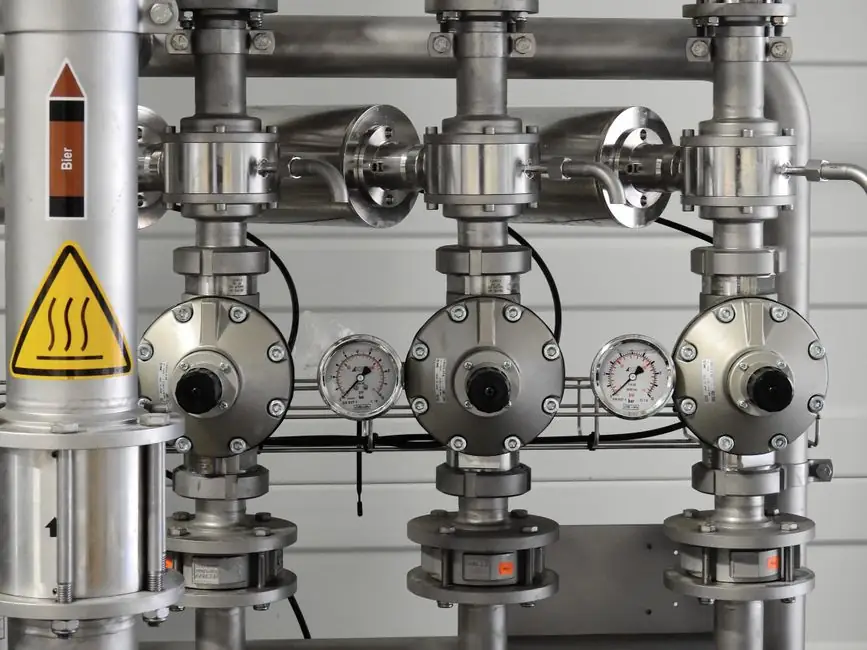
A positioner with valve-stem feedback typically reduces loop hysteresis to under 0.5% of full stroke, against 5–15% on a directly-driven pneumatic actuator, per field engineering references [S2].
Specifying one is therefore a trade-off: the same closed-loop device that delivers ±1% accuracy and remote diagnostics also adds instrument-air demand, a new failure node, and a price premium over a bare actuator [S2][S4].
What a Positioner Actually Does in the Loop
A valve positioner is a closed-loop controller mounted on the actuator or yoke that continuously compares the command signal (3–15 psi pneumatic, 4–20 mA analog, or HART/FOUNDATION Fieldbus/PROFIBUS PA digital) against measured stem position, then bleeds or supplies air to the actuator diaphragm or piston until the two match [S1][S3].
Without a positioner, the actuator spring alone translates the controller output to stem travel, and static friction from packing, high differential pressure, or unbalance forces leaves the stem short of the demanded setpoint; with one, stem position becomes the process variable (PV), the control signal is the setpoint (SP), and the pneumatic relay output is the manipulated variable (MV) [S1][S3]. The feedback element is normally a potentiometer, LVDT, or non-contact magnetic sensor, paired with an I/P (current-to-pressure) transducer in electro-pneumatic designs, or a flapper/nozzle assembly in purely pneumatic units [S1].
Main Types and the Trade-off Behind Each
The three families cover most process control use cases. Pneumatic positioners run on 3–15 psi or 0.2–1.0 bar instrument air, have no electronics to fail, and suit legacy loops, but they cannot self-calibrate or expose HART variables [S3]. Electro-pneumatic positioners add a 4–20 mA input with an I/P stage, plus optional HART, and reach typical accuracy of ±0.5–1% with LVDT or potentiometer feedback [S1]. Digital smart positioners layer microprocessor auto-calibration, partial-stroke testing, and FOUNDATION Fieldbus or PROFIBUS PA diagnostics on top, but require clean dry air and firmware management [S3][S7].
Typical bench figures from a current electro-pneumatic design are repeatability below 0.3%, accuracy ±1%, hysteresis below 0.5%, operating temperature -20°C to 60°C (extendable to -40°C on build), and IP55 housing with NEMA 4X / Belzona P65 as an option [S4]. For a side-by-side spec view, see the valve positioner types and classifications field reference.
Quantified Advantages: Why Engineers Add One
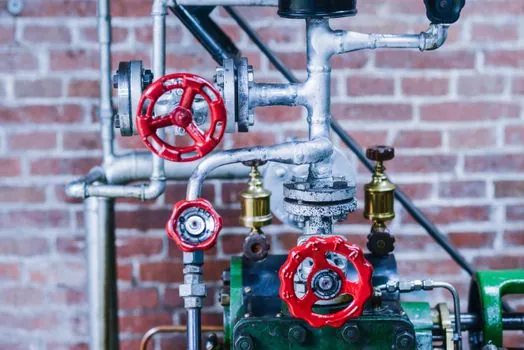
The single largest gain is dead-band and hysteresis reduction. With a positioner on a modulating control loop, the 5–15% full-stroke hysteresis of a spring-return actuator collapses to under 0.5%, which directly improves setpoint tracking and reduces valve-related process variance [S2]. A positioner also delivers faster stroking on large actuators, where the controller output alone cannot overcome packing friction and dynamic unbalance at high ΔP [S1][S6].
Smart and digital positioners add measurable operational value: automatic tuning of travel, seat leakage trending through partial-stroke tests, and HART or FOUNDATION Fieldbus variables for asset management systems, which the field engineering community now treats as the baseline for predictive maintenance rather than a premium feature [S7][S8]. For an overview of the feedback architecture, see the valve positioner entry.
Quantified Disadvantages: Where Adding a Positioner Hurts
The same closed loop introduces new failure modes. Continuous bleed from the pneumatic relay can consume 0.1–0.5 Nm³/h of clean, dry instrument air per device, a real load on the air manifold of a large plant, and a leak path that drifts calibration over time [S1][S3]. I/P transducers add a component that can stick or fail, and a digital positioner adds firmware, surge protection, and grounding requirements that an analog loop never had [S1][S7].
Cost stacks quickly: a smart digital positioner is several times the price of a pneumatic positioner, and a positioner plus accessories on a single control valve can rival the actuator cost on small rotary assemblies. The feedback linkage is also a known wear point on high-cycle or vibrating service, and on quarter-turn valves with poor packing friction the positioner can oscillate unless gains are tuned to the actuator volume [S2][S4]. Hazardous-area approvals (FM, CSA, ATEX, IECEx) are a separate SKU and a separate documentation burden; on a non-hazardous HVAC or water-service line, that cost is wasted [S5].
Selection Criteria and Use-Case Fit

Spec a positioner when the loop needs tight throttling control, when the application must correct for hysteresis (errors of 5–15% of full stroke can occur without one), or when the control system requires continuous feedback of the valve stem or shaft position [S1][S2][S3]. The smart digital tier fits chemical, refining, and power-generation modulating loops where diagnostics justify the price premium [S2][S8].
Skip the positioner on simple open/close isolation valves, on very small actuators where the spring range and friction are low, on services with dirty or wet instrument air that would foul the nozzle/flapper, or where the controller is already a positioner (some smart actuators integrate the function) [S2][S3]. For a comparison with newer integrated smart actuators, see the smart valve positioner reference. For a related trade-off on the pneumatic supply side, see the balancing valve entry.
Standards, Sourcing, and What to Verify on the Datasheet
Spec sheets should quote the three numbers that drive field performance: hysteresis, repeatability, and linearity as a percentage of full stroke; the operating temperature range; the ingress protection rating (IP54 minimum outdoors, IP65 preferred on washdown or offshore); and the hazardous-area approval if required [S4][S5]. Confirm the signal type matches the control system (e.g., 3–15 psi or 4–20 mA) and that the positioner accepts the same input format used by the controller [S1][S3].
Quality system accreditations to look for on the OEM side include ISO 9001, ISO/TS 29001 (oil and gas), ISO 14001, and OHSAS 18001; for safety-related service, ask for IEC 61508 / IEC 61511 SIL data and PED conformity for European pressure equipment scope [S4]. For broader context on actuator-side integration in process plants, see the construction machinery and equipment reference.
Track two signals going forward: how often smart positioner partial-stroke diagnostics are replacing full stroke-tests in end-user maintenance procedures, and whether FOUNDATION Fieldbus and PROFIBUS PA remain the dominant industrial protocols or get displaced by Ethernet-APL on greenfield builds [S3][S8].