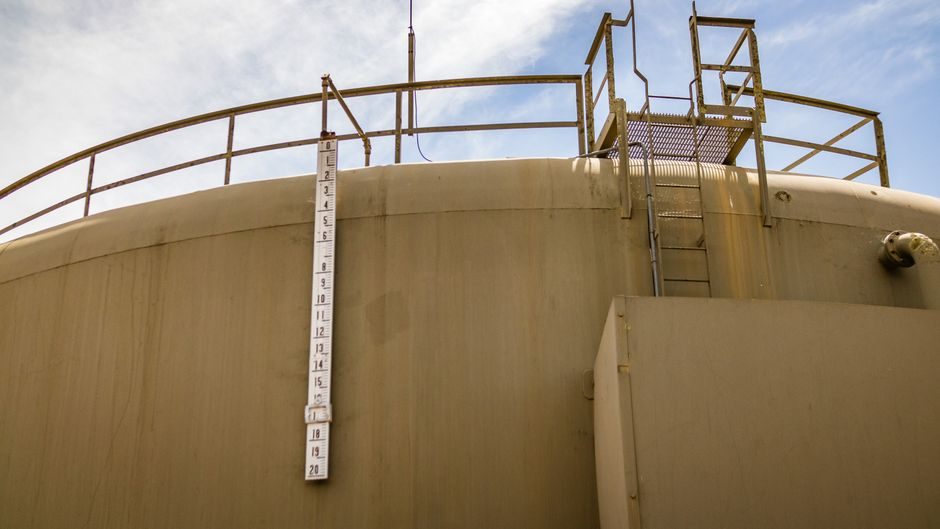
Variable area flowmeters cover a usable span from 0.4 l/h on the KROHNE DK series laboratory model [S5] up to 250 m³/h on the Houdec 134 industrial glass-tube model [S3], which makes a single VA platform a viable choice for bench, OEM skid and plant-side service without jumping to a Coriolis flowmeter.
The principle is unchanged: a float rides a tapered cone lifted by the drag of the flowing medium; the float position is read against a calibrated scale, magnetically coupled to an external pointer, or sensed inductively for a 4-20 mA / HART retransmit. Unlike electromagnetic flowmeter and ultrasonic flowmeter options, VA meters are mechanical direct-reading devices that do not need a conductive fluid or a sound-coupling path to function.
Fluid Compatibility and Body Material Selection
Fluid compatibility drives the first material gate: water, air and inert gas can use PVC, brass or stainless steel; aggressive media and steam push the spec toward stainless steel cones and armored housings. The PKP Prozessmesstechnik DS25 is explicitly positioned for aggressive media, gas and steam using the variable-area principle with a stainless steel conical tube and a magnetic external pointer indicator [S4], while the Aalborg V series uses stainless steel, glass or brass for water and air service up to 121 °C [S1].
PVC remains the default for water treatment, irrigation, marine and OEM plastic-piping skids: the Effast HDRFLU ships in PVC for DN25 to DN65 line sizes in vertical mounting [S6], and the Houdec 134 lists PVC and glass as standard build materials for liquids and gas at 60-200 °C [S3]. For corrosive or slightly abrasive liquids the Universal Flow Monitors MX uses PVC, titanium or polysulfone wetted parts and is rated to 200 bar, which is well beyond what any glass-tube VA meter can survive.
Process Envelope: Temperature, Pressure and DN Size
The process envelope separates the three VA sub-families. Glass-tube meters cap out around 34.5 bar and 200 °C (Houdec 134 [S3]); metal-tube industrial meters push to 121 °C as a common floor for the Aalborg V series [S1] and can reach higher on specialty builds; PVC-body units are limited to cold, low-pressure water lines as in the Effast HDRFLU DN25-DN65 [S6].
Line size is a co-constraint: the SN series from Universal Flow Monitors covers DN8 to DN25 with 4-20 mA + HART and an LCD, the HDRFLU spans DN25-DN65 [S6], and the Houdec 134 covers higher volumetric flow rates for DN-equivalent industrial pipe [S3]. A useful rule of thumb: glass-tube meters for low flow / lab service, armored metal-tube meters for steam and aggressive media, PVC-body meters for cold water and irrigation — and if the spec needs both high pressure and clean electronics output, an electromagnetic flowmeter on a conductive liquid or a turbine flowmeter for clean light hydrocarbons usually wins over a VA meter at that point.
Output, Indication and Hazardous-Area Certification
Output options on 2026-spec VA meters split into three tiers: pure local indication, analog retransmit, and digital/HART. Pure local-indication units (Aalborg V [S1], Effast HDRFLU [S6], PKP DS25 with optional magnetic pointer [S4]) keep cost at the bottom of the range and fit OEM skids where the operator reads the scale directly. Analog tier is the TECFLUID M21, an inductive variable-area meter for liquids, gas and steam with a 4-20 mA output and ATEX rating [S2], and the Universal Flow Monitors MX with 4-20 mA on corrosive fluids.
Digital tier adds HART to a 4-20 mA loop: the SN series ships with 4-20 mA + HART and a local LCD on DN8-DN25 lines. Functional safety is also part of the output spec: the KROHNE DK series carries SIL 2 for laboratory and process use at 0.4-5000 l/h [S5], which is the level engineers should be looking for when a VA meter is used as a guard-line flow element rather than a pure indicator. For oxygen and medical-gas service the dedicated branch is the JG Moriya 300530 oxygen flowmeter, a conical-tube-and-sphere VA meter sized 0-30 l/min and built for hospital pipeline oxygen.
Selection Criteria Compared Across the Main VA Sub-Types
The decision matrix below lines the three main VA sub-types against four procurement-side criteria. Numbers come from the catalog data on each series: glass-tube industrial (Houdec 134 [S3]), armored metal-tube (PKP DS25 [S4], Aalborg V [S1], TECFLUID M21 [S2]) and PVC-body (Effast HDRFLU [S6], Houdec 134 PVC option [S3], Universal Flow Monitors MX in PVC).
Cost per meter is lowest for PVC-body and glass-tube, mid for metal-tube, and rises once ATEX, HART or SIL 2 is added. Process temperature ceiling is roughly 60-90 °C for PVC (Effast HDRFLU is a cold-water device [S6]), 100-200 °C for glass-tube (Houdec 134 up to 200 °C [S3]), and 121 °C and beyond for metal-tube (Aalborg V to 121 °C [S1]). Output flexibility is highest on metal-tube: TECFLUID M21 adds 4-20 mA + ATEX [S2] and the SN series adds HART + LCD, whereas PVC and basic glass units are local-indication only [S6]. Hazardous-area fit is cleanest on the metal-tube family: TECFLUID M21 is ATEX-rated [S2] and KROHNE DK is SIL 2 [S5]; PVC and most glass units are not rated for Zone 1 in the catalog data shown. The complementary primer on variable area flowmeter selection: 6 spec gates before you quote walks the same gates in checklist form.
Who VA Meters Are For — and Who Should Pick a Different Meter
VA meters are the right call for clean, single-phase, low-to-medium viscosity liquids and for non-corrosive gases and steam, especially when a direct local reading is wanted and the budget cannot carry a Coriolis or magnetic price tag. They are common on water-treatment skids (Effast HDRFLU [S6]), on laboratory benches (KROHNE DK [S5]), on hospital oxygen lines (JG Moriya 300530) and on steam auxiliary lines (PKP DS25 [S4], TECFLUID M21 [S2]).
They are not the right call for slurries, two-phase flow, very low flow below 0.4 l/h where Coriolis or ultrasonic flowmeter precision matters, conductive liquids where an electromagnetic flowmeter is effectively maintenance-free, or large-pipe high-pressure hydrocarbon service where a turbine flowmeter or Coriolis meter is the standard solution. Picking a VA meter in any of those services usually means a float that stalls, a glass tube that fails, or a wetted material that the fluid attacks inside a quarter.
Standards, Sourcing and Documentation to Lock Down Before Order
Spec sheets in 2026 list ISO 9001 quality systems as the default manufacturer claim, with ATEX [S2] and SIL 2 [S5] shown on the higher-tier data sheets. The TECFLUID M21 and Universal Flow Monitors MX and SN series offer 4-20 mA analog output, with the SN series additionally supporting HART communication alongside the 4-20 mA signal.
For procurement, lock the following five items in writing before issuing a PO: calibrated flow range with units and reference conditions, process temperature and pressure with minimum and maximum, wetted material list (cone, float, O-rings, end fittings), output type and protocol (local / 4-20 mA / HART / ATEX / SIL), and a calibration certificate traceable to a national standard. A purchase order that leaves any of those five blank usually returns with a float sized to water when the line carries steam, or a brass body when the fluid is deionized. The HART-equipped SN series at 300-1500 psi and 0.5-20 us gal/min is a useful reference for how tight a vendor data sheet can be on a VA meter in 2026.
Track two signals over the next quarter: ATEX/IECEx catalog updates on the metal-tube families (TECFLUID M21 [S2] and PKP DS25 [S4] are the current ATEX data points to watch), and any 4-20 mA + HART variants released on the KROHNE DK lab meter platform [S5] — a HART option on that low-flow range would close the gap to Coriolis-class digital readback on the laboratory bench.