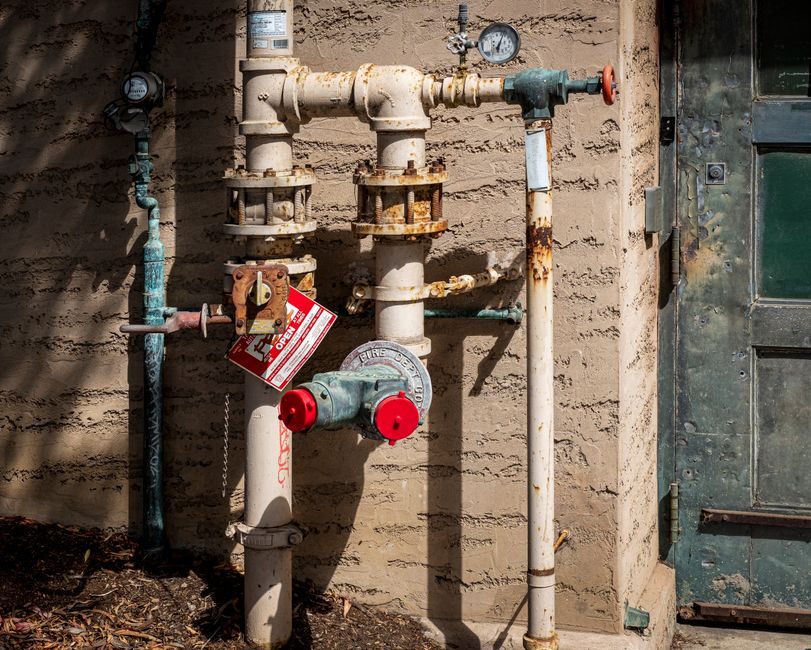
Stainless-steel variable area flowmeters sized for laboratory and light-industrial liquids start around USD 350-600 for an ELETTROTEC FMP-series tube with 0.1-170 l/min range and 10 bar / 60 °C rating [S1], while an ATEX-certified Meister RVO/U-4 (DN8, 0-5 l/min) sits noticeably higher because of hazardous-area documentation and traceability [S2].
Across 2026 catalogs, four cost bands dominate the variable area flowmeter market: a commodity PVC band (USD 80-300) for water/irrigation/marine, a precision-glass/acrylic band (USD 350-900) for lab and gas services, a stainless/PTFE industrial band (USD 1,200-2,500) for process lines, and a fully electronic ATEX + HART/PROFIBUS band (USD 2,800-4,500+) for pharmaceutical and chemical skids [S4][S5][S8][S9]. The price spread between the lowest and highest band is roughly 35-55x, which is wider than for almost any other flow technology on the spec sheet.
Body material and corrosion class set the floor price
PVC and polypropylene bodies such as the Effast HDRFLU series (DN25-DN65, vertical, corrosion-resistant) anchor the low end of the 2026 catalog, because molded thermoplastic floats, tubes, and end fittings are commodity injection-molded parts with thin-wall glass-taper metering sections [S4].
Stainless steel 316 and PTFE-lined bodies (TECFLUID 6000 series, materials including stainless steel, PTFE, glass, PVC, polypropylene) lift the price 3-6x over PVC because of precision-bore glass or metal tubes, machined end fittings, and full traceability documentation per pressure-equipment rules [S8]. For engineers mapping cost to chemistry, a useful shortcut is that moving from neutral water (PVC) to dilute acid, hot caustic, or deionized water (stainless + PTFE) typically doubles or triples the line item on the instrument-data sheet. If you are weighing the technology choice itself against a more modern alternative, the side-by-side in Variable Area Flowmeter vs Coriolis: 2026 Selection Comparison lays out the cost-of-ownership difference frame-by-frame.
Output protocol and electronics multiply the base tube price
A purely mechanical variable area flowmeter with a glass tube and a float is the baseline; the moment an inductive pickup, 4-20 mA transmitter, HART, or PROFIBUS is added (as in TECFLUID M21 and 6000 series, or the older Universal Flow Monitors MX with 4-20 mA at 100-200 bar), the unit price jumps because of the coil, PCB, calibration, and EMC testing inside the housing [S5][S6][S8].
This is also where buyers most often over-spec: a simple tank-level-to-flow indication on plant air rarely justifies HART, while a pharmaceutical clean-in-place loop on a hazardous skid almost always does. A related decision point on the analog loop is the transmitter type itself, which is unpacked in Differential Pressure Transmitter Buying Guide: 2026 Spec Comparison.
Flow range, scale length, and accuracy class
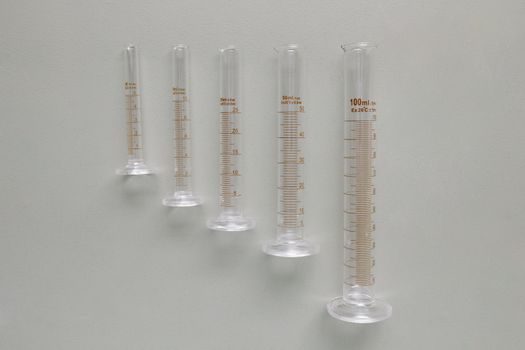
Volumetric range is the single largest cost multiplier inside a given material band. The Aalborg PMR1-series variable area meter covers low-flow liquid and gas at 0-250 °F and 0-200 psi with a precision class typical of laboratory glass tubes [S3], while the Holykell HTWF range scales from DN15 1/2" up to DN300 12", with the larger scales requiring longer precision-bore tubes, heavier floats, and sturdier mountings — each step roughly adding 20-40% to the tube price [S7].
Scale length follows the same logic: a 2" Rate-Master scale is the entry point for DwyerOmega precision flowmeters, with 5" and 10" scales offered for higher resolution and NIST-traceable calibration, and the price ladder climbs with the graduated length because longer scales need tighter bore tolerances and lower-friction floats to preserve linearity [S9]. For most process work, a 6" or 10" scale buys roughly 2-3x the readability of a 2" scale at 1.5-2x the price — the cost per unit of readability is usually lowest in the mid-length scales.
Hazardous area, sanitary, and certification premiums
ATEX-rated variable area flowmeters (Meister RVO/U-4, TECFLUID M21, TECFLUID 6000 series) carry a visible price premium because the manufacturer must maintain a notified-body-approved QA system, document flameproof or intrinsically-safe construction, and supply the EU type-examination certificate with each serial number [S2][S5][S8].
Sanitary and pharmaceutical builds (3-A, EHEDG, polished stainless, CIP/SIP capable) add another premium tier on top of ATEX, typically USD 600-1,500 for surface-finish documentation, FDA-grade elastomers, and weld-trace records [S5][S8]. The combined ATEX + HART + sanitary configuration is the most expensive in the 2026 catalog, and is only justified on skids where the meter is the primary fiscal measurement or where batch release depends on the indicated value.
Where variable area flowmeters fit — and where they do not
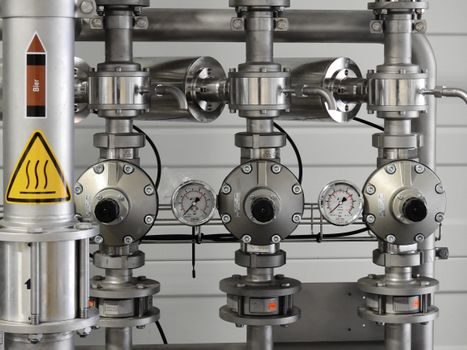
Variable area flowmeters are the right tool for transparent or moderately clean liquids and gases at low-to-mid flow rates where local mechanical indication is acceptable, where no power is available, and where budget favors a simple device with no moving electronics — examples include water treatment dosing lines, laboratory gas bubblers, and irrigation headers [S4][S9]. They are the wrong tool for opaque slurries, multi-phase flow, high-pressure steam above the limits listed by the manufacturer, sanitary processes requiring CIP validation on the wetted path, or any application demanding mass-flow accuracy better than roughly ±2-5% of full scale [S3][S8].
Universal Flow Monitors' MX vane-style variable area flowmeter for corrosive fluids shows the pressure ceiling of the technology: with PVC, titanium, and polysulfone wetted parts rated to 100-200 bar at DN25-DN80, the construction can survive harsh chemistry, but only at the cost of the heavier float and stiffer float-geometry calibration [S6]. Above 250 °F (121 °C) the Aalborg PMR1 envelope shows the practical upper limit for most glass- and plastic-tubed designs, and beyond that engineers should be looking at metal-tube variable area meters or moving to a different flow principle entirely — a choice laid out in Thermal mass flowmeter buying guide 2026: inline vs insertion vs low-flow liquid.
Selection criteria and options compared
Four representative 2026 builds make the cost tradeoffs concrete: Effast HDRFLU (PVC, water/gas, DN25-DN65, mechanical direct-reading) sits at the commodity end; Aalborg PMR1 (stainless/aluminum/glass, low-flow precision) covers the lab tier; Holykell HTWF (multi-size DN15-DN300, water/oil/chemicals/fuel/gas) covers general industrial mechanical indication; and the TECFLUID 6000 series (inductive, 4-20 mA/HART/PROFIBUS, ATEX, multi-material wetted parts) sits at the top of the catalog [S4][S3][S7][S8]. On a cost-per-spec point, the PVC body wins on price and chemical compatibility for water, the glass-tube precision build wins on readability per dollar for gas and low-flow liquid, the multi-size mechanical line wins on configurability for skids that grow over time, and the electronic ATEX/HART build wins on integration density where the loop already has a digital backbone. The decision flow for a typical specifier is therefore: fluid chemistry → material → required indication (local vs 4-20 mA vs HART) → hazardous area → sanitary or not, in that order, with each step adding a discrete cost band rather than a continuous gradient.
Failure modes and lifecycle costs engineers undercount
The cheapest variable area flowmeter on the catalog is rarely the cheapest installed cost. Float wear in abrasive service, glass tube etching in hot caustic or HF-bearing streams, and polymer creep in PVC bodies above 60 °C all shorten service life, and the 2026 catalog data is explicit about the temperature and pressure envelopes that bound these failure modes (ELETTROTEC FMP capped at 60 °C / 10 bar, Aalborg PMR1 at 250 °F / 200 psi, Universal Flow Monitors MX at 100-200 bar) [S1][S3][S6]. Under-specifying the wetted material is the most common way a USD 200 tube becomes a USD 5,000 annual line item once you add unplanned shutdowns, repeat calibration, and replacement floats.
The second under-counted cost is calibration. NIST-traceable calibration on a DwyerOmega precision flowmeter is offered as a paid option, and on the higher-end ATEX/HART units the same calibration carries a higher price tag because the procedure must be performed on the assembled electronic transmitter, not just the mechanical tube [S9]. A 12-month calibration cycle on a USD 3,500 electronic unit can therefore add USD 200-400 per year, which over a 10-year life rivals the original purchase price of the commodity PVC tier.
Sourcing, standards, and what to verify on the quote
For 2026 procurement, three documentation items separate a defensible quote from a low-ball: a current EU type-examination certificate for any ATEX-marked variable area flowmeter, a material certificate (3.1 per EN 10204) for the wetted parts on stainless/PTFE builds, and a published flow-calibration curve on the actual float/tube combination being shipped rather than a generic datasheet number [S2][S5][S8]. On the engineering side, the relevant flow-calculation references are ISO 5167 for differential-style meters in adjacent applications, and the ATEX 2014/34/EU directive plus the IEC 60079 series for hazardous-area equipment — these are the documents a qualified supplier should be able to map to each line of the data sheet.
Trackable signals for the next procurement cycle: (1) watch whether the 2026 catalogs from TECFLUID and Meister extend the inductive variable area line further into DN15 and below, because that is where the small-flow pharmaceutical demand is concentrated [S5][S8]; (2) watch the price trajectory of the Holykell HTWF DN50-DN100 stainless build, because that size range is where variable area competes most directly with coriolis flowmeter on chemical dosing skids, and the 2026 catalog already shows a broad DN15-DN300 spread [S7]. If a baseline process spec is needed for a future article in this series, the operational principles are summarized in the reference page on the variable-area flowmeter and contrasted with the electromagnetic flowmeter where conductive liquids are involved.