A variable frequency drive controls induction-motor speed and torque by varying supply frequency and voltage, with soft starting, energy savings, and precise process control as its principal benefits [S1].
Variable frequency drives serve pumps, fans, conveyors, HVAC equipment, and other motor-driven systems, but their economics depend on load variation, installation quality, electrical protection, cooling, and control tuning [S1][S2].
What a Variable Frequency Drive Changes
A variable frequency drive converts 1-phase or 3-phase AC into an internal DC link, then supplies a controlled motor output using pulse-width modulation. This lets an induction motor operate at speeds other than the fixed supply frequency [S3].
The variable frequency drive adjusts output frequency and voltage to regulate motor speed and torque rather than relying on a fixed-speed connection. That mechanism enables soft starts, controlled stops, and speed changes without changing the driven machine [S1][S3].
For pumps and fans, the operating relationship matters. Under affinity laws, flow varies approximately in direct proportion to shaft speed, while pump head varies with the square of speed [S3]. These relationships can reduce pumping energy when output is reduced, but they also change the available operating curve and must be accounted for during selection.
Benefits for Energy, Process Control, and Maintenance
Matching motor speed to demand can reduce electrical energy consumption in variable-load applications, especially centrifugal pumps and fans. A drive avoids the loss of running a motor at full output when the process requires less flow, pressure, or air movement [S1][S4].
Closed-loop control turns this capability into measurable process performance. A drive can adjust motor speed to hold a pressure or flow setpoint, commonly through a PID loop, instead of throttling a valve and dissipating energy across the restriction [S3].
Soft starting and stopping reduce initial mechanical shock and limit the initial inrush current that a direct-on-line motor start can impose [S1][S6]. Smoother operation can reduce wear in bearings, belts, couplings, and driven equipment, while speed adjustment can preserve useful operating flexibility [S1][S2].
The return is application-specific rather than automatic. A poorly managed VFD can consume more energy, while operation outside tested pump curves can damage the pump instead of extending its life. The drive must be paired with load knowledge, suitable control logic, and operating limits [S3].
Cost and Installation Trade-Offs
The principal disadvantage is a higher initial purchase price than fixed-speed or simpler mechanical control arrangements. VFDs can cost more than belt drives or gearboxes, while associated enclosures, filters, wiring, commissioning labor, and training add cost [S2].
Installation and maintenance are more complex than with across-the-line starters. Drives require technical expertise for parameter configuration, cable selection, grounding, cooling, commissioning, and fault response; inadequate setup can cause inefficiency or equipment failure [S1][S2].
Small or constant-load systems may not recover the added capital through energy savings. A fixed-speed motor with a correctly selected mechanical control method can be simpler and less expensive when precise speed variation provides little operating benefit [S2].
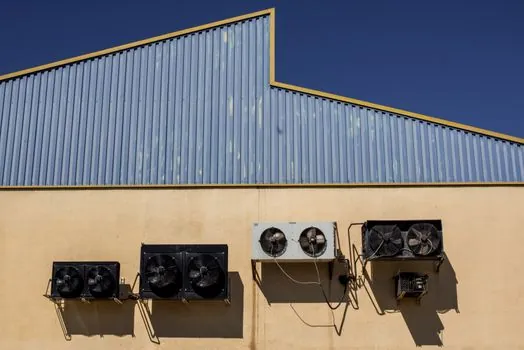
Environmental exposure is another selection constraint. Dust, humidity, high temperature, and cold can degrade drive performance or cause failure, so hazardous or dirty installations may require environmental control, suitable enclosure ratings, or a larger cooling design [S1][S3].
Electrical Effects and Motor Protection
VFDs generate harmonics, electromagnetic interference, radio-frequency interference, and voltage transients that can affect sensitive equipment, power systems, or motor insulation. Filtering and other mitigation measures may be required, adding cost and cabinet space [S1][S2].
Drives also dissipate heat and may require cooling fans or alternative heat-rejection methods. Heat-management capacity must cover the drive's losses because excess temperature can shorten component life or force protective shutdown [S2].
Not every motor is suitable without review. Motor insulation, allowable starting current, cable length, carrier frequency, grounding, and harmonic effects belong in the purchase and commissioning check. A VFD installation guide provides the wiring, cooling, grounding, and testing details needed to make those checks operational.
VFD, Soft Starter, Belt Drive, and Gearbox Compared
A VFD provides continuous speed regulation, can reduce energy consumption, and may introduce power-quality concerns. A soft starter reduces starting current and mechanical stress, yet it provides limited steady-state speed control and does not offer the same operating flexibility [S6].
Belt drives and gearboxes wear over time and create maintenance needs. A VFD removes the need for some mechanical transmission components while adding semiconductor switching, filters, cooling, and specialist maintenance [S2].
Where VFDs Fit, and Where They Do Not
Variable-speed drives fit applications whose output changes over time and where energy, process precision, or soft starting has measurable value. Pumps, fans, conveyors, and HVAC systems are established use cases because their output can be adjusted to meet demand [S1][S4].
A VFD is a poor fit for a short-duration test rig with negligible operating hours, a fixed-output machine with no need for speed variation, or an installation that cannot provide suitable electrical protection, cooling, and maintenance access. It is also a poor shortcut for replacing an inadequately selected pump or fan [S3].
For closed-loop service, the servo drive is the closer comparison when high dynamic response, positioning accuracy, and coordinated motion are required. A VFD is generally more appropriate for continuous-duty industrial machinery, pumps, and fans where precise positioning is not the governing requirement.
Commissioning and Maintenance Controls
Commissioning should verify motor rotation, commanded speed, minimum and maximum frequency limits, acceleration and deceleration ramps, fault behavior, and the process feedback used for closed-loop control. It should also confirm that the motor operates within its intended speed, current, and thermal limits [S1][S3].
For pumps and fans, baseline operating points should be recorded before changing speed. System resistance, valve position, flow, head, and pump efficiency must be evaluated at the intended operating curve, because a speed change alters both output and hydraulic behavior [S3].
Routine maintenance should include inspection for overheating, abnormal noise, worn wiring, connection damage, cooling performance, and filter condition. Drives require regular attention because component quality and maintenance intensity directly affect performance and service life [S1].
The next decision should be based on measured operating hours, load variation, energy cost, required control accuracy, installation environment, and expected maintenance access. These values allow the capital premium to be compared with the specific savings and process benefits available from speed control [S1][S2][S5].