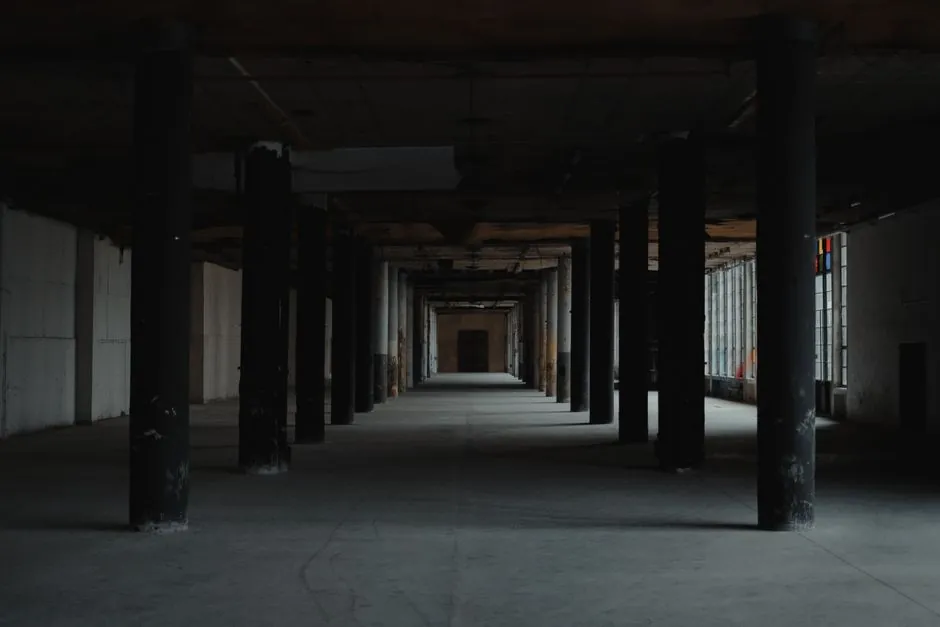
Warehouse-grade building stone selection turns on three measurable properties: density, water absorption, and abrasion resistance, with granite (ASTM C-615) typically the hardest commercially specified option and dense limestone the practical mid-range alternative [S1][S2].
The decision affects both the building envelope (where stone may serve as cladding or paving) and the storage yard (where incoming pallets sit before installation), so the same material must be evaluated for in-service performance and for safe handling in racking, on dollies, and on loading docks [S3][S4].
Geologic categories and what each one delivers in a warehouse
Building stone splits into three geologic families, and each behaves differently under forklift traffic, pallet loads, and humidity swings inside an unconditioned warehouse [S2].
Sedimentary stones (sandstone, limestone, dolomite) form in water-laid deposits, are generally more porous, and absorb 1 to 12 percent by weight depending on density, which makes them prone to frost spalling in cold-storage doorways and to staining from hydraulic-fluid drips in loading areas [S2].
Metamorphic stones (marble, slate, quartzite, gneiss) recrystallize under heat and pressure, with marble offering polish and uniform color but lower acid resistance, and quartzite delivering near-granite hardness with a layered cleavage that complicates pallet stacking [S2].
Igneous stones (granite, basalt, diorite, gabbro) cool from magma, are the densest family, and are the default spec for warehouse floors, curb stones, and exterior cladding where abrasion and chemical resistance dominate [S2].
ASTM trade classification and the spec values that actually matter
ASTM standards govern the physical requirements of dimension stone, and they are reviewed on a five-year committee cycle, so the published values are the binding reference for any procurement document [S2].
Granite supplied under ASTM C-615 must meet defined minima for density, absorption, modulus of rupture, and abrasion resistance; the standard is the primary citation engineers raise when granite is challenged as a paving or cladding spec [S2].
Marble is classified into four soundness groups (A, B, C, D) based on the frequency of geological flaws, veins, and voids, with Group A the only grade suitable for warehouse flooring or exterior tread and Groups C/D essentially decorative because they require polyester or epoxy resin repairs to remain serviceable [S2].
For warehouse procurement, the two numeric properties that drive a yes/no decision are water absorption (lower is better, granite typically below 0.4 percent, dense limestone 1 to 3 percent) and Mohs hardness (granite 6 to 7, marble 3 to 4, limestone 3), because both correlate directly with edge-chipping rates during pallet handling [S1][S2].
Criteria comparison: granite, limestone, marble, sandstone for warehouse use
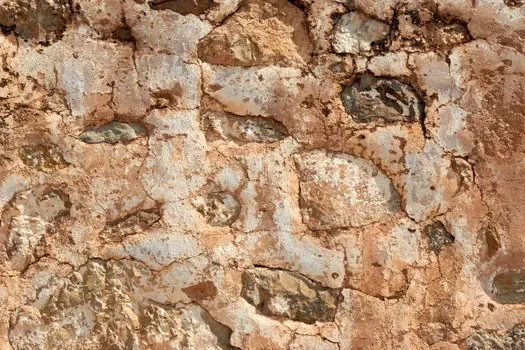
On a side-by-side basis across four decision criteria, granite wins on hardness and chemical resistance, limestone wins on cost and slip resistance when honed, marble wins on aesthetic uniformity but loses on acid and abrasion, and sandstone is the budget option only for vertical cladding [S1][S2].
For a warehouse floor that sees pallet-jack wheels and forklift turns, granite's 6 to 7 Mohs and sub-0.4 percent absorption extend service life well past 25 years, while polished marble in the same duty will show track marks within months and require re-finishing [S1][S2].
For exterior cladding or loading-dock cheek walls, dense limestone (3 to 12 percent absorption, 2.4 to 2.7 g/cc density) gives a workable balance of slip resistance and weather tolerance, provided the spec calls for factory-sealed faces on the weather-exposed side [S1].
For interior feature walls in offices or showroom areas where foot traffic is light and aesthetics dominate, marble Groups A and B are defensible, with explicit exclusion of Groups C and D in any horizontal-surfacing scope [S2].
Who this material choice is for, and who it is not for
Specifying natural stone is the right call for warehouse owners who need a 25+ year service life on floors and exterior walls, can absorb the higher first-cost versus concrete, and have a source-yard that can deliver consistent geology across multiple pallets [S1][S3].
It is the wrong call for projects under tight lead times requiring a single reorder, for sites without a covered dry-storage buffer, or for owners who cannot commit to periodic resealing of sedimentary stones in freeze-thaw climates [S1][S4].
Operators looking only at short-term capex should compare against polished concrete or industrial-grade tile, since the lifecycle math reverses only when the service horizon exceeds roughly 15 years [S1].
Storage and handling spec inside the warehouse
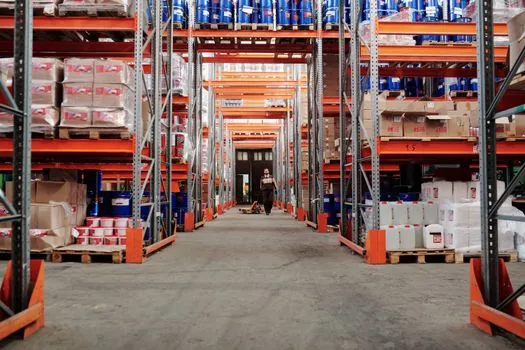
Building stone stored on site or in a distribution warehouse must be kept dry, off the slab, on pallets or racking, and away from direct sunlight, because the same properties that make granite durable in service make it brittle at thin edges during a shift in storage [S4].
Minimum storage footprint is 200 square feet with 12 ft height clearance, and a dedicated zone of at least 10 ft by 8 ft per stone type is recommended so that dissimilar lithologies do not stack-mix and transfer edge damage [S4].
Loading-dock access needs a 12 ft wide door, an 8 ft clear aisle for forklift travel, a 10 ft doorway clearance, and a forklift rated at no less than 5,000 lb load capacity, all of which are non-negotiable when pallets exceed 48 in. stack height [S4].
Each piece should be wrapped in bubble wrap or heavy-duty cardboard, palletized for movement, and supported on racking designed for the actual unit weight rather than generic shelving load class, because stone does not yield visibly before it fails [S4].
Limitations, failure modes, and what the spec must exclude
Edge chipping during forklift handling is the single most common in-warehouse failure mode, driven by thin-edge geometry on cut-to-size pieces and by pallets stacked higher than the 48 in. safe limit on standard racking [S4].
Staining from hydraulic oil, rust from rebar in adjacent storage, and efflorescence on sedimentary stones stored damp are the second-tier failure modes, all controlled by keeping stone off a wet slab and inside a dry, ventilated envelope [S1][S4].
Acidic exposure (citrus, battery acid, cleaning chemistries) will etch marble and limestone within minutes and will dull granite over months, so chemical-resistant stone or sealed-only surfaces must be specified in battery-charging or food-handling zones [S1][S2].
Spec documents should explicitly exclude Groups C and D marble from any horizontal or exterior application and should require ASTM C-615 compliance certificates with each granite shipment, because the trade classification is the only enforceable reference if a dispute arises [S2].
Procurement, sourcing, and standards to cite
A defensible procurement spec for warehouse building stone should reference ASTM C-615 for granite dimension stone, the four-group marble soundness classification for any marble inclusion, and a documented test-method set covering absorption, density, modulus of rupture, and abrasion [S2].
ASTM reviews these standards on a five-year committee cycle, so the specifier should record the published revision year on the purchase order to lock the test method, not just the material name [S2].
Regional yards such as Thompson Building Materials in Southern California stock brick, thin brick, natural stone, manufactured stone, architectural precast, and tile across multiple showrooms, which is the kind of multi-product distributor that allows a single PO to cover compatible accessories like matching pavers and trim [S3].
Independent storage operators such as Cubework publish minimum square footage, ceiling clearance, aisle width, and forklift capacity as hard requirements for stone-block tenants, and these four numbers (200 sq ft, 12 ft, 8 ft, 5,000 lb) are the most copied baseline thresholds in U.S. stone-warehouse practice [S4].
Trackable signals to watch over the next procurement cycle: any ASTM C-615 revision in the current five-year review window, distributor announcements of new regional quarries affecting lead time, and warehouse-operator publications updating the 5,000 lb forklift baseline as electric pallet jacks replace IC forklifts in stone yards.
For component-level specifications, see building stone, building pipe hardware, and pressure transmitter.