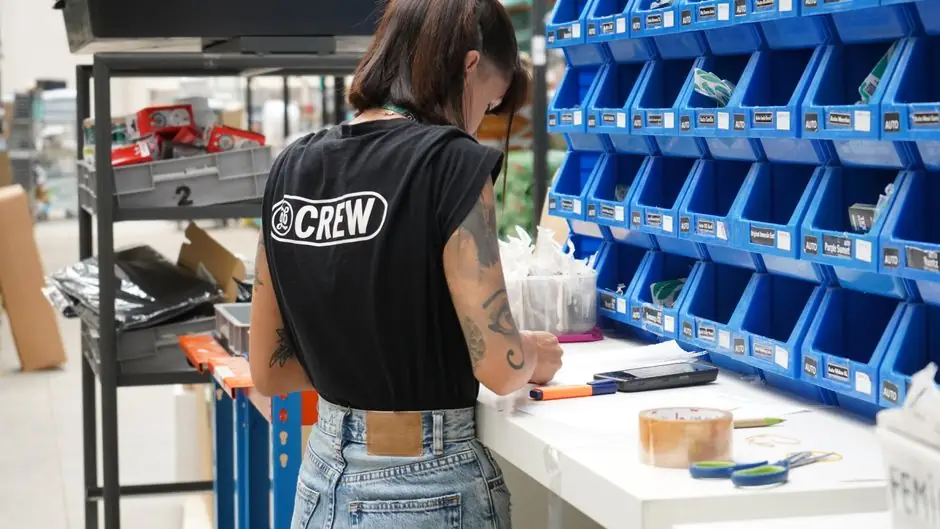
Warehouse picking, packing, and forklift work routinely exposes feet to falling cartons, rolling pallet jacks, oily concrete, and sharp debris, so certified safety footwear is a baseline control under OSHA 29 CFR 1910.136 in the US and EN ISO 20345 in Europe [S1][S3].
A single shift can run 10,000–20,000 steps on hard industrial flooring, which is why 2026 vendor guidance consistently pairs toe protection with weight under ~500 g per shoe, slip-resistant outsoles, and cushioned midsoles rather than treating toe-cap impact rating alone as the deciding spec [S1].
Which standards and toe-cap classes apply to warehouse work
EN ISO 20345 grades safety footwear by impact and compression resistance, with SB/S1/S1P/S2/S3 codes defining toe protection plus additional properties such as closed-seat region, antistatic behaviour, and puncture-resistant midsoles; OSHA 29 CFR 1910.136 requires US employers to issue protective footwear that meets ASTM F2413 when foot-injury risk is present [S1][S3].
ASTM F2413 covers impact, compression, and electrical hazard protection in a single standard and is the benchmark cited when North American warehouses specify safety toes, while MS ISO 20345 is the Malaysian adoption of the EN ISO 20345 framework for facilities operating under different national regulators [S1].
For most warehouse picking, packing, and forklift aisles, S1P (basic toe + antistatic + energy-absorbing heel + penetration-resistant midsole) or S3 (adds water-resistant upper) is the practical target class; S3 makes sense near loading docks and outdoor staging where wet conditions recur [S5].
Steel toe, composite toe, and alloy toe on the warehouse floor
Steel toe caps deliver strong impact and compression protection at lower cost but add weight and conduct heat or cold through the upper, which matters for cold-storage and freezer aisles [S1][S3].
Composite toe (fiberglass or carbon-fibre blend) and aluminium toe caps meet the same impact and compression classes at a noticeably lower mass, with better thermal insulation; alloy and carbon toes also pass metal-detector screening, which is useful in food, pharma, and export-pack warehouses with security gates [S1][S2][S3].
Reebok Work's manufacturing and warehousing category lists composite (131 styles), alloy (29), steel (26), and carbon (1) toe options as of mid-2026, with composite dominating the athletic work category, illustrating the market shift toward lighter non-metal protection [S2].
Slip resistance, puncture plates, and the loading-dock floor

Slip-resistant outsoles rated for water, oil, and dust contamination are the single most cited feature across 2026 warehouse guidance because smooth concrete that allows pallet jacks to roll efficiently becomes slick the moment coolant, condensation, or shrink-wrap debris hits the surface [S1][S4][S5].
Puncture-resistant midsoles, typically a steel plate (S1P/S3 with steel midsole) or a woven Kevlar/aramid plate, block nails from broken pallets, staples, metal strapping, and discarded fasteners that accumulate in picking lanes; the aramid version keeps the shoe fully metal-free for detector-sensitive facilities [S5].
At loading docks where forklift wheels track water and diesel film onto the slab, a slip-rated outsole plus a S3 water-resistant upper is the common pairing, while interior picking zones usually run S1P with mesh uppers for breathability [S1][S5].
Selection criteria by warehouse zone and shift profile
Picking and packing zones favour lightweight composite-toe S1P shoes with breathable mesh uppers, memory-foam insoles, and shock-absorbing heels to keep fatigue manageable across 10,000+ steps per shift [S1][S3][S5].
Forklift and heavy-pallet zones add requirements for closed metatarsal protection or external met guards on boots, plus electrical hazard (EH) rated soles if battery-charging areas are nearby; ASTM F2413 EH-rated footwear is the typical US specification here [S2][S3].
Cold storage and freezer aisles need composite or aluminium toes (to avoid the cold-bridge of steel), Thinsulate or equivalent lining, and slip-rated outsoles formulated for low-temperature flexibility, while dry goods and ambient warehouses can prioritise breathability and weight over thermal performance [S1][S3].
Fit, sizing, and shift-length ergonomics
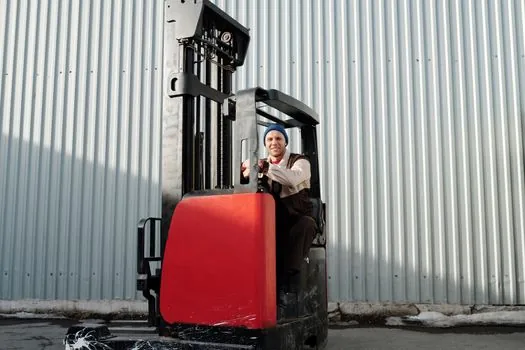
Safety footwear is commonly worn for 10–12 hour shifts, so a generous toe box, secure heel lock, EVA or PU midsole cushioning, and moisture-wicking lining are non-negotiable comfort items; the wrong last causes blisters, knee pain, and lost time that erodes any savings on the ticket price [S1][S3].
Reebok Work's catalog shows 190–198 size-SKU coverage across the most common US men's 7–12 range, while only 4 SKUs ship in extra-wide EW and 10 in 4E, which means warehouses with non-standard foot shapes should confirm width availability before specifying a model fleet-wide [S2].
Anti-fatigue insoles, arch support, and shock-absorbing heels reduce the cumulative impact of concrete walking, which is repeatedly flagged in 2026 buyer guidance as a control for musculoskeletal complaints rather than a luxury add-on [S1][S3][S4].
Common selection mistakes and procurement pitfalls
Buying on toe-cap price alone typically omits slip resistance, which is the failure mode most often reported in warehouse injury logs, and over-indexing on a single heavy-duty boot style across the whole DC ignores zone-by-zone hazard differences [S1][S4].
Specifying steel-toe footwear in cold storage or freezer zones creates condensation and cold-bridge discomfort that drives workers to remove the PPE, defeating the control; the fix is composite or aluminium toe plus a low-temperature-rated outsole compound [S1][S3].
Ignoring fit and width leads to issued-but-unworn footwear; a documented trial programme across 1–2 shifts on the actual floor, plus checks against the worker's hazard assessment, is the standard remedy and aligns with the broader PPE fit-for-purpose principle used in the safety shoes category [S1][S3].
Specifications to lock into the purchase order
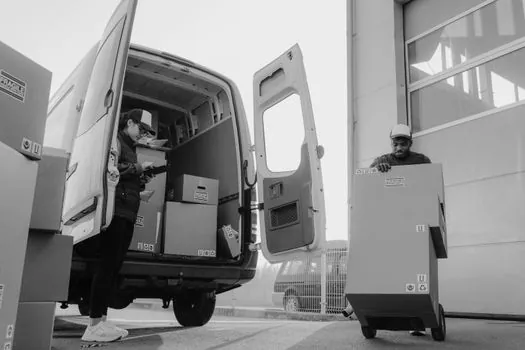
The procurement spec should require the certification standard and class (EN ISO 20345 S1P or S3, or ASTM F2413 I/75 C/75 with EH where applicable), the toe-cap material, the outsole slip rating (SRC where oil and water both apply), the midsole type, the upper construction, the weight per shoe, and the size/width matrix to be supplied [S1][S2][S3].
Track the next two signals: (1) whether EN ISO 20345 or ASTM F2413 revision cycles published in late 2025–2026 alter the impact rating thresholds for the I/75/C/75 class, and (2) whether your facility's risk assessment under the broader machine safety and fire safety frameworks calls for EH, ESD, or met-guard add-ons that change the qualified model list.
See also our earlier report, Gas Alarm Controller Selection Criteria for Mining Operations.