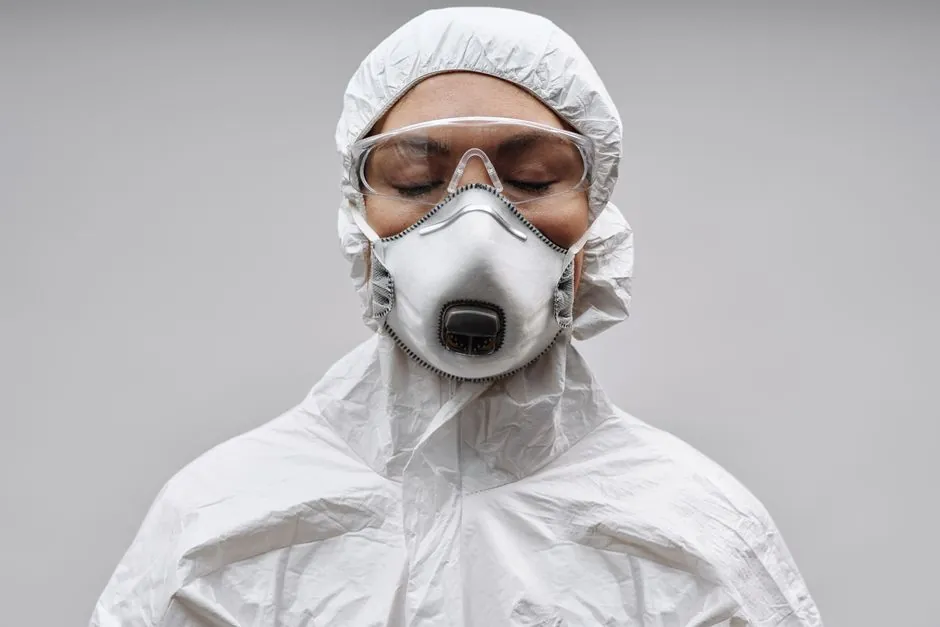
Electrical work generates a wider range of respiratory hazards than most procurement specs acknowledge, and the right respirator for a panel builder is rarely the right respirator for a confined-space cable puller. Hazard class, oxygen concentration, and assigned protection factor (APF) under OSHA 29 CFR 1910.134 decide the answer before brand or comfort does [S1][S5].
Across the United States an estimated 5 million workers in 1.3 million workplaces are required to wear respiratory protection, and employer-reported respiratory illness still exceeded 54,000 cases in 2024 [S5]. Electrical rooms contribute a disproportionate share of the difficult edge cases: welding fumes from bus-bar fabrication, silica dust from masonry penetrations, solvent vapours from varnish and potting, and oxygen depletion inside switchgear cabinets during fire events [S3][S5].
Hazard inventory for electrical tasks before filter selection
Selection must start with a written hazard assessment, because no respirator can filter a hazard it was not designed for, and a particulate-only cartridge will pass organic vapours straight through [S3]. The 3M Center for Respiratory Protection sequence puts hazard type first (particulate vs gas/vapour vs both), then oxygen adequacy, then concentration relative to the permissible exposure limit (PEL) [S3].
Common electrical-work hazards map to specific filter choices: tin-lead solder fumes and rosin-core smoke call out a P100 or P95 with an organic-vapour cartridge; arc-flash debris and concrete dust from masonry wall penetrations are sub-micron particulates requiring at minimum a P95 or N95 if oil aerosol is absent; PVC insulation thermal decomposition releases hydrogen chloride and should be treated as a gas/vapour hazard with combination cartridges, not a particulate filter alone [S2][S3][S5]. For context on the broader hazardous-area envelope that surrounds live electrical work, the explosion-proof vs anti-static selection primer walks through how ignition risk and PPE interact.
Filter class, APF, and the OSHA 29 CFR 1910.134 assignment
NIOSH filter designations are not interchangeable: N-series are not oil-resistant, R-series are somewhat oil-resistant (limited service life), and P-series are oil-resistant with a 40-hour or manufacturer-specified service-life ceiling [S1][S5]. The numeric suffix (95/99/100) is the minimum filtration efficiency, so a P100 captures at least 99.97 percent of challenge aerosol, the same benchmark used for HE filters [S5].
APF values under 29 CFR 1910.134 quantify how much the respirator reduces ambient concentration for the wearer, and they are the binding number in a spec line: APF 10 for a half-mask air-purifying respirator, APF 50 for a full-face APR or tight-fitting powered air-purifying respirator (PAPR), APF 1000 for a positive-pressure supplied-air system with a full hood [S5]. An atmosphere that is oxygen-deficient (below 19.5 percent O2) or immediately dangerous to life and health (IDLH) disqualifies all air-purifying options, regardless of filter class, and forces a supplied-air respirator (SAR) or self-contained breathing apparatus (SCBA) [S3][S5]. A formal respirator spec line in any RFQ should call out APF, filter class, NIOSH approval number, and the 29 CFR 1910.134 program reference in a single line.
Scenario matrix: which respirator goes on which electrical job
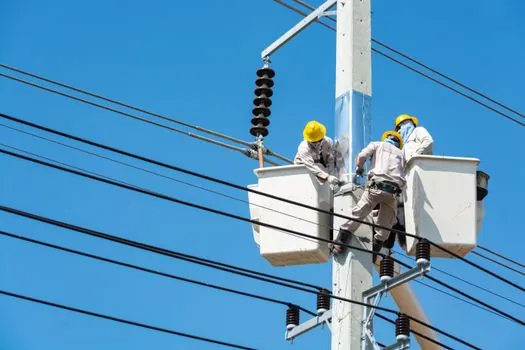
Four scenarios cover the majority of electrical-work exposure, and the comparison below lines them up against the criteria that drive spec: hazard, minimum filter, APF, and the governing OSHA clause. (Numbers are drawn from the source guidance, not extrapolated; 3M and Honeywell guidance is qualitative, OSHA APFs are regulatory.) [S5]
1. Bench soldering and PCB rework: particulate plus organic vapour, mitigated by a half-mask elastomeric APR with P100 + organic-vapour cartridge, APF 10, fit-tested per 29 CFR 1910.134 [S3][S5]. 2. Switchgear bus-bar welding or grinding: metal-oxide fume and fine particulate, mitigated by a full-face APR with P100 (or a tight-fitting PAPR for hot work), APF 50 [S5]. 3. Cable pull in a confined indoor vault with confirmed adequate oxygen but solvent-vapour exposure: half- or full-face APR with combination P100 + organic-vapour cartridge, APF 10-50, with continuous air monitoring for O2 [S3]. 4. IDLH or oxygen-deficient vault, post-arc-flash, or unknown atmosphere: SAR with full hood at APF 1000, or SCBA per 29 CFR 1910.134, never an APR [S5]. The confined-space variants 3 and 4 are exactly the cases the oxygen detector selection for electrical confined-space work walkthrough covers, and that air-monitoring step is a hard prerequisite before any respirator is donned.
Fit, program, and the 29 CFR 1910.134 written program
APF is a theoretical floor that is only valid when the respirator seals, and a single missed user seal check drops real protection below the assigned value [S1][S5]. NIOSH specifies a user seal check every donning for tight-fitting respirators, and OSHA requires qualitative or quantitative fit testing before first use and annually thereafter under 29 CFR 1910.134 [S1][S5].
Issuing a respirator without a written Respiratory Protection Program is a citable OSHA violation, not an option. The program must document hazard assessment, medical evaluation, fit testing, training, and maintenance, and the RPP administrator, not the purchasing department, owns the selection decision [S1][S5]. For electrical rooms specifically, the program should cross-reference the safety fence certification checklist for electrical rooms, because physical access control and respiratory protection both sit inside the same arc-flash boundary management effort.
Limitations and common selection mistakes
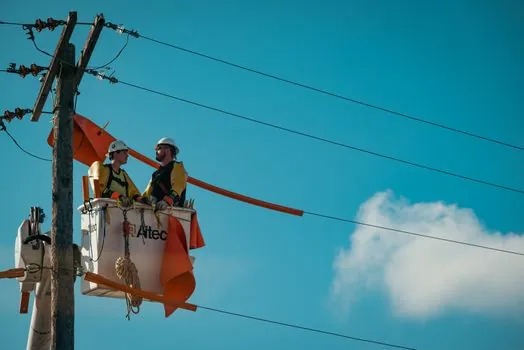
The most frequent spec error in electrical work is choosing an N95 disposable for solvent vapour: N95 is a particulate filter only, has no organic-vapour capability, and its APF 10 is below the OSHA expectation for many routine operations [S3][S5]. A second error is trusting filter class without checking the oil environment: in plant rooms with machining mist or hydraulic aerosol, an N-series filter loads prematurely and shifts breathing resistance upward, which is precisely the service-life scenario P-series was designed to handle [S1].
A third error is treating a PAPR as automatic overkill. PAPRs are assigned APF 25 (loose-fitting hood) or APF 50 (tight-fitting facepiece), require battery management, and do not change the oxygen-adequacy rule; they remain air-purifying and cannot be used in IDLH or oxygen-deficient atmospheres [S5]. When the atmosphere is suspect, the only valid spec is supplied-air (SAR) or SCBA, and the fixed gas detector selection for chemical plants reference outlines how upstream monitoring should be tied into the same confined-space permit.
Procurement spec line and verification
A clean spec line reads: half-mask elastomeric APR, NIOSH-approved with approval number TC-84A-XXXX, P100 plus organic-vapour combination cartridge, APF 10, used inside a written RPP per 29 CFR 1910.134, fit test documented annually [S1][S5]. Add an SAR clause (APF 1000) as the conditional fallback whenever the hazard assessment cannot rule out oxygen deficiency or IDLH, which is the realistic default for indoor switchgear rooms after a fault event [S5].
Two signals confirm the spec is on track: (a) every cartridge shipped carries a NIOSH approval number that resolves on the NIOSH Certified Equipment List, and counterfeit respirator alerts are reviewed before purchase [S1]; (b) the chosen electrical measurement instrument package, gas detector, and low-voltage electrical lockout hardware are listed in the same written RPP, so the respiratory decision is traceable to the same hazard assessment that drove the arc-flash label and the aerial work platform lift plan.