
For work-at-height (WAH) sites, warning tape is a visual layer on top of the WAH hierarchy of controls, not a substitute for collective protection: UK HSE data cited in 2026-08 guidance attributes roughly one quarter of all workplace fatalities to falls from height, with construction carrying the highest share [S3].
Specifying tape means picking the right product class (barricade, floor-marking, reflective, anti-slip, underground), the right color code, and the right width for the drop-zone footprint. The warning tape encyclopedia page anchors the basics: bright, high-contrast, durable, correctly coloured for the hazard. Selecting by spec, not by the cheapest roll, is what keeps a temporary perimeter doing its job until the scaffold comes down.
Why Warning Tape Is Specified on a WAH Site
The Work at Height Regulations 2005 require WAH tasks to be planned, supervised, and executed by competent people, with collective protection (guard rails, scaffold, MEWPs) prioritised over personal protection (harnesses) [S3]. Warning tape sits one level below the physical barrier: it defines the exclusion zone around a leading edge, scaffold base, or overhead-lift swing radius, and it tells dropped-object zones apart from pedestrian routes.
Non-adhesive barricade tape (polyethylene or PVC, typically yellow/black or red/black) is the workhorse for the temporary drop-zone perimeter because it ties off without adhesive residue and is visible from a distance [S1][S5]. OSHA-aligned colour logic, also adopted in many internal safety manuals, reserves red for the highest-level danger (serious injury or death) and yellow for caution [S1]. On a WAH job, that means red "DANGER" tape around an unprotected leading edge and yellow "CAUTION" tape around a lower-risk transition zone such as a tool-store area or a material-lift path.
Product Types: What Goes in the Spec
Five product classes cover almost every WAH tape requirement, each with a distinct material and use case [S2][S5]:
1) Barricade tape (non-adhesive): lightweight polyethylene or PVC, common roll width 2 in (50.8 mm), used for temporary outdoor/indoor hazard marking. Typical legends: "CAUTION DO NOT ENTER" (yellow/black) and "DANGER KEEP OUT" (red/black).
2) Underground warning tape: weather-resistant polyethylene, buried above utility lines; metal-detectable variants exist. APWA-style colour codes (red electric, yellow gas/oil, blue water, green sewer, orange comms) apply where local dig-safe rules reference them [S5].
3) Adhesive warning / floor-marking tape: self-adhesive, abrasion-resistant, available in solid colour or stripe; used for permanent or semi-permanent indoor hazard marking on walkways, equipment boundaries, loading docks, and the inside of scaffold access points.
4) Reflective warning tape: used where low-light or vehicle-movement visibility is needed, including the edges of MEWP platforms and night-shift road works.
5) Anti-slip hazard tape: textured surface in bright colours (yellow, red, orange) or black/yellow stripe, applied to scaffold planks, ladder rungs, and access platforms to reduce slip risk on contaminated or wet surfaces [S2][S5].
Decision Criteria: Colour, Width, Material, Adhesion
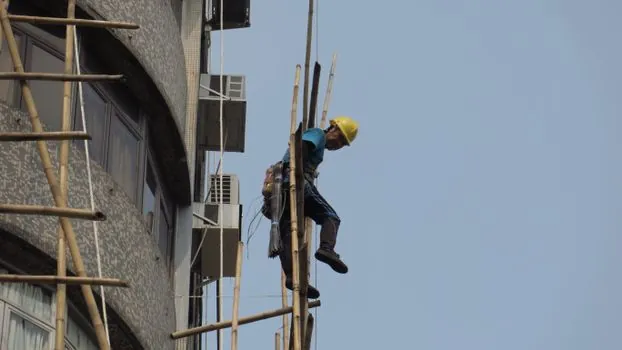
Colour is the first filter. Yellow-and-black striped tape reads as "caution, slow down, watch your step," while red-and-white or red-and-black signals an exclusion zone where entry is not permitted [S1][S4][S5]. Mixing the two (yellow "CAUTION" tape around an open lift shaft) is one of the most common WAH signage errors; the legend and the stripe colour must agree with the hazard class.
Width and roll format are the second filter. Hazard warning tape is commonly sold in 2 in (50.8 mm) widths by the roll or case, in striped polyethylene-cloth with rubber adhesive for the adhesive variant [S2]. For a long scaffold run, multiple parallel runs of 2 in tape read more clearly than a single narrow strip, and a printed legend ("DANGER OVERHEAD WORK") reduces ambiguity at low-literacy or multilingual sites.
Material and adhesion are the third filter. Indoor, semi-permanent floor marking on smooth concrete wants a rubber-adhesive PVC or PE tape that removes cleanly at handover; outdoor barricade duty wants non-adhesive polyethylene that survives wind and UV without degrading into litter. A warning sign on a fixed post should be used alongside tape wherever the hazard is permanent, because tape degrades, gets cut, or gets walked through, and is meant for hours-to-days duration, not months [S1].
Comparison: Tape Classes Against WAH Selection Criteria
The matrix below lines the five tape classes up against four WAH-relevant criteria: typical duration, primary use, adhesion, and visibility range. Use it as a quick filter when writing a method statement or a procurement line. [S5]
- Barricade (non-adhesive): hours to days, perimeter/drop-zone, none, tens of metres in daylight [S1][S5].
- Underground (buried): permanent (years), utility-marking, none, not visible until excavated [S5].
- Adhesive floor-marking: weeks to months, walkways, equipment boundaries, indoor edges, rubber adhesive, several metres [S2][S5].
- Reflective: hours to days, low-light / vehicle zones, adhesive or non-adhesive, retroreflective at 50+ m with headlight illumination [S5].
- Anti-slip: weeks to months, ladder rungs, scaffold planks, MEWP access, rubber adhesive grit, several metres [S2][S5].
For a WAH site, the realistic spec set is barricade for the leading-edge and drop-zone perimeter, adhesive floor-marking inside the scaffold access corridor, anti-slip on the first few ladder rungs and any wet-prone platform, and reflective on the MEWP chassis if night-shift lift work is in scope. Underground tape is not a WAH item, but it shows up in the same civil subcontractor scope when a scaffold base is being excavated.
WAH-Specific Use Cases and Failure Modes
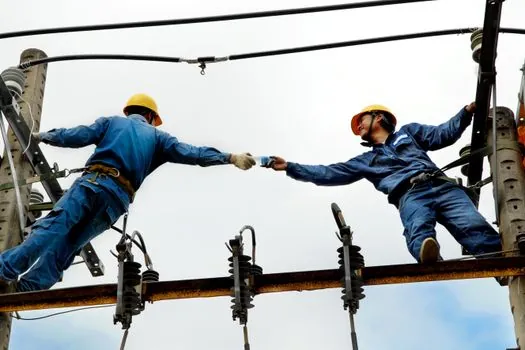
Leading-edge and drop-zone: yellow/black barricade tape tied off between scaffold standards at chest height, with red "DANGER" tape added where the edge is unguarded by a Class A guard rail. The tape is the visual cue; the guard rail is the collective control [S3].
Overhead-lift and crane swing radius: red barricade tape around the swing arc on the ground, with a second inner ring of yellow tape for the slow-speed buffer zone. Posting a permanent aerial work platform decal at the MEWP basket itself is a separate requirement from ground tape.
Scaffold access and ladder runs: adhesive anti-slip tape on the first and last three rungs, plus a 50 mm floor-marking stripe across the threshold so the "safe step" line is obvious in low light. This combination is standard because contamination on aluminium rungs is the dominant cause of low-height ladder slips on WAH sites.
Confined-space or fragile-surface work: barricade tape around the access cover, plus a free-standing floor sign at the entry, because tape alone is not robust enough where a worker could trip and fall into the opening [S1].
Common failure modes: tape run at knee height (workers step over it), tape run on the inside face of a guard rail (hidden from approach), tape left up after the hazard has been removed (people stop respecting it), and yellow tape used on a red-level hazard (understates risk). Each one of these degrades the entire site signage plan, not just the tape line.
Limits, Standards, and Sourcing
Warning tape is not a fall-arrest device and is not a substitute for the WAH hierarchy: avoid, prevent, mitigate. UK guidance restates that order explicitly, with collective measures (guard rails, MEWPs) always ranking above personal measures (harnesses) [S3]. For a hard quantitative anchor, the same source notes that approximately 25% of UK workplace fatalities stem from falls from height, which is the reason the WAH control hierarchy exists in the first place [S3].
On the standards side, OSHA 29 CFR 1910.145 (Specifications for accident prevention signs and tags) and the ANSI Z535 colour-and-format conventions are the most-cited references for danger / caution / notice signage in North America, while ISO 7010 W-series pictograms are the European equivalent; pick whichever set is referenced in the project specification. Always verify the current revision with the project HSE lead before pinning a date on a submittal.
For procurement, rolls are typically sold by the case in 2 in widths; common constructions are 63-mesh polyethylene-coated cloth with rubber adhesive for the striped adhesive variant, and lightweight polyethylene film for non-adhesive barricade [S2]. If the job needs a printed legend, confirm print legibility after UV exposure and confirm the adhesive will not lift floor paint at handover; both points are routine submittal rejections. An aerial work truck specifier should also reference the same colour and signage logic, because the lift vehicle itself is part of the visible WAH scene and crews will pattern-match what they see on the chassis.
Track two signals going into Q4 2026: whether more sites are moving to printed-legend barricade tape over plain striped rolls (improves comprehension on multilingual projects, but adds cost per roll), and whether photoluminescent egress-style tape, which can glow 6 to 24 hours after ambient-light charge, gets adopted on night-shift WAH access routes as a supplement to battery-powered lighting [S2]. Both are small line items with outsized effect on the readability of a WAH exclusion zone. For a deeper cross-discipline read on how tape and signage fit into broader facility safety planning, the stretch film selection guide and the architectural hardware selection playbook cover adjacent specification logic for warehouses and industrial facilities, while a height gauge reference is the right cross-check for any access-platform measurement tied to the same job.