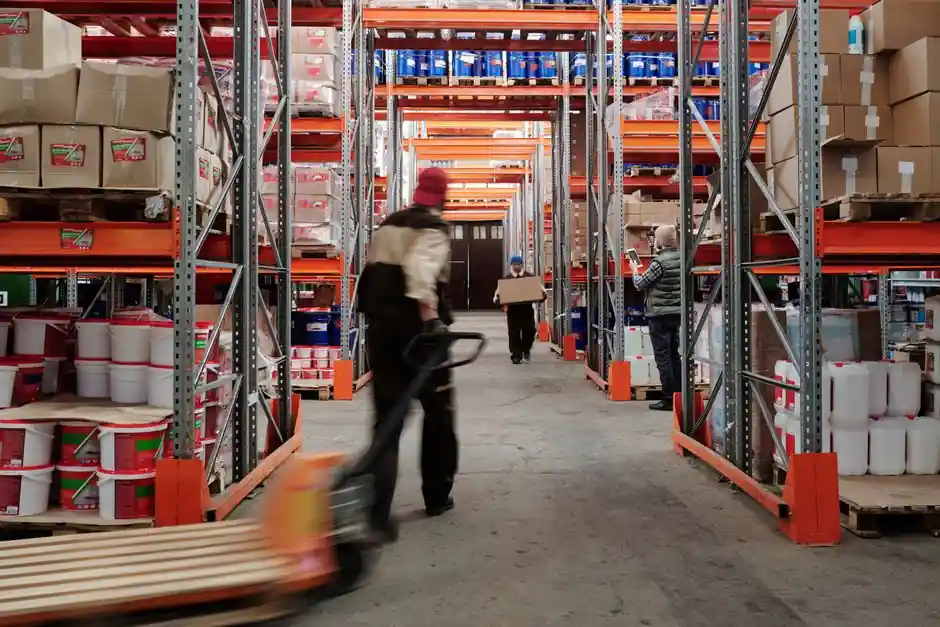
Choosing the right floor warning tape in a warehouse is a thickness-and-traffic problem first, a color problem second: 2-3 mil general-purpose vinyl handles pedestrian zones, while 5-50 mil PVC is the default for forklift lanes, with 50-mil beveled-edge products now the upper-tier industrial benchmark [S1][S3].
Three selection levers drive 80% of the decision: substrate (vinyl vs PVC), thickness in mil, and the OSHA-aligned color code (yellow for aisles and pathways, red for safety and emergency zones, green for safety equipment, blue for materials or storage, white for workstations) [S1][S4]. Specialty variants (reflective, anti-slip, glow-in-the-dark) only get layered on once those three are locked.
Substrate and thickness: what to specify by traffic zone
Vinyl floor tape is the flexible, low-to-moderate traffic option for general marking and clean-room-adjacent zones; PVC is thicker, more rigid, and designed for heavy-duty forklift and pallet-traffic aisles [S1]. The thickest industrial-grade products, such as the 50-mil (0.050 in) PVC floor tape with custom beveled edges from Mighty Line, target demanding environments where standard PVC lifts, tears, or snags under wheel and pallet impact [S3].
For new spec sheets, the practical ranges to write in are: 2-3 mil vinyl for pedestrian-only and low-traffic areas, 5-15 mil general PVC for mixed traffic, and 35-50 mil heavy-duty PVC (with beveled edges preferred) for forklift aisles, dock approaches, and any lane that sees repeated pallet-jack or powered-truck turning [S1][S3]. Anything thinner than 5 mil in a forklift aisle is a false economy; the tape will compress, lift at the edges, and fail inspection within months.
Underground warning tape, a different but related product class, follows a similar logic of matching strength to environment: look for high tensile strength plus resistance to moisture, UV, and chemicals when the tape must survive burial or long-term outdoor exposure [S2]. That same chemical-and-moisture resistance is the reason PVC dominates over vinyl in wet warehouse zones such as washdown areas, cold-storage condensation pockets, and outdoor loading bays.
OSHA color convention: yellow, red, green, blue, white
The accepted warehouse color code is yellow for aisles and pathways, red for safety and emergency zones, green for safety equipment (eyewash stations, fire equipment, first-aid), blue for materials or storage areas, and white for workstations and operations [S1][S4]. Black-and-yellow or red-and-white striped patterns are reserved for hazard callouts and physical-danger zones, where a single color is not loud enough [S5].
Consistency matters more than creativity: a floor-marking program only works if the same color means the same thing throughout the facility [S3]. Mixing vendor color charts is a common failure mode; two "safety yellow" rolls from different suppliers can read as different colors under the same LED high-bay lighting, which defeats the standardization the system is meant to deliver. The 5S methodology, formalized in workplace organization literature, treats the color code as a language, not a suggestion, and ties it directly to lean operational discipline [S4].
For a spec-first buyer, that means writing the color by function (e.g. "yellow, OSHA aisle marking, RAL 1023 or equivalent") and locking the supplier's color batch before large orders go in, rather than calling out a vendor SKU on the drawing.
Specialty variants: reflective, anti-slip, glow-in-the-dark

Reflective tape is specified for low-light environments, anti-slip tape for areas prone to spills or moisture, and glow-in-the-dark tape for power-outage and emergency egress marking [S1]. Each adds a discrete cost step, so the spec should require the variant only at the zone where it earns its keep: reflective strips at pedestrian-forklift crossings inside dim rack aisles, anti-slip at wet-process or outdoor dock zones, photoluminescent runs along primary egress paths.
Caution-tape barriers, the barricade-style rolls hung during maintenance or to cordon off a spill, sit alongside floor tape in a complete warehouse safety-signage system and follow the same color logic: red or red-and-white for active hazards, yellow for temporary caution, and a switch to rigid barriers or warning sign setups for any condition that persists past a shift [S6].
Underground-detectable warning tape is a separate spec, used above buried utilities, and is selected for detectability and chemical resistance rather than foot traffic; non-detectable PE tape is the budget option, detectable foil-backed tape the spec for any buried line that future excavation crews must be able to locate [S2].
Application: surface prep, adhesion, and durability failure modes
Surface preparation drives adhesion more than tape chemistry does: sweep and degrease the floor, allow it to dry fully, then apply tape with firm pressure; a heavy-duty cleaner or degreaser is required to lift oil and grease that would otherwise starve the adhesive [S1]. Concrete that has been sealed, painted, or previously marked with old tape needs mechanical abrasion or a chemical strip; new tape over a contaminated or dusty substrate is the single most common cause of edge-lift within the first 30 days.
Durability failure modes in real warehouses, in order of frequency, are: edge lift from forklift wheel shear, color fade under LED high-bay plus UV through skylights, tear-through from pallet drag, and adhesive cold-flow under static load (racked pallets sitting on a taped boundary). The 50-mil beveled-edge design specifically targets edge-lift and pallet-drag tear, by providing a sloped transition that takes wheel impact at an angle rather than a square 90-degree edge [S3].
For temperature-extreme warehouses (cold storage below -20 °C, or hot production zones above 50 °C), the spec must call out the adhesive service-temperature range from the manufacturer datasheet, not the color brochure; standard acrylic adhesives lose tack below roughly 0 °C, and a cold-storage-rated rubber-based adhesive is the right call for freezers.
Compliance, OSHA, and what "OSHA-compliant floor tape" actually means

OSHA does not certify individual floor-tape products; the agency requires that aisles, mechanical equipment, and hazard areas be "clearly marked" under 29 CFR 1910.22(b) and walking-working-surface standards, and it recognizes ANSI Z535 color conventions as the de facto reference for what "clearly marked" looks like [S1][S6]. A product marketed as "OSHA-compliant" is therefore claiming conformance to the color and visibility expectations embedded in those consensus standards, not a third-party approval.
Practical implication: any vendor selling colored floor tape can claim OSHA alignment, so the spec should require a documented color match to the ANSI Z535 palette (safety yellow, safety red, etc.), a minimum retroreflectivity value where reflective tape is called for, and a slip-resistance rating (e.g. coefficient of friction per UL 410 or ANSI/NFSI B101.1) for any tape specified in a wet or spill-prone zone [S6]. A floor-marking program that ties tape, warning sign placement, and caution barricades to a single written standard is auditable; a facility that mixes color meanings across product lines is not.
Cost, lifecycle, and when tape beats paint
Floor tape beats paint on three measurable dimensions: install time (hours, not days of cure), reversibility (peel and replace when the layout changes), and total cost of ownership for layouts that change more than once a year [S1][S4]. Paint wins on raw material cost per square foot in static, high-traffic facilities that do not reconfigure, but the operational cost of shutting an aisle to repaint typically overwhelms the material savings.
For a new warehouse spec, a defensible default is: vinyl 2-3 mil in dry, pedestrian-only zones with expected life of 1-2 years; PVC 5-15 mil in mixed-traffic zones with expected life of 2-4 years; PVC 35-50 mil with beveled edges in forklift lanes and dock approaches with expected life of 3-5 years [S1][S3]. Anti-slip, reflective, and glow-in-the-dark variants are layered on top, never substituted for, the right base thickness.
Two trackable signals to watch over the next quarter are vendor rollouts of higher-mil (>50 mil) beveled-edge products aimed at AGV and autonomous-mobile-robot lanes, where wheel geometry and path-repeatability punish even heavy PVC, and tighter OSHA enforcement guidance on retroreflective markings in low-light rack aisles, where reflective tape will move from optional to effectively required [S3][S6]. A facility spec written today should leave room for both shifts by treating color and reflectivity as named variables on the drawing, not fixed product SKUs. For related spec work, the same selection discipline applies to warehouse suspended ceiling selection and to broader architectural hardware selection for industrial facilities, both of which lean on the same function-first, attribute-locked approach.
Spec-level background on the components involved: pressure transmitter.