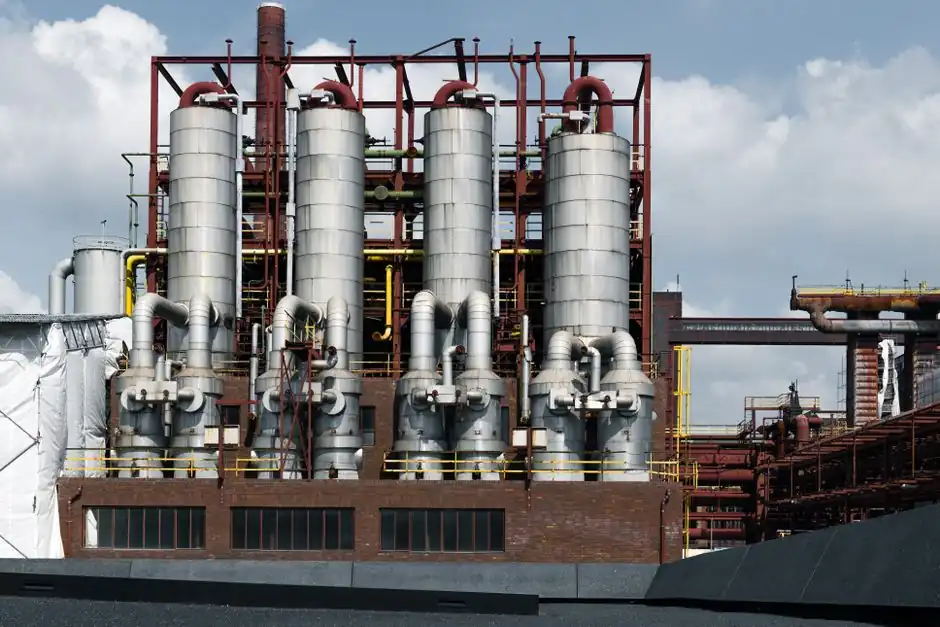
Industrial-facility openings are a different animal from tenant-fit-out doors, and the specifier who treats them the same ends up replacing closers on year three. The controlling discipline is the same family of standards that governs any commercial door: ANSI/BHMA A156 in North America and the EN 1935 / EN 1906 / EN 1154 / EN 179 / EN 1125 cluster in Europe, each of which assigns a tested grade to hinges, locksets, door closers, and exit devices [S3]. Industrial conditions simply add overlays: corrosion class, abuse rating, electrified access control, and fire/smoke separation, all of which have to be written into the same line of the hardware schedule.
For a purchasing engineer the practical starting point is not a brand list but a performance envelope per opening: duty cycle, fire rating, accessibility, security class, and the environment around the door. Once those are pinned down, the architectural hardware catalog narrows itself to a handful of qualifying products, and the rest of the decision becomes materials, finishes, and integration with low-voltage systems rather than a beauty contest.
Performance grades and the standards that actually decide the spec
ANSI/BHMA A156 publishes separate standard numbers for each product family, and each one is graded on a 1-2-3 scale, with Grade 1 the heaviest commercial / institutional duty and Grade 3 the residential baseline [S3]. Specifying a closer for an industrial warehouse man door, for example, typically means calling out A156.4 Grade 1 with a tested minimum of 1,000,000 cycles, while the same product on an office interior can drop to Grade 2 at 500,000 cycles.
On the European side, hinges sit under EN 1935, locksets under EN 1906, controlled door closers under EN 1154, and emergency / panic exit devices under EN 179 (lever-operated) and EN 1125 (horizontal-bar panic), each with a multi-digit classification that breaks out category of use, durability, door mass, fire/smoke resistance, and security [S3]. For an industrial specifier working a transatlantic project, the cleanest move is to write the EN number and the ANSI grade in parallel on the same schedule line, so the fabricator is not guessing which test report to pull.
Fire-rated openings add a second layer. The USC HSC guide specification (Division 08 71 02) ties door hardware directly to UL 10C / NFPA 252 positive-pressure fire tests and to the intumescent seals that ship with the door assembly rather than with the hardware set [S1]. If a hardware substitution breaks the labeled assembly, the AHJ can reject the opening on inspection day, regardless of how the individual lockset tested in isolation.
Material, finish, and corrosion class for plant environments
Industrial sites throw chemicals, salt spray, wash-down, and forklift abuse at door assemblies that an office spec never has to defend against. The common move is to default to stainless steel (typically 304 for dry interior and 316 for wash-down or coastal exposure), with brass reserved for low-cycle decorative openings and anodized aluminum for storefront and interior partition doors [S2][S4]. For hinges on exterior or process-area doors, specifying a 304 / 316 base metal and a US32D (satin stainless) or equivalent EN 1670 Grade 4 finish typically extends service life past a 25-year building life without a re-finish.
Finish codes are not interchangeable across the Atlantic. ANSI/BHMA A156.18 defines US3, US4, US10, US26, US26D, US32, US32D, and the rest of the US-family finishes, while EN 1670 grades corrosion resistance from 0 (no requirement) up to Grade 4 (very high) [S3]. On a chemical-plant or wastewater door, EN 1670 Grade 4 is the practical floor; below that, the plating fails in months under hydrogen sulfide or chlorinated humidity.
Fasteners and through-bolts on industrial doors belong on the same corrosion schedule as the visible hardware. Stainless self-tapping or machine screws, not zinc-plated carbon steel, are the default once the opening is outside a conditioned corridor, and the specifier who bundles the fasteners under the hardware line item (rather than letting Division 06 swallow them) avoids the field condition where a Grade 1 closer is held on by mild-steel screws that have rusted to dust.
Door cycles, door mass, and the closer selection math
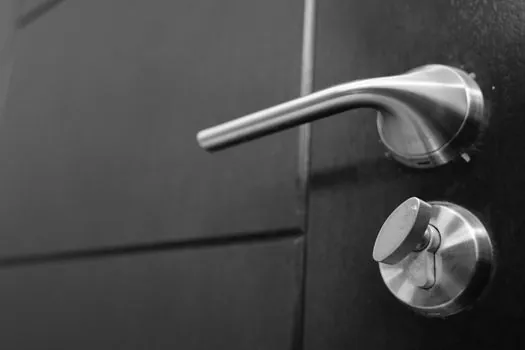
A controlled door closer is not a generic part number. EN 1154 grades closers on a 1-7 power size, where size 1 covers a 750 mm door leaf and size 7 covers a 1600 mm leaf, and pairs that with a Category of Use from Grade 3 (light) to Grade 8 (very heavy, 500,000 test cycles) [S3]. A 1200 mm exterior steel door on a loading dock that sees 200+ cycles a day from pallet traffic needs a size 5 minimum and a Grade 8 durability figure; sizing down to a size 3 closer to save $80 is the textbook path to a closer that has stripped its pinion by month 18.
Spring hinges (ANSI/BHMA A156.17) and continuous geared hinges (A156.26) carry their own grade language, and on high-abuse industrial doors the continuous geared hinge is often the better buy despite higher unit cost, because it spreads the load across the full frame height and removes the bottom-hinge sag that triggers door-edge and seal damage. For a broader look at how those engineering trade-offs show up in adjacent building-component specs, the Spec-First Selection Map for Commercial Building Flooring walks a parallel duty-cycle-first methodology for floor finishes, and the same logic applies here.
One non-obvious point: ANSI/BHMA closer grades are tested on a complete door-and-frame assembly, not on a bench. A closer that meets A156.4 Grade 1 on a 1-3/4 in solid-core wood door may not pass the same test on a 2 in hollow-metal insulated door with a wire-glass lite, because the door mass and the wind load on the lite both change the closer's effective duty. Specifiers who want a defensible number should ask for the OEM's test report at the actual door mass and width of the scheduled opening, not the brochure cycle count.
Electrified hardware and access-control integration on industrial doors
Industrial sites layer access control, intrusion detection, and fire-alarm release on top of the mechanical opening, and the hardware schedule has to accommodate that without duplicating line items. The USC guide spec explicitly calls out electrified door hardware, including electric locking and release hardware, low-voltage power supplies, and wall- or floor-mounted electromagnetic hold-opens, and cross-references Division 26 for wiring and Division 28 for the access-control and intrusion-detection devices [S1].
The integration rule is that the electrified lock or strike must fail in the direction the life-safety code requires, and the hardware schedule is where that fact has to be written down. A mag-hold on a stairwell door has to drop power on the fire-alarm signal; an electrified mortise lock on a server room has to release on legitimate REX but stay locked on fire alarm if the room is a smoke compartment. Those are not options to negotiate in the field; they belong in the Division 08 71 00 spec on day one.
Voltage drop is the field failure mode that catches most first-time industrial specifiers. A 24 VDC electrified exit device on a long wire run from the head-end power supply can sit at 18 V at the device and refuse to release under load, and the solution is either a regulated 24 V supply at the door or a 12 V device with a local battery-backed supply. Whichever is chosen, the wire gauge, the VA rating of the supply, and the device current draw all need to be on the same sheet of the hardware set, not buried in the access-control submittal.
Who industrial architectural hardware is for, and who it is not for
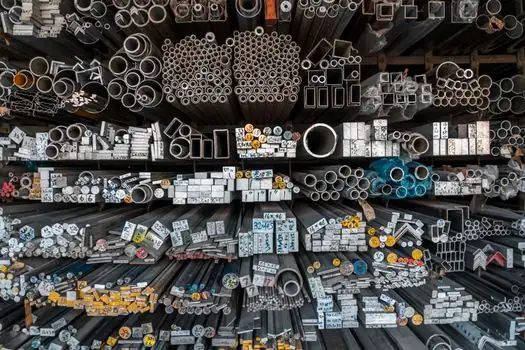
This spec-first approach is for the purchasing engineer, facilities engineer, or general-contractor hardware scheduler who is building a Division 08 71 00 schedule for a manufacturing plant, warehouse, water-treatment facility, refinery, logistics terminal, or other industrial building. It also applies to commercial buildings where individual openings are industrial in nature: loading docks, generator rooms, chemical storage rooms, clean rooms, and similar. The audience that should not be using this approach is the homeowner or interior designer picking residential builders hardware for a single-family remodel, where the right spec is closer to a decorative US15 or US10B finish on a Grade 3 cylindrical lockset and a closer is rarely required. [S3]
It is also not the right playbook for high-security or blast-rated openings in defense or government work, where the spec is driven by UFC 4-010-01, DOD minimum antiterrorism standards, and forced-entry-rated assemblies, none of which sit inside the ANSI/BHMA A156 envelope. For those, the specifier pulls a different document set and tests to a different family of standards, and the architectural hardware set is only one piece of a much larger protective design.
For buyers who do sit in the industrial-facility lane, the practical signal to watch is the revision status of ANSI/BHMA A156 standards and the parallel EN 1935 / EN 1906 / EN 1154 / EN 179 / EN 1125 family, plus any code-cycle updates to NFPA 80 (fire doors) and NFPA 101 (life safety) that change the rating, signage, or release rules on industrial openings. A new edition of NFPA 80 in the past 24 months would be the kind of trigger that forces a re-spec across the whole facility hardware schedule.
Trackable next nodes: the 2026 revision of the USC HSC guide specification (Division 08 71 02) and the CSI MasterFormat 2026 update of Division 08 and the adjacent Division 10 specialties that govern specialty hardware, both of which will shift section numbering that distributors and specifiers cite on submittals. Engineers writing the next round of industrial hardware sets should also confirm the current edition of ANSI/BHMA A156.4 (door closers) and A156.36 (auxiliary hardware) before locking a quote, since finish and grade references drift every 3-5 years.
Spec-level background on the components involved: building pipe hardware, and industrial adhesive.