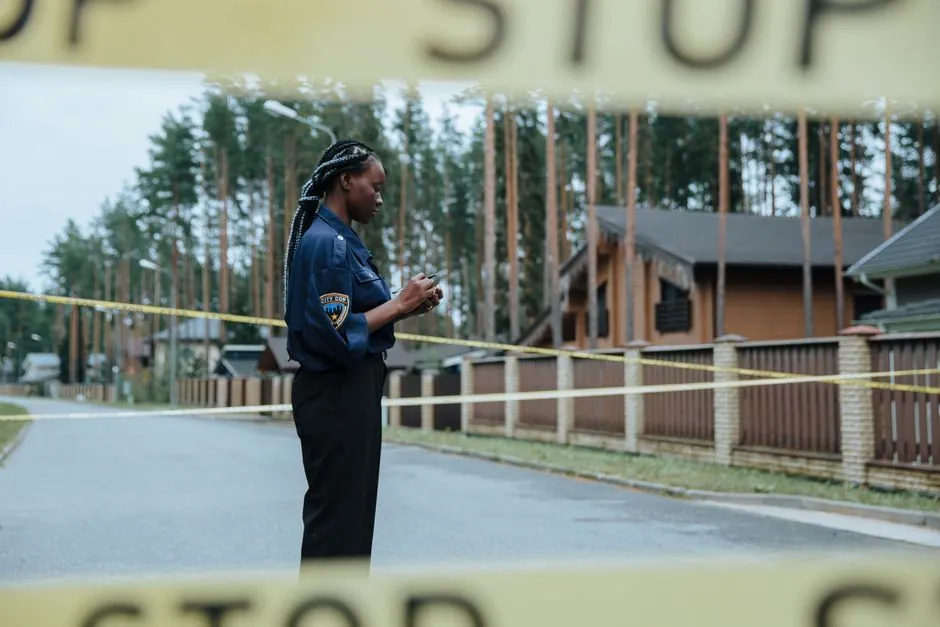
Underground warning tape sits 12 in (30 cm) above the protected utility, with detectable variants rated for 10-36 in surface detection depending on width [S4][S2]. The 2024 CGA DIRT Report logged 196,977 utility damages, with water and sewer work accounting for 24% of incidents, the strongest single argument for following APWA color codes and burial-depth rules on every open-trench install [S2].
Surface warning tape is a different product family: striped polyethylene-coated cloth (63-mesh) on a rubber adhesive, sold in 2 in widths and roll or case pack, with yellow-black as the default hazard stripe and red-white, red-yellow, black-white, and green-white as alternates [S3]. For work at height and roof-edge zones, a separate spec-driven tape selection map covers edge-marking, retroreflective, and glow-in-the-dark variants.
Underground tape: detectable vs. non-detectable construction
Non-detectable underground tape is 100% low-density polyethylene (LDPE) film at a nominal 4 mil overall thickness, acid- and alkali-resistant, lead-free, and intended purely as a visual cue when an excavator uncovers it [S2]. Detectable tape adds a 4.5 mil solid aluminum foil core fully encased in printed polyethylene; the foil is visible from both sides and creates a reflective surface that a non-ferrous metal locator can pick up from grade, no digging required [S2].
Construction dictates the field role. Non-detectable tape only works once the trench is open and a worker sees the stripe; detectable tape supports pre-excavation sweeps and is the right pick whenever the installer needs locate-ability from the surface [S2]. A wider foil core produces a stronger electromagnetic return, which is why detection range scales with width rather than thickness: 2 in detectable tape reads at roughly 10-14 in, while 6 in detectable tape is rated for 24-36 in [S2].
Burial depth and overlap: the numbers that drive a compliant install
The Damage Prevention Solutions install guide recommends burying warning or marking tape 12 in (30 cm) or less below grade, with the minimum distance from the top of the pipeline at 12 in (30 cm), extending to a 24 in (60 cm)-36 in (90 cm) band for deeper services [S4]. Each run must be overlapped a minimum of 20 ft (6 m) or physically joined, so continuous coverage is preserved at pipe couplings, fittings, and trench transitions [S4].
Detection depth has to be matched to placement, not to maximum bury. A 2 in detectable tape is only rated to 14 in [S2]; if the spec forces 30 in of cover, the locator will miss it. The most common field error is using a narrow detectable roll on a deep utility, then wondering why the pre-dig sweep comes up clean. For pipe at 24-36 in, specify 6 in detectable tape and bury it inside the 24-36 in window, not deeper [S2][S4].
APWA color code: matching the tape to the utility below

APWA color coding is the U.S. convention that makes the stripe meaningful at the moment of excavation. The published mapping pairs red with electric power, yellow with gas-oil-steam, orange with communication/CATV, blue with potable water, green with sewer, and purple with reclaimed water [S2][S1]. Using the wrong color on a multi-utility site is a common documentation failure and slows the call-before-you-dig response when crews see tape but cannot read the line class from the print legend.
Buyers specifying rolls for a contractor yard should stock the full APWA set rather than ordering one generic yellow roll. Trident Products' utility-marking line and similar catalogs split the SKUs by color and by print legend (e.g., "CAUTION: BURIED ELECTRIC LINE BELOW") so that field crews can match a stripe to the as-built without cross-referencing a chart [S5]. Detectable rolls in 6 in width are commonly stocked in the same six colors; 2 in detectable rolls are widely available but limited to the shallower 10-14 in detection band [S2].
Surface hazard tape: 63-mesh cloth, 2 in stock, five stripe patterns
Standard hazard warning tape is a 63-mesh polyethylene-coated cloth with rubber adhesive, sold in 2 in widths on rolls or cases, and striped yellow-black by default [S3]. The same construction ships in black-white, red-yellow, green-white, red-white, and black-yellow stripe patterns, which lets a facility mark restricted zones, hygiene boundaries, and traffic separation without a custom print run [S3].
Stripe color follows convention, not regulation: yellow-black reads as physical hazard, red-white or red-yellow as prohibition or fire-related danger, green-white as safety/first-aid, black-white as housekeeping or traffic, and a red block with white "DANGER" or "CAUTION" text as the barricade-tape variant for cordoning off a room or pit [S3]. Barricade tape is non-adhesive and acts as a physical barrier, not a surface mark, and is the right pick when the goal is keeping people out, not steering them along a path [S3].
Anti-slip, reflective, and glow-in-the-dark variants
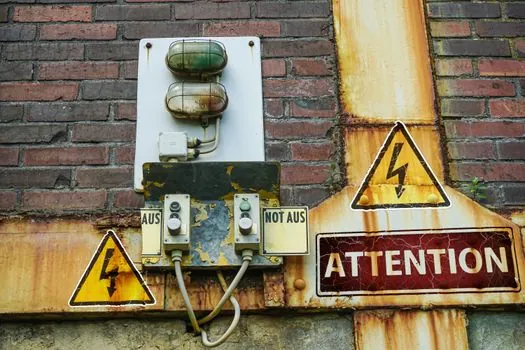
Anti-slip tape carries a textured mineral or abrasive top layer; commercial SKUs ship in 1, 2, and 4 in widths up to 24 in, plus 6 in x 24 in cleats, in yellow, red, orange, and a long list of subtler colors [S3]. Reflective tape adds a retroreflective layer for low-light aisles, loading-dock edges, and vehicle bumpers, and is the right pick wherever a headlight or forklift light needs to bounce back to the operator. Glow-in-the-dark tape is photoluminescent polyester with an acrylic adhesive, fluoresces bright green after light exposure, and stays visible 6-24 hours in a power failure to meet emergency-egress standards [S3].
A facility that runs three shifts should stock all three, not just one. Anti-slip tape goes on ramps and stair nosings, reflective tape on the same edges plus forklift aisles, and glow tape on the egress path so the route is visible when the lights go out. Trying to substitute one product for all three roles is the most common shortlist mistake; the materials do different things and the failure modes are different (slip, missed-curve strike, egress confusion).
Selection shortlist: matching tape variant to duty
For open-trench utility work below 14 in of cover, pick 2 in non-detectable LDPE tape in the APWA color matching the line, and bury it 12 in above the pipe with 20 ft overlaps at joints [S2][S4]. For deeper bores (24-36 in) or HDD installs, step up to 6 in detectable tape with the foil core, confirm the 24-36 in detection rating, and run it continuous with the same 20 ft overlap rule [S2][S4]. For facility floor marking, specify 2 in 63-mesh striped cloth on rubber adhesive in the stripe color that matches the hazard class [S3].
Floor safety benefits from a layered approach: anti-slip tape on the slip-risk surface, reflective tape on the same edge for forklift visibility, and photoluminescent egress tape along the exit path [S3]. Where utility marking crosses into broader site safety, a warning sign buying guide 2026 covers the post-and-panel layer that points crews to the buried-line marker in the first place. The spec to lock in writing, before the order goes in, is the tape type (detectable/non-detectable), the APWA color, the width-driven detection depth, the 12 in / 30 cm burial offset, and the 20 ft overlap rule [S2][S4].
Detailed specification references: warning tape, linear guide, and warning sign.