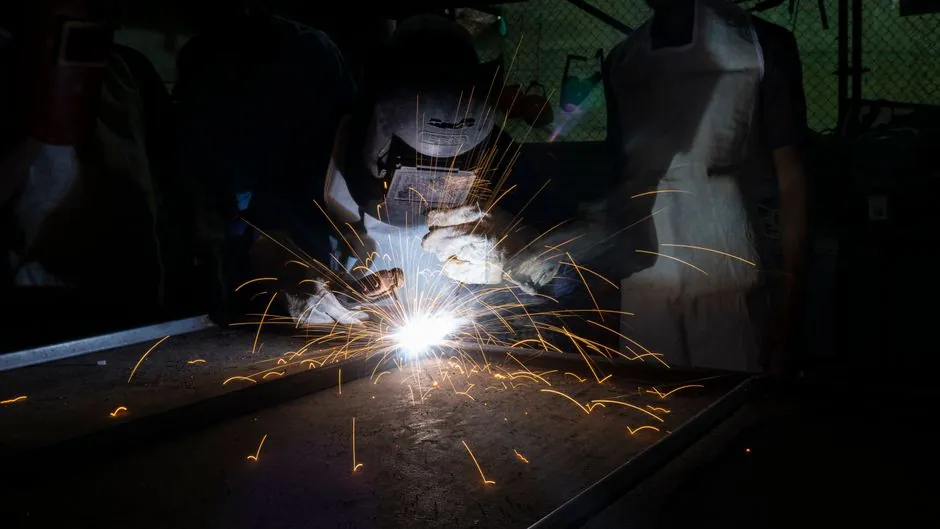
For arc welding, oxy-fuel cutting, and grinding offcuts, an FFP2 disposable respirator (EN 149:2001 +A1:2009) is the minimum specified particulate filter; FFP3 is required where stainless or hard-facing welding generates hexavalent chromium or nickel fumes above the workplace exposure limit [S3].
A standard disposable dust mask is built as a three-layer nonwoven laminate (outer spunbond polypropylene, middle meltblown electret, inner spunbond) and is sized to the wearer's face; performance classes (FFP1/FFP2/FFP3) are defined by the EN 149 sodium-chloride and paraffin-oil penetration test, not by layer count [S3].
FFP1 vs FFP2 vs FFP3: particulate filtration thresholds
EN 149:2001 +A1:2009 sets the filtration bands used across all EU-spec welding dust masks: FFP1 filters at least 80% of airborne particles, FFP2 at least 94%, and FFP3 at least 99% when challenged with a 0.1-0.3 micron aerosol at 95 L/min [S3]. For most GMAW/FCAW mild-steel welding, FFP2 covers the 4-10 mg/m³ total fume range; FFP3 is the right gate the moment stainless, hard-facing, or coated-electrode work enters the bay.
Welding fume is not simple nuisance dust: it is a metal-oxide aerosol with ultrafine fraction below 0.1 micron, and OSHA's permissible exposure limit for manganese (an Fume Component from mild-steel consumables) sits at 5 mg/m³ ceiling, which is why a sealed FFP2/FFP3 with adjustable nosepiece is mandatory, not a surgical-style dust mask [S3].
Disposable half-mask vs elastomeric half-mask vs powered air (PAPR)
Reusable elastomeric half-masks accept EN 143 P1/P2/P3 bayonet cartridges and are the cost-correct choice for fabrication shops running 4-8 hr/day of weld time; a P3 particulate filter gives the same 99% filtration band as FFP3 but in a serviceable package [S3]. Powered air-purifying respirators (PAPR) with TH2/TH3 hoods (EN 12941) are the right spec for confined-space welding (tank interiors, ship double-bottom) where the assigned protection factor of 25-500 removes the fit-test sensitivity that drags down negative-pressure half-masks.
For routine structural welding in open bays, an FFP2 disposable plus an auto-darkening welding helmet that meets EN ISO 16321 (the successor to EN 169/EN 175) is the standard pairing; the helmet shade range 9-13 covers most MIG/MMA amperages from 60-350 A.
Layering with the welding helmet: fit, fogging, and face-seal leakage
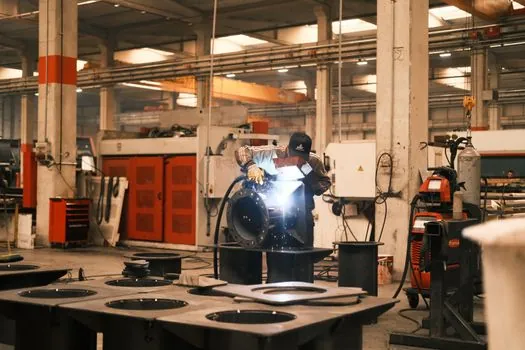
The most common failure mode is face-seal leakage at the nosepiece and chin: an FFP2 with metal-strip nosepiece, foam nose pad, and inner face seal must be donned before the welding helmet is dropped, and the nosepiece pressed to the face bridge before each arc strike. Welders who wear prescription glasses should switch to a low-profile FFP2 with side-flange foam, otherwise the temple arms break the seal and cut effective fit factor by 2-5x. [S1]
For hot, humid summer work, valve-style FFP2/FFP3 disposables cut exhalation resistance roughly in half and reduce visor fogging inside the welding helmet, but the valve defeats source control, so they must not be used in healthcare-adjacent or sterile work zones.
Activated-carbon layer: ozone and NO2 from MIG/MAG
MIG/MAG welding of aluminium and stainless produces measurable ozone and NO2 at the plume; an FFP2/FFP3 with an activated-carbon layer (commonly designated "FFP2 AC" or "FFP3 AC") adds a carbon stage to the meltblown stack to adsorb these gases up to one TLV before the carbon saturates, typically a single shift on light duty, half a shift on heavy aluminium spool-gun work [S3].
Material and construction: nonwoven, meltblown, and electret charge
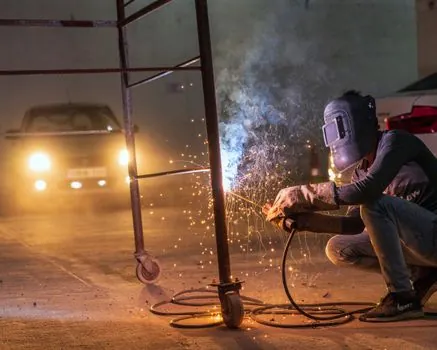
The functional layer of every FFP2/FFP3 dust mask is meltblown polypropylene, typically 20-50 g/m², charged to an electret state so it captures sub-micron particles by electrostatic attraction in addition to mechanical interception [S3]. Outer and inner layers are spunbond PP at 18-25 g/m² for splash and skin-contact comfort. Total mask mass is usually 4-8 g; higher mass does not mean higher protection, since fit factor dominates penetration in field use.
For procurement, the relevant spec lines are EN 149 class + Dolomite-clogging test (the "D" suffix, mandatory for hot/humid welding environments), latex-free straps, and adjustable nosepiece; reusable masks should additionally cite EN 140 (facepiece) plus EN 143 (P-series filters).
When a dust mask is NOT the right PPE
A single-strap nuisance dust mask is rated for non-toxic particulates up to 4x the WEL, and it is not acceptable for welding fume, hexavalent chromium, manganese, beryllium, or lead; those applications require a certified FFP2/FFP3 or an elastomeric respirator [S3]. Supplied-air (SAR) with EN 14594 Grade 2B/3A airline is the spec for stainless boiler-overlay work and any confined space with IDLH oxygen deficiency. For a related reference on plant-wide respirator programmes, see the chemical-plant dust-mask spec map for FFP class, cartridge, and fit-test gating.
For PPE selection on the welding side (gloves, screens, helmet auto-darkening shade), the welding and cutting tool reference lists the shade-by-amperage matrix and EN ISO 16321 categories that must match the respirator class above.
Selection checklist a welding supervisor can run on the shop floor
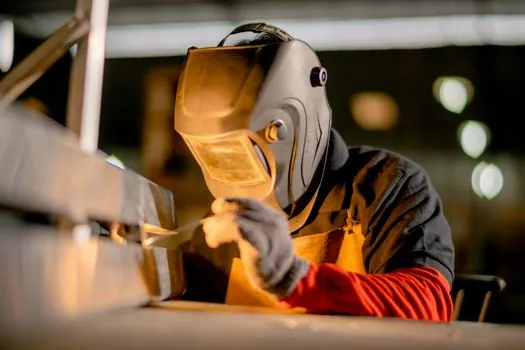
Run this five-line gate before every job: (1) base material (mild steel = FFP2; stainless / hard-facing / beryllium-copper = FFP3); (2) consumable type (low-hydrogen, stainless, or aluminium = add AC carbon layer); (3) ventilation (open bay = FFP acceptable; confined space = PAPR TH3 or SAR); (4) fit (qualitative or quantitative fit test per EN 529 / OSHA 29 CFR 1910.134, mandatory for tight-fitting negative-pressure masks); (5) compatibility with the welding helmet (nosepiece and chin seal intact under helmet shell, exhalation valve routed so plume does not fog the auto-darkening filter). [S1]
For adjacent shop-floor PPE and consumable selection outside respiratory, the firefighting face-shield spec gate reference shows the same fit-test and EN-class discipline applied to eye/face protection.
Track the next revision: EN 149 is under the CEN/TC 79 work programme and the next amendment cycle is expected to tighten the Dolomite clogging test and add a quantitative fit-factor requirement; PPE suppliers stocking 2026 batches should be asked for the current EN 149:2001 +A1:2009 DoP (Declaration of Performance) reference and the notified-body number, since unmarked "KN95" or "FFP2" stock from non-EU manufacturers is not compliant for EU welding operations.
For the relevant spec sheets and selection criteria, see dust mask, and dust detector.