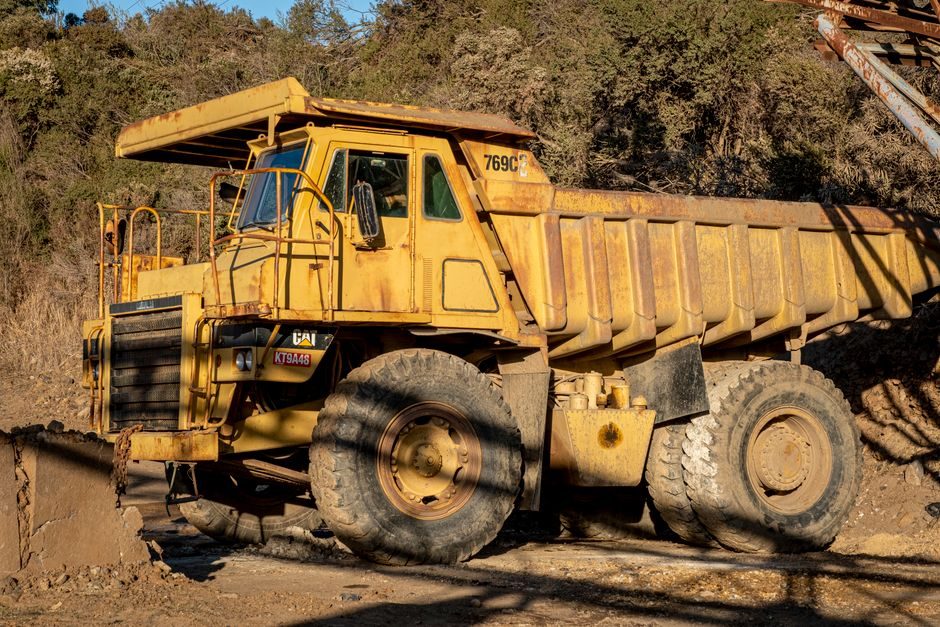
Wheel loader installation is a four-stage gate process — receiving inspection, hydraulic/electrical commissioning, attachment mating, and 50-100 hour break-in — and skipping any gate is the dominant cause of early axle and hydraulic failure on compact units [S1][S3].
On the supply side, the 2026 compact-loader market is dominated by Chinese OEMs offering 0.8-6 ton classes with 15-workday lead times and OEM/ODM support: Weihai Titan lists 3.5-4 ton hydraulic long-boom models at US$1,000-1,500/set, and a remote-diagnostic mini at US$2,499-3,999/set FOB [S3]; Wolf (Qingdao Zongjin) catalogs 2.5-ton telehandlers and wheel loaders on FOB/CFR/CIF/DDP/FCA/EXW terms, 5.0/5 rating, ≤15 workday lead time [S6]. The same wheel loader platform underpins both compact and 5-ton SEM/XCMG offerings on Chanway's catalog (SEM656D 5-ton rated, XCMG LW300K/LW500K/LW500KL) [S1].
Pre-Delivery Receiving Inspection (Gate 1)
Receiving inspection must verify four items before any hydraulic power-up: crating damage survey, oil-level cold check, tire pressure against the data plate, and a no-start electrical continuity check on the battery isolator — failure to do the cold check causes the installer to mistake factory oil fill for a leak [S1][S3].
Chinese compact-class shipments from Weihai Titan, Wolf, Katop and Chanway typically arrive in wooden crate / steel-frame packaging with the bucket, ROPS and counterweight detached [S1][S3][S6]. Document crate corner impact readings > 50g (per typical packaging indicator) and photograph all fork-lift lift points before uncrating; the lift points are usually marked on the crate per the OEM shipping drawing, and the installer should match them against the operator's manual before hoisting [S3][S6]. Confirm the data plate model code against the packing list — common codes seen on 2026 shipments include "TL60 / TL50" (Titan) and "SEM656D / LW500K" (Chanway-affiliated XCMG/SEM lines) [S1][S3].
Hydraulic and Powertrain Commissioning (Gate 2)
Hydraulic commissioning follows a fixed sequence: cold oil fill to the sight-glass midpoint, manual bleed of the tilt/ lift cylinder air, engine crank at 800 rpm for 5 minutes to reach 40 °C, then full-pressure cycle of the bucket and boom — running cold at full pressure cavitates the pump and is the leading cause of 90-day warranty claims [S3][S6].
Compact 2026 units are predominantly hydrostatic drive with electronic throttle (e.g. SEM656D "low speed engine" variant and Titan TL-series mini loaders) [S1][S3]. Verify the hydrostatic loop filter is a known part-number from the OEM parts list; aftermarket filters with lower β-ratio ratings shorten pump life. Engine oil grade for Tier 4 / Stage V export units is typically 15W-40 CK-4, with hydraulic oil ISO VG 46 for warm climates, ISO VG 32 for sub-zero sites [S3]. A 2026 Wolf 2.5-ton telehandler ships with LC/T/T/PayPal payment terms and 15-day peak-season lead time, with multilingual speaker support (French / Russian / Portuguese / Spanish / German / Italian) for after-sales coordination [S6] — a buyer-side spec-gate item for European or South American job sites.
Attachment Mating and Quick-Coupler Verification (Gate 3)
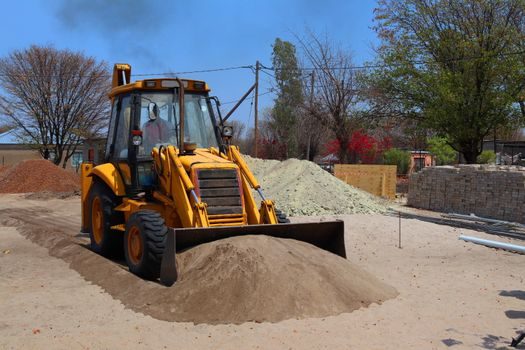
Attachment mating must verify three mechanical interlocks: pin diameter and shoulder engagement on the quick-coupler, hydraulic quick-disconnect dry-break, and electrical connector pin-out for any powered attachment — Chinese OEM quick-couplers are not cross-compatible with globalized systems such as SSL/ASV patterns unless explicitly stated [S1][S6].
Chanway's catalog lists the practical attachment set: General Purpose Bucket, Coupler GP Bucket, Coupler Hay Fork, Coupler Pallet Fork, Hay Fork, Quick Couple Arrangement, High Lift Arrangement, Light Material Bucket, Large Volume Log Gripper, Log Gripper, Reinforced Log Gripper, Pipe Gripper, Rock Bucket, Snow Plow, Pallet Fork [S1]. For skid-steer-class interchange on a small wheel loader, separately confirm the skid steer loader coupler pattern; mismatched wedge-coupler geometry jams the hydraulic lock. For backhoe loader hybrids (e.g. Chanway's Backhoe Loader XCMG WZ30-25, Wolf TL30-25/TL40-28/TL45-35/TL45-16/TL35-10 series) verify both ends of the joystick harness before backfilling the hydraulic reservoir [S1][S3].
Operator-Station and ROPS Assembly (Gate 4)
Operator-station assembly is the highest-liability installation step: ROPS bolts must be torqued to the OEM value (commonly 280-350 N·m on compact Chinese units) and the seat-belt anchor retested to 1,500 N, per the platform's ISO 3471 / ROPS compliance marking on the data plate [S1][S3].
Titan's compact track loader offering is a useful reference: it ships with "foldable ROPS for safe operation," which means two additional pins must be engaged and the fold-latch detent spring compressed correctly before the unit is released to the operator [S3]. A foldable ROPS folded during operation is a single-point catastrophic failure mode. Pair the operator-station check with the loader's serial-number photo and a 360° pre-use walkaround log — both are evidence required under most regional mobile-equipment commissioning audits, including EU stage-V CE marking documentation [S3][S6].
50-100 Hour Break-In Procedure (Gate 5)
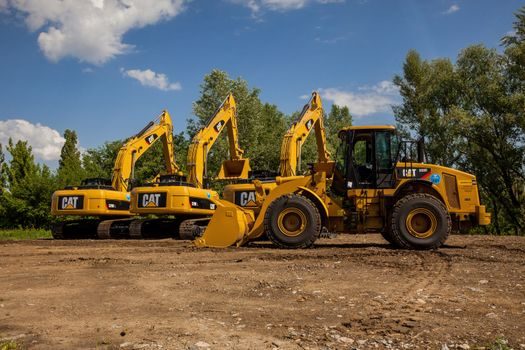
Break-in is the final gate: operate at ≤ 70% of rated load for the first 50 hours, drain and replace hydraulic oil + filter at 100 hours, and retorque wheel-nut and bucket-pin fasteners after the first 10 hours of vibration — these are the most commonly missed items, and they correlate with premature bearing and pin failures seen in the field [S3][S6].
OEM support terms in 2026 make the break-in handoff straightforward: Weihai Titan offers OEM/ODM service, sample availability, and ≤ 5.65-hour average response time, with a 5.0/5 rating; Wolf matches with overseas-agent / branch support and the same 15-day lead time [S3][S6]. For larger-class units such as the SEM656D 5-ton and XCMG LW500K, the buyer should request a 100-hour maintenance schedule PDF at the quotation stage, not after delivery — post-delivery document delays are the most common cause of missed break-in steps on 5-ton-class Chinese shipments [S1].
Cost Gate: Quotation Read-Through for Installation Planning
Installation cost planning reads three numbers off the FOB quotation: unit FOB price, attachment line items, and lead time. A 2026 mini-class wheel loader is published at US$1,000-1,500/set FOB (3.5-4 ton hydraulic long-boom), and a remote-diagnostic mini at US$2,499-3,999/set FOB; both at 1 set MOQ [S3]. Wolf lists 2.5-ton telehandler / wheel-loader variants on FOB/CFR/CIF/DDP/FCA/EXW with LC/T/T/PayPal and 15-day lead time [S6]. For higher-class planning, see the telehandler price and cost guide 2026 and the mini excavator price & cost guide 2026 for cross-platform TCO comparison.
Trackable signals worth watching over the next procurement window: (1) whether the 2026 hydrostatic mini-loader platform picks up a CAN-bus telematics standard across Titan, Wolf, Katop and Chanway lines (remote-diagnostic hardware is already in the catalog [S3], but a unified data schema is not yet visible in the published spec sheets [S1][S3][S6]); (2) whether 5-ton SEM/XCMG platforms adopt the same foldable-ROPS pattern now standard on compact track loaders [S1][S3].