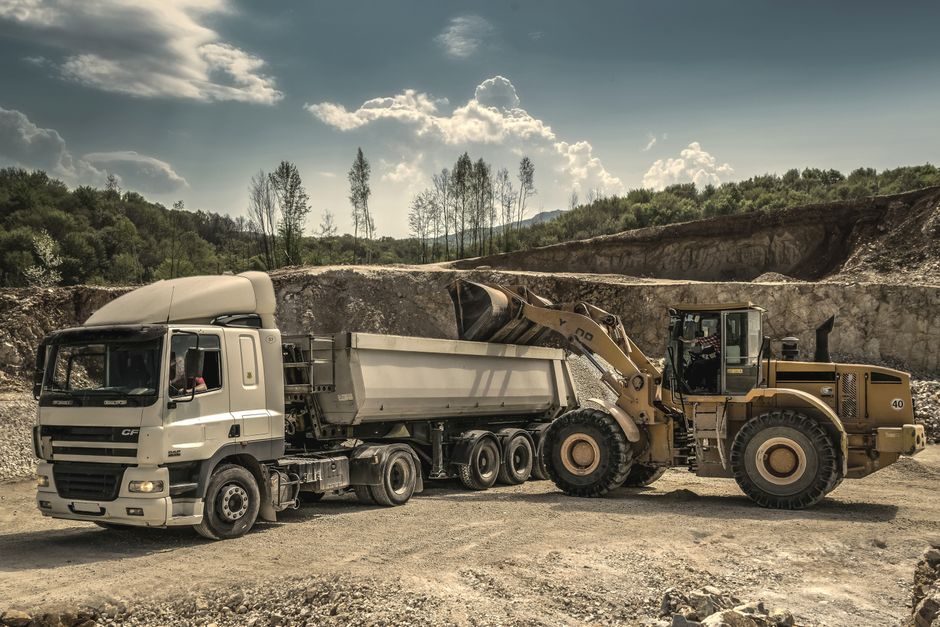
Wheel loaders deployed at drinking-water and wastewater treatment works fall overwhelmingly in the 1.0–3.0 m³ bucket / 3–5 tonne operating weight class, with Qingdao-built ZJ, Wolf and Elite series machines accounting for the bulk of municipal-tender bids in 2026 [S1][S2][S3].
For most WTP/WWTP duties — sludge cake loading, screenings transfer, sand and grit handling, lime or PAC bag palletising — buyers pair a 1.6–2.0 m³ general-purpose bucket with a quick-coupler, an optional sealed forks set, and a high-tip or 4-in-1 bucket for silo loading at 3.0–3.6 m [S1].
Operating Class vs. Plant Duty
Plant-scale sets the operating class: small WTP under 50,000 m³/day typically runs a 1.0 m³ / 3-tonne unit; mid-cap 50,000–200,000 m³/day needs 1.6–2.0 m³ / 4–5 tonne; large WWTP above 200,000 m³/day, especially with thermal-sludge trains, scales to 2.5–3.0 m³ / 6–8 tonne [S1][S2].
Wheel loaders sit one step below backhoe loaders in trenching depth but ahead of skid-steer loaders in cycle volume — a 5-tonne wheel loader cycles roughly 2.5× the payload of a 1.5-tonne skid-steer per shift, which is why municipal procurements consolidate onto wheel loaders above 50,000 m³/day throughput.
Bucket-tip height is the single most-often mis-specified number: confirm ≥3.3 m for standard 25-tonne lime or PAC silos, and ≥3.6 m for 40-tonne silos — the Qingdao Elite ZL30-class machine quotes 3.0–3.6 m hinge-pin height depending on boom configuration [S2].
Bucket, Tyre and Attachment Stack for Sludge and Chemical Yards
Standard GP bucket: 1.6–2.0 m³, Q345 or NM400 cutting edge, 1100–1500 mm width — handles screenings, grit and dewatered cake at 22–28% DS [S1].
High-tip / 4-in-1 bucket: +600–800 mm dump clearance, mandatory for ≥25 t silo loading; Wolf-series and ZJ-series both offer factory-fitted 4-in-1 options in the 3-tonne and 5-tonne classes [S1][S3].
Sealed forks, sweeper, and snow/chemical blades are common yard attachments; for potable-water sites opt for food-grade hydraulic oil and epoxy-coated hydraulic lines — most Qingdao OEMs will substitute on PO for an extra 2–4% on unit price [S2].
Tyre choice is decisive on wet cake: L-3 (rock) cuts fast on screenings; L-5 (deep-tread) is the de facto WWTP default; foam-filled or solid tyres are required for any operation over an open clarifier or filter deck — a 23.5-25 L-5 set typically lands at 8–12% of machine FOB price [S1][S3].
Power, Emission and Engine Tier Match
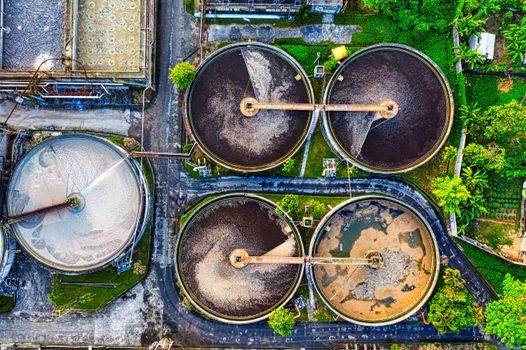
Yuchai, Weichai and Cummins engines dominate the 3–5 tonne class, with 92–162 kW gross power across ZL16, ZL30, ZL50 size codes [S1][S2][S3].
For projects funded by World Bank, ADB or EU institutions, China Stage IV / EU Stage V emission compliance is non-negotiable — verify the engine plate and the DOC+DPF+SCR stack, not just the marketing sheet, as Qingdao mid-tier builders sometimes ship Stage IIIa units unless contractually bound to higher tiers [S1].
For water-treatment plants in coal- or heavy-oil-dependent regions where Stage IV fuel (ULSD <10 ppm S) is unreliable, Stage IIIa mechanically-governed engines remain a defensible choice — the trade is higher fuel consumption and a shorter DPF service interval that you will never have to schedule.
Drivetrain, Hydraulics and Service Footprint
ZF or Hangchi powershift transmissions with 4 forward / 2 reverse are standard across the 3–5 tonne class; full-powershift adds roughly 6–8% to FOB and is worth the spend for any machine averaging >1,500 h/yr in continuous WWTP operation [S1][S2].
Loader-arm pin geometry, not just bucket size, drives cycle time: 90° articulation with a 5.2–5.8 m lift-arm pivot height on ZL30-class machines gives a 9.5–10.5 s full-cycle, which is the field benchmark for screening-compost and cake-bay work [S3].
Service footprint matters at WTP sites where mechanics have light-vehicle, not heavy-equipment, tooling: look for ground-level service points, swing-out coolers, and centralised lube banks. A 3-tonne machine with proper ground-level daily-check access is what actually gets greased; the same unit without it runs dry within 500 h.
Comparison: 1.6 m³ vs 2.0 m³ vs 3.0 m³ Wheel Loader at the WTP Gate
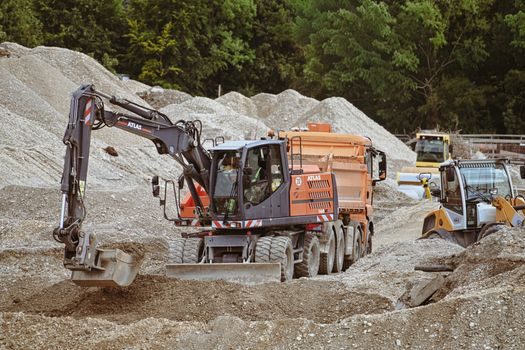
Three classes dominate municipal procurement; the decision sits on plant throughput, peak-day cake volume and yard footprint rather than on engine kW alone [S1][S2][S3].
1.6 m³ / 3-tonne (e.g. ZL16-class): best for small WTP and remote pump-station sites, ≤50,000 m³/day, single operator, low capital outlay, easy to ship in a 20 ft OT container.
2.0 m³ / 5-tonne (e.g. ZL30/Wolf-class): the de facto mid-cap workhorse, handles 50,000–200,000 m³/day WTP plus the screenings and grit bays, takes a 4-in-1 bucket and forks, fits a 40 ft FR container for export.
3.0 m³ / 6–8-tonne (e.g. ZL50-class): only justified at large WWTP >200,000 m³/day with thermal-sludge trains or where 30-tonne silo loading is daily routine; higher tyre and fuel cost, needs a full-time operator, harder to mobilise in a containerised tender.
Source Levers, Lead Time and FOB Bands
Direct-from-OEM (Qingdao Zongjin, Qingdao Elite, the ZJ-brand cluster) FOB Qingdao bands for 2026 cluster at USD 11,000–14,500 for 1-tonne mini loaders, USD 16,500–22,000 for 1.6 m³ / 3-tonne, and USD 28,000–42,000 for 2.0 m³ / 5-tonne, with Stage IV and full-powershift options adding 8–15% [S1][S2][S3].
Lead time from PO to Qingdao port is typically 25–35 working days for stocked 3–5 tonne classes; customised colour, hydraulics or emission spec extends to 45–60 days; full container load (FCL) is mandatory for the larger classes to avoid ro-ro differential [S1].
Useful parallel reads for water-treatment procurement teams: How to Choose a Wheel Loader: Class, Power, Bucket and Sourcing Levers and Rough Terrain Forklift Sizing and Selection: Capacity Bands, Drive Layout cover the same factory-tier logic for adjacent yard equipment.
Limitations and Failure Modes at the Plant
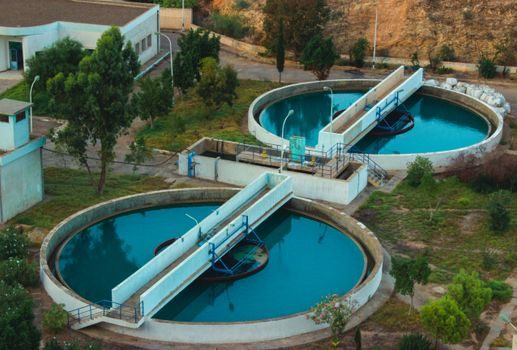
Wheel loaders fail at WTP/WWTP in three predictable ways: hydraulic contamination from polymer residue, brake fade on chemical-yard ramps, and structural cracking at the articulation joint on units running 4,000+ h/yr without a hitch-and-pivot audit [S1][S2].
Polymer and PAC dust ingress into the hydraulic tank is the single most-cited failure at WWTP sites; specifying a sealed-tank breather and an extra 10 µm return-line filter at PO saves roughly 30% of mid-life hydraulic component cost [S1].
Buyers without a Class 1 forklift licence-equivalent operator should not specify a 5-tonne machine for routine 1-tonne cake-bay work — operator fit is a procurement variable, not a training afterthought, and the 2-tonne class is the realistic ceiling for non-dedicated operators.
For specs of the loader class itself, the wheel loader reference page lists the standard operating-weight and bucket ranges the figures above are anchored to.
Track, going forward, two signals: the spread between Stage IIIa and Stage IV quote sheets from the same Qingdao supplier (a 4–6% gap is healthy, 12%+ suggests the Stage IV unit is being marked up via a third-party DOC/DPF kit), and whether the OEM will issue a written 2,000-hour or 18-month powertrain warranty naming the engine and transmission serial — anything shorter is a flag for spec down on the next plant.