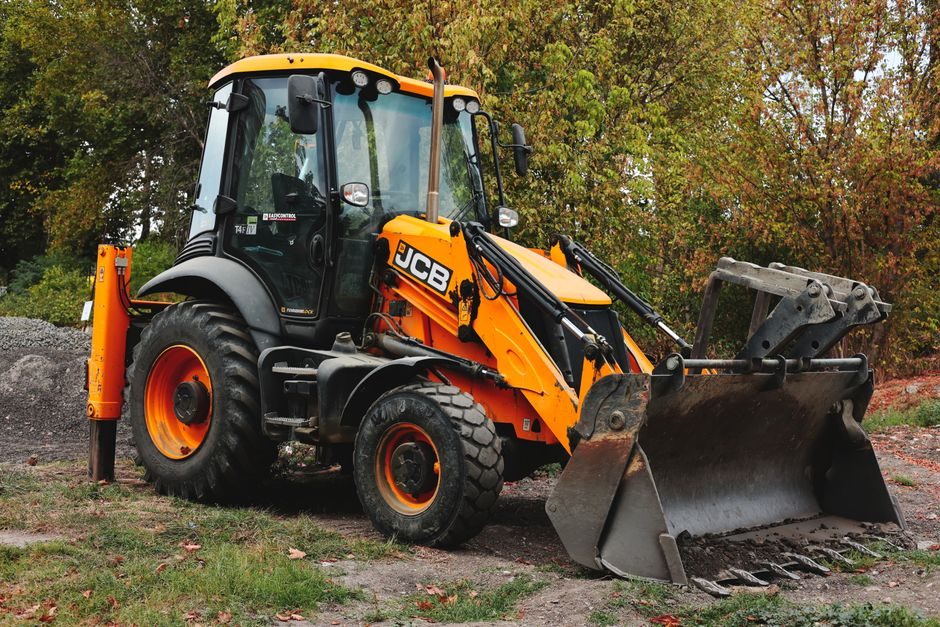
Wheel loaders are matched to job sites by operating weight, engine power, bucket capacity and auxiliary-hydraulic flow; the wrong combination shows up fast as poor rimpull, slow cycle times and excess fuel burn.
For 2026 sourcing, the active wholesale band on Made-in-China runs roughly US$4,070-4,970 per unit for compact 1-6 ton class machines from audited suppliers [S1], while 5-ton class SDLG 956 / LG956 / Cat-equivalent 936L and 950 units dominate the second-hand and OEM-rebadge channels [S2]. Bucket-teeth and front-loader wear parts are stocked in dedicated SKUs such as the CCMG LW520C front-loader family from Liaoning OEMs [S3].
Operating Weight and Engine Power Bands
Compact wheel loaders below 3 metric tons (1-2.5 ton class) are typically driven by 30-75 kW diesel engines, with 0.5-1.5 m³ general-purpose buckets; CE-certified compact units in this class are listed with customisable attachments and EPA / CE diesel options across multiple Chinese OEM catalogues [S6]. The mid-size 5-ton class — the SDLG 956 / LG956 / Cat 950 / Cat 936L cluster — runs roughly 160-200 kW with 2.3-3.5 m³ buckets, and is the workhorse band for quarry, aggregate and bulk-earthmoving fleets [S2]. Above that, large mining-class loaders cross 250 kW with bucket volumes above 4 m³, but those tend to be procured on tender rather than wholesale channels.
Rule of thumb: bucket capacity in m³ is roughly equal to operating weight in tons divided by 3 for general-purpose configuration — a 5-ton machine carrying 1.5-1.8 m³ is underspec'd, while 3.0-3.5 m³ is the productive sweet spot. Engine power density should sit between 25 and 35 kW per ton of operating weight for a wheeled loader; below 20 kW/t the machine bogs in stockpile, above 40 kW/t you are paying for power you cannot put on the ground.
Drivetrain, Hydraulics and Attachment Couplers
Two decision points decide 70% of long-term satisfaction: the transmission type and the auxiliary hydraulic flow. Fixed-displacement gear pumps with mechanical control are standard on entry-level Chinese compact loaders and deliver 40-60 L/min at 16-20 MPa; load-sensing piston pumps (60-120 L/min, 20-22 MPa) appear on mid-size and large machines and are required to run high-flow attachments like 4-in-1 buckets, sweepers and snow blowers [S4]. The EOUGEM mini-loader line, with 19 years of production experience in the small-loader segment, ships a quick-coupler interface that accepts pallet forks, augers, grapples and snow blades off the same skid-steer-class plate [S4].
If your job mix is more than 30% non-bucket work (forks, broom, breaker, auger), spec load-sensing hydraulics up front; rebuilding a fixed-displacement machine to support attachments later costs more than the original price delta. Quick-coupler standardisation (ISO 24410 / Skid-Steer Universal) lets one fleet share attachments across compact track loaders, skid-steer loaders and mini wheel loaders — a useful hedge when the job mix shifts between sites.
New vs Used: Total Cost of Ownership Levers
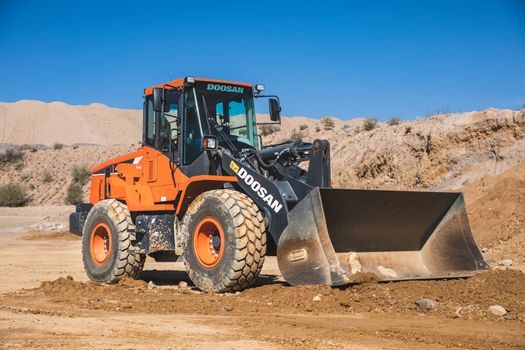
New Chinese compact loaders in the 1-6 ton band sit at US$4,070-4,970 wholesale FOB for an MOQ of one piece from Diamond / Audited suppliers on Made-in-China [S1]; a comparable 5-ton class new unit from a Tier-1 OEM typically lands two to four times higher once CE / EPA documentation, warranty and dealer prep are added [S6]. The used-equipment channel skews heavily toward 5-ton Cat-class machines: SDLG 956F, Cat 936L, Cat 950, Cat 966, sold at 90%-new condition by Liaoning and Shandong brokers [S2].
Total-cost math: a used 5-ton machine at 60-70% of new price saves roughly 30-40% on acquisition but typically carries 4,000-8,000 engine hours; budget US$8,000-15,000 for an engine / transmission refurb within the first 12 months. Below 3,000 hours the used unit is competitive with new on a per-hour basis; above 8,000 hours the rebuild cost erases the discount. For a buyer running under 1,200 hours per year, a well-maintained used 5-ton SDLG / Cat-class loader generally beats new on payback by year two.
Standards, Certification and Cross-Border Sourcing
CE marking under the Machinery Directive is the baseline requirement for any loader entering the EU; EPA Tier 4 Final / EU Stage V is the emissions tier most Chinese compact-loader SKUs advertise in their product descriptions [S6]. For buyers shipping into North America, confirm both EPA and California CARB documentation at the SKU level — Tier 4 Final and Stage V are not interchangeable. ROPS / FOPS cab certification (ISO 12117 for ROPS, ISO 3449 for FOPS) is mandatory on any machine offered to commercial operators; reject any quote that does not list them explicitly.
Wholesale platforms list manufacturers in two tiers: Diamond / Audited suppliers (third-party verified, generally lower risk) and unverified listings. For fleet orders above 10 units, require an on-site audit or third-party pre-shipment inspection — the price gap between the two tiers is rarely above 8% and the failure-rate delta is significant. The wire-cut cable drag chain cost-banding exercise from 2026 is a useful parallel: the same handful of levers (steel index, certification overhead, MOQ) drives 70-80% of price variance across Chinese industrial sourcing channels.
Size Class Comparison: Compact vs Mid-Size vs Large
The comparison below lines up the three useful procurement classes against four decision criteria, distilled from the wholesale and used-channel data referenced above: [S1]
Compact (1-3 ton): operating weight 1,500-3,500 kg, engine 30-75 kW, bucket 0.5-1.5 m³, typical job = landscaping, small aggregate yards, farm feed handling. Wholesale price band US$4,070-4,970 for entry-level units [S1]; CE / EPA / Stage V documentation commonly available [S6]. Weak on rimpull and stockpile work; excels in confined yards where a wheel loader under 2.5 m³ bucket capacity is needed.
Mid-size (5-7 ton): operating weight 14,000-18,000 kg, engine 160-200 kW, bucket 2.3-3.5 m³, typical job = aggregate stockpile, quarry face, bulk earthworks. New OEM pricing typically 2-4x the compact band; used SDLG 956 / Cat 950 / Cat 936L units dominate the second-hand channel [S2]. The productive sweet spot for most contractor fleets; the bucket capacity to operating weight ratio here is also the default benchmark for backhoe-loader cross-comparison when a single machine must dig and load.
Large (10-30 ton): operating weight 25,000-50,000+ kg, engine 250-1,000 kW, bucket 4-12 m³, typical job = mining, port bulk, large quarry. Sold via tender rather than wholesale; rarely stocked on Made-in-China / Okorder platforms. Required for high-cycle, high-tonnage operations; over-spec'd for any site below 100,000 tonnes per year of moved material.
Selection Checklist and Failure Modes
A short spec-side checklist that survives most fleet reviews: confirm operating weight in kg (not just "ton class"), engine kW and emissions tier, bucket m³, max breakout force in kN, full-turn tipping load in kg, auxiliary hydraulic flow in L/min and pressure in MPa, ROPS / FOPS certification, quick-coupler standard, and a documented service interval table [S3][S4][S6]. Two failure modes to design out: (1) under-spec'd auxiliary hydraulics on a machine that will later run high-flow attachments, and (2) the wrong emissions tier for the destination market — Stage V machines cannot be field-upgraded to EPA Tier 4 Final and vice versa.
Trackable signals over the next procurement cycle: the wholesale price band on the 1-3 ton compact class [S1], the mix of CE / EPA listings on [S6], and the 5-ton used-equipment availability on the SDLG / Cat-rebadge channel [S2]. The export-volume backdrop from the China machine-tool export data flows in roughly the same direction as construction-machinery wholesale: when Chinese heavy-industrial exports hold share, Chinese compact-loader wholesale pricing stays competitive against both Korean and Japanese competitors.