
New factories are coming, but some of their capacity will not be online until 2028 [S4].
The practical wait for broad lead-time relief is therefore roughly 3 years, with an earlier benefit possible only where completed additions align with less demanding specifications.
Capacity may arrive by 2028, but relief will be phased
Against that construction window, the reported plan for some new capacity to be online by 2028 sets an approximate 2025–2028 build-to-production interval rather than a single guaranteed easing date [S4].
Manufacturing capacity does not translate directly into available delivery slots. Power transformers are custom-engineered, individually tested and certified, so a new line must also pass through production ramp-up, customer qualification, working-capital constraints and loading of critical components [S3].
Current procurement windows remain measured in years
Average power-transformer lead times reached 128 weeks in the second quarter of 2025, while generator step-up units averaged 144 weeks [S2][S4]. A 128-week interval equals approximately 30 months, and the 144-week generator step-up average equals about 34 months, placing both ranges beyond a typical 1-to-3-year factory construction period [S2].
Before the pandemic, large power transformers typically had lead times of 7 to 14 months [S3]. Some specialized units now carry procurement timelines of 36 to 48 months [S3]. For projects needing customized high-voltage equipment, assuming that one new factory will normalize delivery in 2028 is too aggressive.
Specification choice determines whether capacity helps
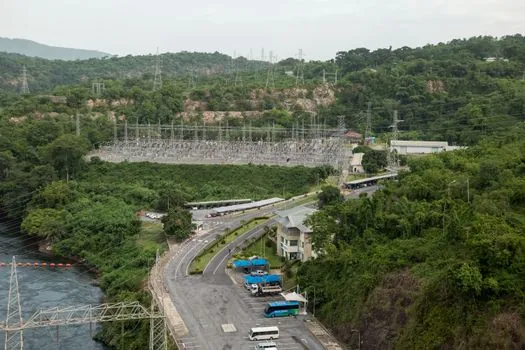
Off-the-shelf, catalog-spec three-phase padmount transformers are commonly quoted at 12 to 26 weeks, while customized voltages, enclosure modifications or utility-specific requirements can extend delivery to 40 weeks or more [S5].
A new factory that produces standard ratings, common voltages and repeatable configurations can relieve the queue sooner than one serving highly customized projects. Power transformers differ from distribution units because they operate at high voltage, meet project-specific requirements and require individual testing and certification [S3].
Demand can absorb added production
Power-transformer demand increased 119% from 2019 through the cited Wood Mackenzie dataset, while prices rose 77% over the same period [S2][S4]. Generator step-up transformer demand grew 274%, and roughly 80% of large power transformers used in the United States were imported [S2].
A 10 percentage-point increase would provide additional throughput, but demand growth, qualification and product mix can prevent that arithmetic from becoming shorter delivery dates. Wood Mackenzie estimated a 30% supply shortfall for power transformers in 2025, versus about 10% for distribution transformers [S4].
Materials and components can delay the benefit
Prices for power transformers have risen 77% since 2019 [S2]. A new plant does not remove these input constraints, particularly where a project requires a specific conductor material or core configuration [S5].
Large power transformers also depend on a narrow supplier base for specialized components, while skilled technicians are needed for assembly, testing and customer-specified inspections [S3][S5].
Buyers should plan against three delivery bands
Catalog transformers generally occupy the 12-to-26-week band, customized padmount or substation equipment often requires 40 weeks or more, and average large power-transformer procurement is running at 128 weeks, with generator step-up units at 144 weeks [S2][S4][S5].
For schedule planning, use these as distinct procurement classes rather than one market average. A 12-to-14-month design basis would fit some standard substation units, a 30-to-34-month basis reflects current power and generator step-up averages, and a 36-to-48-month contingency covers specialized units approaching the upper reported range [S2][S3][S4].
Engineering should freeze defensible load studies, utility coordination, ratings, voltages and switchgear configuration early, then use performance-based specifications that permit several qualified manufacturers [S4]. Standardization can also reduce dependence on narrow customization, while evaluating refurbished or remanufactured equipment for noncritical or temporary service [S4].
Track factory milestones, not a shortage-end forecast
First-year relief depends on construction completion, equipment installation, factory qualification and customer acceptance before shipment, not on an investment announcement alone. The earliest credible signal is a completed production line with demonstrated transformer output, followed by a reduction in booked lead times for standard ratings. [S3]
Buyers should track four indicators: operating lead-time quotes for the specified rating and voltage, supplier confirmation of manufacturing capacity, available slots for testing and shipment, and the order date for newly qualified production. A standardization guide becomes more valuable as factories seek repeatable builds, while the direct-buying guide is relevant when assigning responsibility for engineering, procurement and expediting.