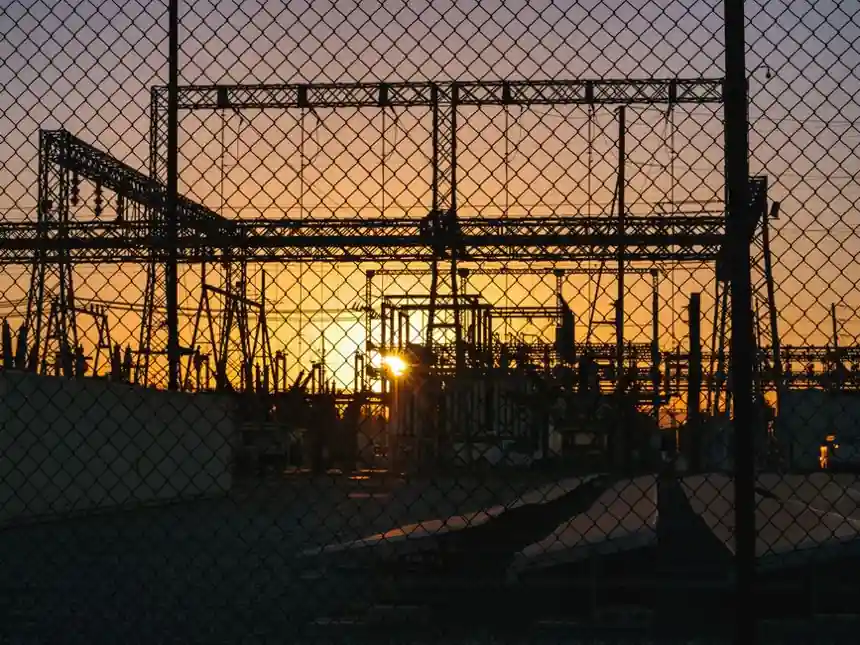
U.S. power transformer lead times reached 128 weeks in 2026, with generator step-up units averaging 144 weeks and some orders stretching to four years, according to Wood Mackenzie's Q2 2025 survey data cited in May 2026 reporting [S3].
Power transformer prices have climbed 77% since 2019, distribution units 78-95%, and Cleveland-Cliffs remains the sole domestic producer of grain-oriented electrical steel, the core material in every transformer [S3]. With roughly 80% of large power transformers imported and 274% growth in generator step-up demand since 2019, equipment availability has replaced capital and permitting as the primary gating factor for industrial expansion [S3]. For process engineers and EPC procurement teams, the lever left on the table is not new factory capacity but tighter design harmonization across a project's transformer fleet.
What Design Harmonization Actually Means on a Drawing
Each eliminated variant frees a factory slot; the same lamination stack, the same bushing, the same CT ratio, all move through the same winding line and test bay without re-tooling [S4].
The engineering principle is older than the supply crisis: the transformer is a 19th-century device, and the U.S. Department of Energy has noted that the design is "based on the engineering principles of the 1800s," which means today's gains come from standardization and manufacturing throughput, not from a new core topology [S1]. Lead times for distribution transformers ballooned from 3-6 months in 2019 to 12-30 months in 2023, and that figure is now eclipsed by large power transformer waits of up to 60 months in North America and Europe for highly specialized builds [S1][S5].
The Numbers Behind a 128-Week Bottleneck
Medium-voltage switchgear (15 kV class) sits at 52-80 weeks in 2026, and pad-mount distribution transformers at 40-65 weeks, so the power transformer is the longest pole in the electrical room tent [S8]. Four structural factors lock in those queues: highly customized engineering, long manufacturing and testing cycles, dependence on a small set of specialized components, and a limited global base of manufacturers capable of producing the largest units [S5].
OEM utilization rates for large power transformer facilities average around 70% globally, projected to reach 80% by 2030, leaving little room to absorb new demand spikes [S5]. IEA's 2025 report "Building the Future Transmission Grid" found that transformer prices in some cases have reached 2.6 times their pre-pandemic levels in real terms, with average lead times nearly doubled since 2021 [S5]. The constraint is not copper or steel alone, though grain-oriented electrical steel prices have roughly doubled since 2020 and copper rose more than 50%, but the slow rotation of customized work through bottlenecks like winding, vacuum oil processing, and individual type testing [S3][S5].
Criteria Comparison: Custom, Standardized, and Stock-Retrofit

Three procurement paths dominate a 2026 transformer buy, and the trade-off is concrete: custom builds carry the longest waits and the highest price premium, harmonized standard builds trade some flexibility for shorter queues, and stock retrofits trade nameplate fit for the fastest energization. [S4]
Custom (project-engineered) units: 128-144 weeks typical, up to 240 weeks for the largest generator step-up builds, premium pricing at 2.6x pre-pandemic real terms, full compliance to every project spec, highest engineering risk carried by the OEM [S3][S5]. Harmonized standard builds: typically 80-110 weeks when slots are available, modest premium over pre-pandemic baseline, sacrificed features limited to non-critical accessories, the slot itself comes from pooling demand with similar utilities or EPCs [S4][S6]. Stock-retrofit (in-stock unit modified to match requirements): delivery can drop to 8-20 weeks for smaller distribution and dry-type units, and Elasco Transformers and similar suppliers explicitly market "modify to match" as a lead-time compression tactic [S4].
The decision is not "always standardize" but "standardize where you can, customize where you must." Impedance, basic insulation level, vector group, and tap range are the four knobs with the highest standardization payoff and the lowest project-specific cost when held constant across a fleet [S5][S6].
Who This Lever Fits, and Who It Does Not
Harmonization pays off for utilities, large data center campuses, and EPCs running multi-phase industrial builds where 3-10 transformer slots are scheduled inside a 36-month window, since the slot-sharing math only works at volume [S6][S7]. It also fits dry-type transformer fleet decisions in commercial and light-industrial settings, where custom dry-type lead times exceeding 50 weeks have pushed operators toward in-stock retrofits [S4].
It is a poor fit for one-off generator interconnections where the GSU impedance must match a specific system strength study, for traction or phase-shifting transformers that have no real "standard" market, and for any site where short-circuit duty, harmonic injection, or grounding requirements force a non-standard impedance window. In those cases, the only procurement lever is ordering 36 months ahead and accepting the power transformer wait [S3][S5].
Implementation: A Procurement-Engineering Workflow
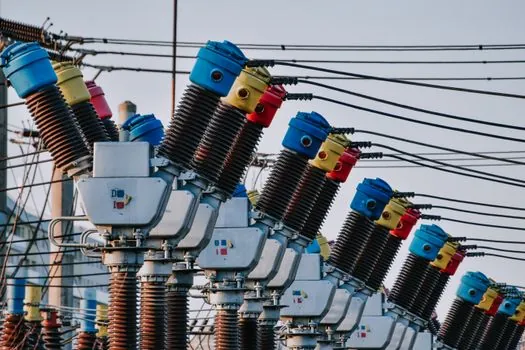
GigaEnergy's August 2026 data-center playbook adds a parallel discipline: break the energization date into real milestones (transformer delivery, switchgear, commissioning) instead of one blended date, because a 128-week transformer and a 52-week breaker on the same critical path need separate tracking [S7]. Standardize Data Center Switchgear Specs to Cut 52-Week Lead Times covers the breaker side of the same problem with the same harmonization logic. The Electrical Equipment Producer Price Index sat at 254.92 in 2026, well above general inflation, which means every month saved on a slot is also a month saved on a price curve that has not yet flattened [S3].
Limits, Failure Modes, and the Standards Caveat
Harmonization does not eliminate the four structural constraints; it only rebalances them. Pooling demand on shared impedance and tap ranges still requires compliance with IEEE C57 series for power transformers, with DOE 2016 efficiency rules for distribution units, and with any utility-specific short-circuit and insulation coordination study that overrides the default [S5]. Over-standardization can also force a higher-than-needed impedance on a small fraction of sites, raising losses and lifetime cost, so the 80/20 split must be enforced on the design side, not retroactively in procurement.
The most common failure mode is treating harmonization as a paper exercise: writing "standard 138/13.8 kV, 9% impedance" on the spec and discovering at the factory that the OEM's standard 138/13.8 kV unit is built on a 10 MVA frame, not the 30 MVA frame the project actually needs. Pool the demand with engineering sign-off before the PO, not after [S4][S6].
Trackable next signals: the IEA's 2025 transmission grid report is due for an update cycle in late 2026, Cleveland-Cliffs is the only domestic GOES producer and any capacity addition there is the single highest-leverage upstream event, and Wood Mackenzie's Q4 2026 transformer survey will be the next independent read on whether 128 weeks is a ceiling or a floor [S3][S5].
For the relevant spec sheets and selection criteria, see lead screw.