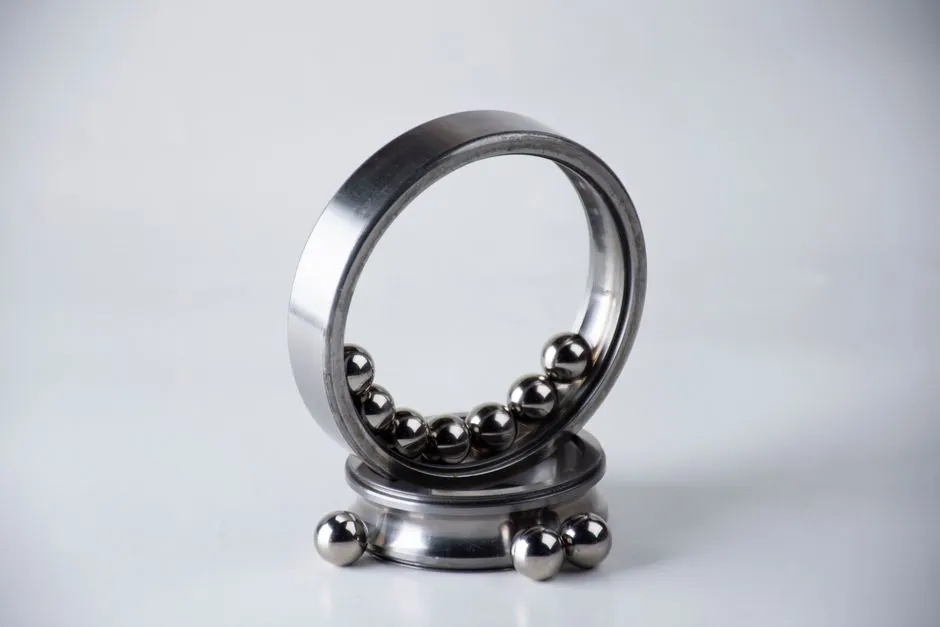
Use a ball spline instead of a keyed shaft when the application demands simultaneous torque transfer, anti-rotation linear travel, and high-cycle life on a single shaft; the basic dynamic load rating of a ball spline is typically 5 to 12 times that of a similarly sized slide bush, and the rolling-element contact outperforms keyed sliding joints in fatigue [S4].
Keyed shafts remain useful for low-cost, semi-permanent hubs where axial travel is rare; ball splines, in contrast, are designed for repeated linear strokes, moment loading, and high rotational speeds, with grooved shaft counts of 2 to 6 and 4-groove designs being the most common compact configuration [S2][S4].
Core Functional Difference Between a Keyed Shaft and a Ball Spline
A keyed shaft transmits torque through a single key seated in a keyway, with the mating hub sliding along the key when axial motion is required; this is a sliding, metal-to-metal interface prone to wear when stroke is frequent [S1][S3].
A ball spline uses longitudinal grooves on the shaft mated to recirculating ball circuits inside the spline nut, so the balls roll along the grooves and the load is carried through rolling contact rather than sliding friction. The shaft grooves are the anti-rotation element, which is why "the load-carrying balls ride in the shaft grooves, which constrains the spline nut from rotating" [S2]. Because the nut cannot spin on the shaft, a single ball spline can replace the parallel-rail pair that a plain linear bushing would otherwise need, cutting footprint, weight, and alignment work [S2].
Selection Criteria: Torque, Stroke, Speed, and Moment Load
For pure torque transmission on a stationary hub, a keyed joint is usually adequate and is cheaper to machine; for a joint that must also slide repeatedly, the keyed keyway wears and the key can fret or shear under reversing load [S1][S3].
Spline shafts in general have a larger contact area than a single key, so circumferential force is shared across multiple teeth and torque capacity rises with the number of teeth engaged; "spline shafts are better suited for high torque applications due to their larger contact area, which allows for more even distribution of forces" [S5]. Ball splines extend that advantage into rolling-element life, with dynamic load ratings of "5~12 times that of a slide bush of a similar size" because the grooved shaft increases contact area versus a plain round bar [S4]. For a SCARA Z-theta axis, an automatic tool changer, or a single-shaft linear stage that also rotates, the rotary ball spline version combines an angular contact bearing, crossed-roller bearing, or gear element on the nut outer diameter with the linear spline, replacing two separate devices with one [S2].
Groove Count, Contact Geometry, and Capacity Tuning

Ball spline shafts are available in 2, 3, 4, or 6 groove configurations, and each count trades capacity against nut length and recirculation room. The popular 4-groove geometry permits side-by-side active and return ball paths inside the nut, so the nut stays compact and all ball tracks stay in contact with their raceways; in 6-groove shafts the grooves crowd the circumference, the recirculation path often has to protrude from the shaft, and only half the tracks contact in any one load direction, so a 6-groove layout is reserved for the highest load cases [S4].
Groove shape is the second tuning lever. Two-point contact grooves are the standard, general-purpose choice; gothic-arch grooves deliver 4-point contact, eliminate internal clearance, raise moment-load capacity, and are typically used on larger spline sizes where precision and rigidity dominate the spec [S4]. Six practical factors drive rated capacity and accuracy, namely the number of grooves, groove shape, nut length, raceway length, tolerance class, and the shaft rigidity plus mounting arrangement [S4].
Comparison of the Three Common Joint Types
For a quick engineering pick, the three options line up against torque capacity, axial-stroke capability, single-shaft suitability, and typical dynamic load factor relative to a plain slide bush of the same size. [S4]
Keyed shaft: lowest cost, simplest to machine, semi-permanent, sliding joint wears under repeated stroke, single keyway concentrates stress and is the weak point under reversing load [S1][S3][S5]. Plain splined shaft (involute, parallel, serrated, crowned): multi-tooth torque transfer, larger contact area than a key, suited to high torque and some misalignment tolerance, but still a sliding metal-on-metal interface under reciprocating motion [S1][S5]. Ball spline: rolling-element contact, anti-rotation built into the shaft grooves, single-shaft configuration replaces parallel shafts, basic dynamic load rating 5 to 12 times that of a same-size slide bush, available in rotary versions that add Z-theta motion in one unit [S2][S4].
Application Fit: Where a Ball Spline Earns Its Place
Ball splines fit any single-shaft linear stage that must not spin, and any axis that needs both linear and rotary motion. Documented uses include paper-mill spool mandates where the shaft must translate horizontally but stay rotationally fixed, SCARA robot Z-theta joints that often route cables through hollow spline shafts, CNC automatic tool changers, and pick-and-place heads that combine a pneumatic cylinder for Z motion with a belt-and-pulley drive for theta motion on a single rotary ball spline [S2].
For deeper context on linear-motion selection, the spec-level differences between a linear guide and a plain linear bearing are laid out in Linear Guide vs Linear Bearing: Spec-Level Differences, and the underlying joint geometry is covered in shaft key and ball spline reference entries. A shaft coupling downstream of the spline stage still has to absorb any residual misalignment, so coupling choice and spline choice should be reviewed together when the duty cycle is reversing.
Limitations and Failure Modes to Watch
Ball splines are not a free upgrade over keys. Six-groove shafts have so little space next to the active ball paths that the nut has to protrude to let the balls recirculate, which raises the risk of dropped balls if the nut is separated from the shaft, so handling discipline matters more than on 4-groove units [S4].
Because the anti-rotation function depends on the shaft grooves, any debris, burr, or brinelling in the grooves will quickly translate into nut runout, higher drag, and premature raceway fatigue, which is why seals, lubrication intervals, and contamination control matter more on a ball spline than on a keyed hub that can be re-cut or re-keyed. The recirculating-ball design also adds cost and length compared with a plain involute spline, so for a low-stroke, low-speed, budget-driven application the keyed or involute-spline route still wins on total cost of ownership [S1][S4][S5].
Sourcing and Standards Notes
Most public ball-spline literature comes from the manufacturers themselves, including NB Corporation's "Demystifying Ball Spline Specs" white paper that quantifies the 5 to 12 times load ratio over slide bushes and the 2 to 6 groove count range, and from THK, Misumi, Nook, and Yamaha product documentation cited in the Linear Motion Tips article on ball spline selection [S2][S4]. For general background on why splined shafts in any form are displacing keyed shafts in most modern drive systems, the Grob Inc. comparison and the True Gear & Spline comparative analysis are the two most-cited English-language references [S1][S5].
One trackable signal for the next design review: the 4-groove gothic-arch ball spline remains the default precision-grade choice, but several vendors have published variants with stainless shafts, hollow bores for cable routing, and integrated gear or crossed-roller rotary elements on the nut, so the next decision on a Z-theta axis should weigh whether a rotary ball spline consolidates two parts into one before defaulting back to a keyed hub plus separate rotary bearing. For motion stages on stacker-crane columns and similar long-travel AS/RS hardware, the rail and aisle tolerance questions raised in Stacker Crane Aisle Width and Rail Tolerance: Spec Reference for AS/RS Builds are a useful cross-check on whether a single-shaft ball spline can replace the twin-rail linear-bearing arrangement that stacker-crane builders often default to.