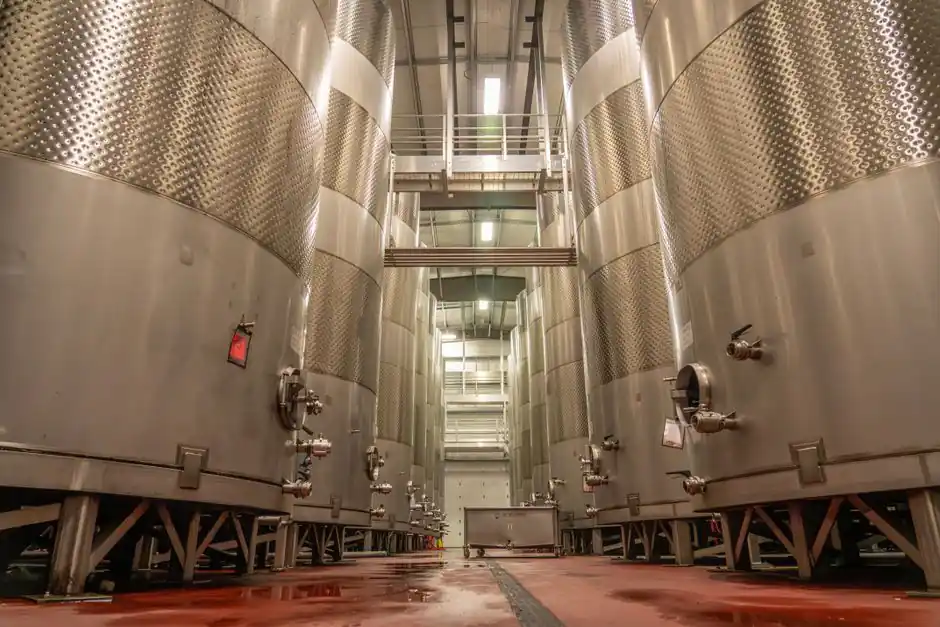
The hardener and the epoxy resin are sold in separate containers in a 2-part system because the cross-linking reaction between them starts the moment the two liquids contact each other, and that reaction cannot be paused [S2].
A 1-part epoxy reaches its cured strength only after heat activation in the 80 to 175 degrees Celsius window, while a 2-part grade sets at room temperature once mixed [S2][S3]. That single chemistry rule is the engineering reason resin and hardener are made, stored, and dosed on physically separate lines.
Ratio Errors Are the Dominant Failure Mode
Adhesive joint strength is governed by the hardener-to-epoxy mass ratio, and experimental data on butt joints shows that excess hardener degrades strength more aggressively than a stoichiometric deficiency, making accurate metering a non-negotiable process variable [S1].
On automated 2-part lines, the most common source of weak bonds is off-ratio dispensing from a worn dispense tip, a short static mixer, or air in the hardener line; the same root cause shows up in hand-mixed shop work where operators eyeball the ratio [S3]. Composite manufacturers address this by specifying forgiving mix ratios of 2:1 or 3:1 by volume, and by adding visual dyes that turn green only when resin and hardener are fully blended [S4]. Two-part systems also carry a pot life of 20 to 90 minutes after mixing, so any surplus mixed at the start of a shift is wasted if the run pauses, another pressure to keep the two streams unmixed until the moment of dispense [S3].
Why 1-Part Systems Cannot Replace the Split
A 1-part epoxy is, chemically, a 2-part system that has already been pre-mixed with a latent curing agent, which is why the two streams still have to be combined at the factory even when the customer sees a single container [S2].
That latent hardener is engineered to stay dormant at room temperature and only become reactive under heat, typically 120 to 175 degrees Celsius for standard industrial grades, with full cure producing lap-shear strength above 20 MPa on prepared metal [S3]. The trade-off is real: a 1-part line needs an oven or induction source, capital that a 2-part line avoids, and many reactive 1-part grades must be shipped and stored at minus 40 degrees Celsius to prevent premature cross-linking in the drum [S3][S2]. The split between the two chemistries at the manufacturing site is therefore not a process choice but a consequence of the underlying cure kinetics: keeping resin and hardener apart is the only way to give the end user either a long room-temperature shelf life (1-part) or a tunable room-temperature cure (2-part).
Viscosity, Cure Profile, and Modular Hardener Speeds

Composite and adhesive plants also use the split to swap hardener speed without touching the resin side, which lets one resin serve a wide range of cure profiles: fast hardener for short tack-free time and quick mold turnaround, slow hardener for large laminates that need extended working life to wet out fibers without dry spots or runoff [S4].
Resin viscosity is independently tuned as well, from very low viscosity infusion resins that wet out large reinforcement areas, up to thixotropic laminating resins that resist sag on vertical or overhead lay-ups [S4]. That kind of modular product line is only possible because the resin reactor and the hardener reactor run as separate unit operations; co-producing them in a single vessel would lock the viscosity and reactivity of the entire output. industrial adhesive formulations built this way can be selected for cure profile, viscosity, and processability as three independent levers rather than one fixed recipe.
Industrial Process Equipment Implications
On the production floor, the split drives the spec of the meter-mix-dispense equipment: a 2-part line needs dual positive-displacement pumps, a static mixer of a length matched to the ratio and viscosity, and a dispense head that can purge air from the hardener side, while a 1-part line needs a sealed thaw cabinet, an oven profiled to bring the part mass to soak temperature (not just the air around it), and thermocouple verification on representative parts [S3].
Health and contamination controls also branch from the split: many amine hardeners are skin sensitizers, so keeping the hardener side enclosed in a metered pump and a static mixer nozzle reduces operator contact versus hand-stirred pots, a control logic familiar to any plant that also runs construction machinery and equipment adhesives in a two-component cartridge format. Defects cluster predictably on each side: 1-part lines fail from cold oven ramps that leave thick bond lines under-cured with low glass transition temperature, while 2-part lines fail from off-ratio soft spots and entrained air that calls for a degassing step on critical work [S3].
Limits of the Split: Where It Stops Working
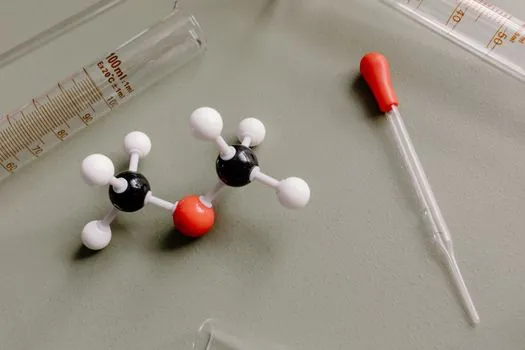
The separate-lines model breaks down for very fast-cure 2-part systems where the pot life drops below 5 minutes, forcing in-line impingement mixing and robotic dispense to keep the working time usable [S3].
It also breaks down for ultra-large composite parts where a single static-mixer shot cannot deliver enough volume, so the plant has to switch to batch-mixed buckets with the operator hand-stirring and racing the clock, accepting the higher defect risk to get the part wet out before gel. checking and testing apparatus for incoming resin and hardener becomes critical at that scale, because any drift in amine value or epoxy equivalent weight on either side of the split will immediately surface as off-ratio cured properties that the structural test lab will catch and reject. Engineered-wood adhesive work has shown the same pattern at the formulation level: incomplete cross-linking from a mis-loaded toughener, here polycarbonate, dropped mechanical properties sharply at high loadings, a reminder that the resin-hardener stoichiometry is the single most sensitive control loop in the entire system [S7].
Comparison: 1-Part vs 2-Part Manufacturing Logic
1-part and 2-part production lines diverge on four decision criteria, and the table below lines the main options up against those criteria so the choice is auditable rather than tribal. [S3]
On cure trigger, 1-part requires external heat at 80 to 175 degrees Celsius while 2-part cures at room temperature in 1 to 4 hours to handling strength and 24 to 72 hours to full strength [S2][S3]. On shelf life, 1-part is stable at room temperature but many grades need minus 40 degrees Celsius storage, whereas 2-part resin and hardener each store indefinitely in sealed containers until mixed [S3]. On ratio sensitivity, 1-part has no on-line ratio to control because it is pre-mixed, while 2-part is highly ratio-sensitive and excess hardener is the worse of the two error directions [S1]. On capital, 1-part needs an oven or induction heater, while 2-part needs meter-mix-dispense pumps and a static mixing nozzle but no heat source [S3]. The substrate also decides: heat-sensitive thermoplastics and populated electronics boards rule out 1-part, while large composite lay-ups with long wet-out times rule out short-pot-life 2-part grades without robotic dispense.
Track the next node through the oven-uniformity audit on any 1-part line that has shifted to a new substrate mass, and watch the hardener amine equivalent specification on the 2-part side, since a supplier change there is the most common root cause of off-ratio cured joints. lamps and light fittings potting and additive manufacturing material vat resins both use variants of this same split, so the standards conversation is already live in adjacent product families.