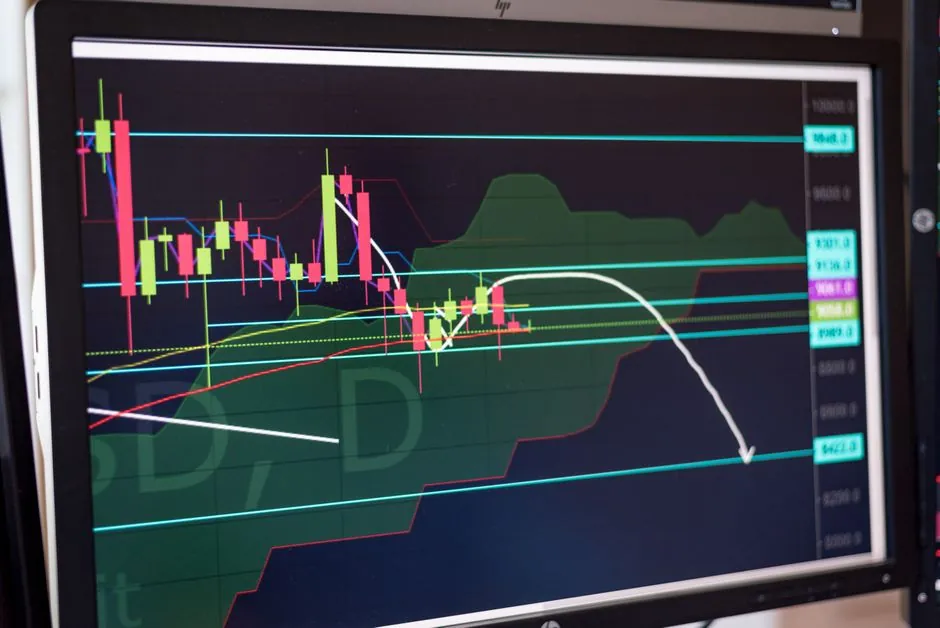
ITO (indium tin oxide) targets are 90% In2O3 / 10% SnO2 by weight, so indium content is the single largest material line in any target bill of materials [S1]. With purities specified at 99.9%, 99.99%, and 99.999%, the underlying indium price feeds directly into raw-material cost [S1].
Budgetary pricing from major deposition-materials distributors is flagged to "vary due to market fluctuations", a wording that in practice tracks the LME-style indium spot tape rather than a stable list price [S3]. The ITO target market is valued at $1.8 B in 2025 and projected to reach $3.2 B by 2034 at a 6.6% CAGR, yet that headline growth sits on top of a supply chain repeatedly described as constrained by "fluctuating indium availability and rising purification expenses" [S5][S4].
The 90/10 Recipe: Why Indium Dominates the Bill of Materials
A standard ITO target is fixed at 90 wt% In2O3 and 10 wt% SnO2, sintered from oxide powders rather than the metals, but the indium is the cost-bearing element in both routes [S1][S8]. Because the indium content is roughly 4.5x the tin content by weight, any percentage move in the indium unit price moves the target's raw-material line by close to the same percentage before yield losses.
Indium is overwhelmingly a byproduct of zinc ore smelting, with no primary indium mines of meaningful scale, so the indium supply curve is structurally inelastic in the short term and price-volatile by construction [S4]. For buyers, this means an ITO target quote is effectively an indium quote plus a fabrication adder, not an independently priced industrial ceramic.
For reference on how the broader sputtering target family is grouped, the ITO grade sits inside the transparent conductive oxide (TCO) sub-class alongside AZO and IGZO, but it is the only one whose primary cation is a byproduct metal [S1].
Purity Tiers, Sintering Yield, and the Hidden Cost Multipliers
Commercially available ITO targets are offered at 99.9%, 99.99%, and 99.999% purity, and the spread between these tiers is materially wider than the spread seen in commodity oxides like alumina [S1]. Each step up the purity ladder requires additional refining of the indium feedstock before it is even reacted into In2O3 powder, so a quote at 99.999% purity already embeds two or three extra indium-refining passes.
ITO has a melting point of 1,800 °C, a maximum power density of 20 W/in² specified for RF or DC sputtering, and brittleness that requires an indium or elastomer bond to a backing plate [S1]. Sintering yield of ITO is typically below dense-theoretical due to oxygen stoichiometry control, and the off-grade material carries no commercial value, so the recovered-cost line is what most vendors quietly negotiate on.
Fabrication of an ITO billet passes through powder preparation, blending, compaction, high-temperature sintering, heat treatment, machining, and surface finishing, eight discrete process steps where scrap can reintroduce indium into the cost base [S1]. Because indium is recoverable but not free to recover, in-house reclaim capacity at a sputtering line directly reduces the realised target cost over the campaign life of a target.
Reclaim Economics: Why the "Spent Target" Is Worth More Than Most Spent Ceramics

This is the ITO-specific reason target reclaim lines exist as a standalone business rather than as a generic ceramics-recycling service.
Vendors that bundle a reclaim credit into the next target quote can therefore undercut vendors that do not, even when both pay the same spot indium price.
For high-volume flat-panel display lines running rotary ITO targets, the reclaim delta can be material enough that the cost per deposited gram of ITO film drops noticeably over a multi-year contract, which is why long-term agreements in this market almost always include a reclaim-passback clause [S2].
Demand-Side Amplifiers: Displays, Touch Panels, and the Buffer-Stock Question
On the demand side, ITO demand is anchored to transparent conductive films for flat-panel displays, touch panels, and certain PV and smart-window stacks, all of which scale with consumer electronics unit volumes [S7]. Because the supply side is byproduct-constrained, the indium buffer-stock levels held by strategic producers effectively set the price ceiling during demand spikes.
The projected CAGR of 6.6% through 2034 implies that indium offtake for ITO targets is still climbing, even as alternative TCOs like silver nanowire, copper mesh, and conductive polymers continue to take share in lower-end touch applications [S5]. For the specifier, the practical takeaway is that ITO target quotes are best locked against an indium reference price on a quarterly or semi-annual basis, not on an annual fixed-price basis, unless the supplier is willing to take the indium-price risk.
Cost-Driver Comparison: How the Main ITO Target Variables Move Price
Looking at the four variables a buyer can actually control (purity, geometry, bonding, and volume tier) against the two variables the buyer cannot control (indium spot price and energy/ sintering cost), the hierarchy is clear. Indium spot price is the single largest swing factor, purity tier is the second, bonding choice (indium bond vs elastomer) is third, and volume tier sets the discount band but does not change the underlying metal exposure [S1][S3].
For planar versus rotary geometry, rotary targets are quoted at a premium per kilogram of usable material because of higher fabrication yield per deposition run, but a rotary target can contain the same total indium as a planar target at roughly the same purity, so the indium cost is comparable while the fabrication adder is higher [S1]. The choice therefore trades a higher unit price for a higher utilisation ratio and lower per-substrate cost over the campaign.
Compared with non-ITO TCO alternatives in the same deposition tool footprint, ITO is the most mature option and the easiest to reclaim, which keeps its total cost of ownership competitive in display-grade applications despite a higher unit indium cost than doped-zinc-oxide grades [S1][S2].
Procurement Signals: What to Watch Between October 2025 and October 2026
Two verifiable signals will move ITO target quotes over the next four quarters: the indium spot price on the major minor-metals exchanges, and the published reclamation-credit clauses from the two or three largest deposition-materials distributors [S2][S3]. The ITO target market was valued at $1.8 billion in 2025 and is projected to reach $3.2 billion by 2034, growing at a CAGR of 6.6% [S5].
Buyers specifying ITO targets should anchor every quote to an explicit indium reference price and a stated purity tier (99.9% vs 99.99% vs 99.999%), and confirm whether the supplier is offering a bonded (indium or elastomer) target with a reclaim credit, since the sputtering target selection is inseparable from the indium pricing regime that surrounds it [S1][S3].
Spec-level background on the components involved: pressure transmitter, and flow meter.
For related coverage, see EPDM vs natural rubber: why EPDM wins on temperature range.