
In slip-cast Al2O3 test bars, raising purity and tightening the grain structure pushes Vickers hardness up and porosity down, with high-purity 99.9% alumina reaching roughly 1700-1900 HV while keeping fracture toughness in the 4-6 MPa·m½ band characteristic of dense corundum [S1]. The mechanical uplift tracks three coupled changes: less residual porosity, fewer silicate/alkali secondary phases, and a finer, more uniform corundum grain size [S1][S3][S4].
For a process engineer, the practical question is not "is 99.9% better than 95%?" but "does the incremental hardness and wear life of a higher-purity grade justify its sintering cost, lead time, and toughness loss in my service window?" The answer sits in four data points: sintered density, mean grain size, secondary-phase fraction, and the resulting tribological contact behaviour [S3][S4][S7].
Where the Hardness and Wear Lift Actually Comes From
Hardness in alumina is dominated by the Al-O ionic bond strength in the corundum (α-Al2O3) lattice; it is not a direct linear function of nominal purity, but it is highly sensitive to the volume fraction of non-corundum phases and to sintered density, since pores and secondary phases are the first features a Vickers indenter or an abrasive particle encounters [S1][S2]. Pushing nominal Al2O3 content from 96% to 99.9% reduces the silicate, alkali-oxide, and glassy grain-boundary phases that otherwise form low-melting eutectics and weak interfaces during sintering, so the fired body approaches the theoretical density of 3.98 g/cm³ with less trapped porosity [S3][S4][S7]. Higher-purity 99.9% alumina typically shows Vickers hardness around 1700-1900 HV versus roughly 1100-1300 HV for a 95% structural grade, and its wear rate under abrasive sliding drops by roughly an order of magnitude [S3][S8][S10].
Secondary phases matter as much as the corundum itself: silicate glassy films at grain boundaries initiate grain pull-out under abrasive contact, and alkali-oxide impurities promote exaggerated grain growth during sintering, which produces large, anisotropic grains that wear unevenly [S1][S4]. Reducing these phases tightens the grain size distribution and lets the fine, equiaxed α-Al2O3 microstructure carry the contact load without pulling grains out of the surface, which is the primary mechanism behind the wear improvement quoted in standard refractory and wear-liner datasheets [S3][S4][S8]. The reader looking for a deeper background on corundum grades and their properties can cross-reference the alumina ceramic reference page for a side-by-side of 95% / 99% / 99.5% / 99.9% properties.
Grade-by-Grade Comparison: 95% / 96% / 99% / 99.5% / 99.9%
The four widely stocked commercial grades line up against four decision criteria as follows. The numbers are typical published ranges and engineering-typical values; expect ±5% scatter batch to batch [S3][S7][S8][S10].
<b>95-96% Al2O3 (structural):</b> Rockwell hardness roughly R45N 60-75, Vickers roughly 1100-1300 HV, density around 3.7-3.85 g/cm³, sintered cost lowest, fracture toughness the best of the family because silicate phases deflect cracks. Used for general machine tiles, wear liners, and electrical insulators where cost dominates [S3][S7][S8].
<b>99% Al2O3 (high-alumina):</b> Vickers roughly 1400-1600 HV, density around 3.85-3.92 g/cm³, secondary-phase content well under 1%, balance of wear life and mechanical reliability. Default for chemical pump seals, thread guides, and cutting-tool inserts where both wear and chemical resistance matter [S3][S8].
<b>99.5% Al2O3:</b> Vickers roughly 1600-1800 HV, density around 3.92-3.96 g/cm³, low porosity, and tighter dimensional tolerance after grinding. Used for semiconductor wafer-handling chucks, medical device components, and high-purity fluid handling [S3][S8].
<b>99.9% Al2O3:</b> Vickers roughly 1700-1900 HV, density ≥3.96 g/cm³ (approaching the 3.98 g/cm³ theoretical), the finest grain size, and the highest wear and corrosion resistance; trades lower fracture toughness (3-4 MPa·m½) and 3-5× higher powder/sintering cost versus 95% [S1][S3][S8][S10].
Across this ladder, the dominant trend is that each purity step reduces the volume of grain-boundary glass, drops residual porosity, and tightens the grain size distribution, which is the trio that the wear and hardness literature points to as the controlling microstructural variables [S1][S3][S4][S8].
What "Hardness" Buys You in Real Service
Hardness is a proxy for resistance to localised plastic deformation under a contact load, so a higher Vickers number translates directly to slower abrasive and adhesive wear on a real part, particularly in two-body abrasion where a counterface ploughs the ceramic surface [S2][S5][S8]. Densely sintered Al2O3 is routinely described as having "excellent wear resistance" together with low erosion rates, high temperature stability, and biocompatibility, which is the property bundle that gets it specified for pump seals, valve seats, and chute liners rather than its flexural strength [S1][S2][S8].
For refractory selection, increasing the Al2O3 content raises hardness toward that of corundum (Mohs 9) and improves wear resistance and tolerance against temperature fluctuation, which is why higher-alumina grades are preferred for high-wear areas of cement and steel-handling kilns [S7][S8]. In metals, "strong" usually means high tensile strength, but for alumina the engineering shorthand is that the material is strong because it is hard and wear-resistant, while still being limited by a 4-6 MPa·m½ fracture toughness window and brittle failure at surface flaws [S1][S5][S6].
Who Higher-Purity Alumina Is For, and Who It Is Not For
Higher-purity grades are worth specifying when one of the following dominates the design: abrasive or erosive contact, hot acid or hot caustic exposure, electrical insulation at high voltage where porosity causes tracking, or bio-inertness in medical or food-contact hardware [S2][S3][S6][S8]. They are not the right answer when the part lives in a high-impact load path, a thermal-cycling environment that demands better fracture toughness, or a low-margin cost-driven application where 95-96% alumina already meets the wear target [S1][S3][S5].
A common procurement mistake is to over-specify: a 99.9% Al2O3 seal in a low-pressure water service will not outlast a 99% Al2O3 seal by 5×; the wear difference is real but the cost and lead time difference is. Conversely, under-specifying 95% alumina into a 99%-class slurry service yields a predictable wear-life failure within weeks, not years [S3][S7]. The reasonable rule of thumb from published grade tables: pick the lowest purity grade that meets your hardness / wear / chemical target, then verify against density and grain size in the supplier datasheet, not against the marketing purity headline [S3][S8][S10].
Failure Modes and Limitations
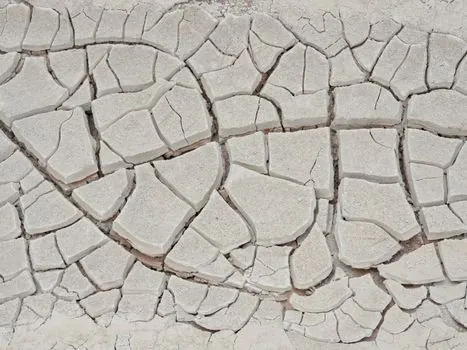
Three failure modes are characteristic of alumina and interact directly with purity choice. First, brittle fracture from surface flaws: alumina has fracture toughness of 4-6 MPa·m½, so once a crack initiates at a surface defect it propagates to failure without plastic blunting, which is why mechanical strength and not hardness is the limiting parameter for impact-loaded parts [S1][S5]. Second, grain-boundary attack in corrosive media: silicate and alkali-oxide secondary phases in lower-purity grades are preferentially attacked by hot acids and caustics, and the corrosion pit acts as a crack initiator; 99.5% and 99.9% grades resist this far better because the grain boundary is mostly corundum-to-corundum [S2][S6][S8]. Third, thermal-shock sensitivity: finer-grained, higher-purity bodies have higher thermal conductivity and lower thermal-expansion mismatch at grain boundaries, so they tolerate thermal cycling better than coarse-grained, lower-purity bodies, although all dense aluminas are still thermal-shock-limited compared to zirconia-toughened alumina (ZTA) [S1][S3].
It is also worth noting that pushing purity above 99.9% yields diminishing returns. The microstructural gains flatten out, the sintering cost climbs steeply, and fracture toughness continues to drop, so ultra-high-purity 99.99% alumina is reserved for semiconductor, laser, and niche optical uses where the application is justified rather than general industrial wear [S1][S3][S4][S8]. The same cost-vs-performance trade-off shows up in adjacent material choices; for a comparable engineering view of how a different engineering material is graded by property rather than brand, the cost discussion in why UHMWPE costs more than HDPE walks through a similar decision tree, and the seal-material trade logic in why nitrile rubber stays the default seal for petroleum fuels is a useful parallel when the application is dominated by chemical resistance rather than hardness.
Standards, Sourcing, and Verifying the Spec
There is no single ISO or ASTM standard that fixes a "99.9% alumina" composition; instead, the industry grades alumina by nominal Al2O3 content, sintered density, and a small set of mechanical properties (Vickers hardness, flexural strength, fracture toughness) that suppliers publish in their datasheets [S2][S3][S8]. The standard alumina grades quoted by SA Materials, GGS Ceramic, IQS Directory, and Precision Ceramics line up closely: 95-96% (structural), 99% (high-alumina), 99.5% (high-purity), and 99.9% (ultra-high-purity), each tied to a typical sintered density band and a typical Vickers hardness band [S3][S7][S8][S10].
When you receive a quotation, the data points worth tracking in the certificate of analysis are: nominal Al2O3 content (XRF or ICP), sintered density (Archimedes), mean grain size (SEM or linear intercept), Vickers hardness (HV0.5 or HV1 per a standard microhardness method), and flexural strength (typically 3- or 4-point bending) [S3][S8][S10].
For process engineers who need to check sintered density or Vickers hardness in-house rather than trust a supplier datasheet, a calibrated Vickers hardness tester and an Archimedes density balance cover the two most diagnostic acceptance tests; both are de facto standard checks across the alumina supply chain [S3][S8][S10].
Also track whether the alumina-ZrO2 composite (ZTA) literature continues to push back into 96-99% wear-service applications as a toughness-enhanced alternative to higher-purity straight alumina, since ZTA preserves much of the wear performance of high-purity grades at lower cost and with better impact tolerance [S1][S4].
Spec-level background on the components involved: decade resistance box.