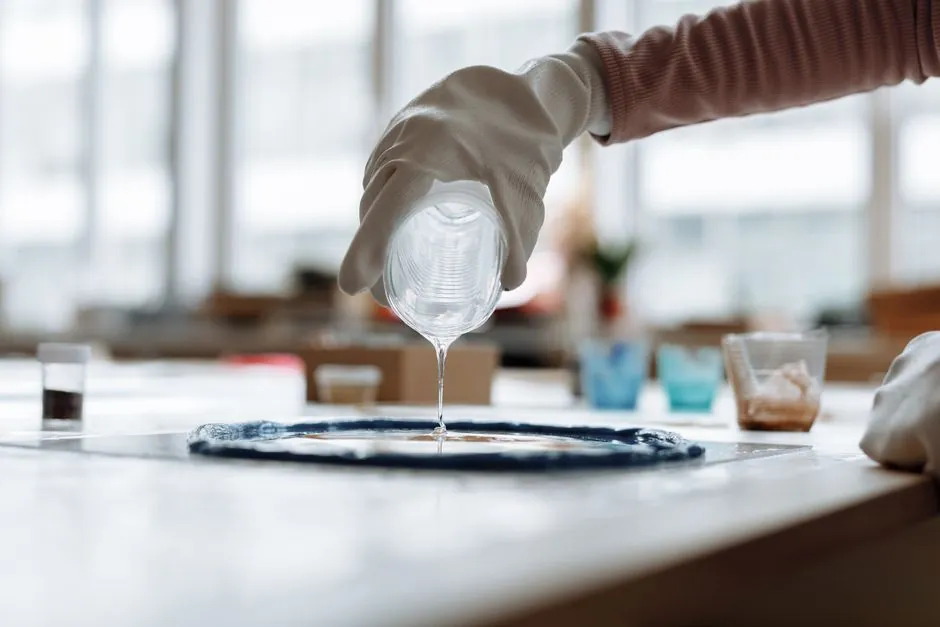
Synthetic resin is engineered as a reactive prepolymer, not a ready-to-bond product: the base polymer, hardener, and additives only deliver cohesive and adhesive strength after a controlled curing reaction, which is why the resin is sold and specified as a precursor [S1][S5].
Most commercial synthetic resins, including the workhorse epoxy grade built on DGEBA (diglycidyl ether of bisphenol A), are made by coupling epichlorohydrin with bisphenol A and are supplied as separate resin and hardener components, because the crosslink network that gives an adhesive its final strength only forms when those components are mixed in the field [S5].
Resin as a reactive prepolymer, not a finished polymer
The core chemistry is that synthetic resin molecules start as short, mobile chains (monomers or prepolymers) that flow like syrup, then link into a three-dimensional network during curing, the moment a liquid becomes a thermoset solid [S1]. Epoxy is explicitly described as a class of reactive prepolymers and polymers containing epoxide groups, with crosslinking performed by polyfunctional amines, acids, phenols, alcohols, or thiols, which are called hardeners or curatives [S5]. This is why a two-part epoxy kit ships the resin and the hardener in separate compartments: the epoxide ring is a strained, reactive functional group that must be opened by a co-reactant to build a thermoset network with useful mechanical and thermal properties [S5]. Because the network only forms in the bond line, the resin itself is the upstream input, not the bonded joint.
Why the curing step forces resin to remain a precursor
Curing is what converts a viscous, low-modulus liquid into a hardened plastic-like solid, and resin cures by polymerization, polycondensation, or polyaddition reactions depending on the chemistry [S2][S7]. Thermosetting resins, including phenolic, urea-formaldehyde, melamine-formaldehyde, and epoxy systems, become insoluble and infusible once the network forms, so they cannot be remelted or reprocessed after cure [S2]. This irreversibility is a deliberate engineering choice: the formulator controls pot life, viscosity, and reactivity at the resin stage, and the end user controls final properties by selecting the hardener ratio, the cure temperature, and the post-cure schedule. In other words, a finished adhesive is a system, not a single chemical, and the resin is the variable that the adhesive formulator tunes to deliver that system.
Petrochemical feedstock and the role of additives
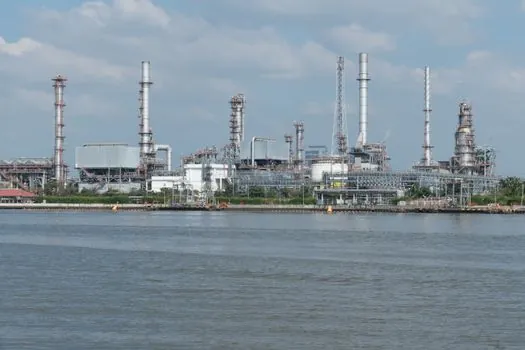
Synthetic resins are industrially produced from petrochemical feedstocks, with crude oil and natural gas processed in refineries to yield the reactive monomers and prepolymers that downstream formulators convert into adhesives, coatings, and composites [S6][S2]. Standard epoxy resin production is largely petroleum derived, although plant-derived feedstocks are now becoming commercially available as partial substitutes, and bio-based tannins are also used as a precursor for bio-derived epoxy resin and as a curing accelerator [S5][S8]. A typical resin bottle contains a base polymer or prepolymer forming the structural backbone, reactive chemical groups that bond during cure, and additives for color, UV protection, flexibility, or bulk fill [S1]. Those additives are part of why the same resin can be sold into radically different end uses, from flooring adhesives to aerospace prepregs, without the underlying precursor chemistry changing.
Comparison of resin classes by adhesive suitability
Resins split into thermoplastic and thermosetting families, and this split sets the boundary between resins that can act like adhesives on their own and those that require a curing partner [S2]. Thermoplastic grades such as polyethylene, polypropylene, polyvinyl chloride, and chlorinated rubber soften on heating and re-harden on cooling, so they are used as hot-melt or solution adhesives, with EVA and polyamide hot-melts being common packaging and bookbinding examples [S2]. Thermosetting grades, including phenolic, urea-formaldehyde, melamine-formaldehyde, and epoxy, build an irreversible network through polycondensation or polyaddition with a hardener, and they deliver the higher heat resistance, chemical resistance, and structural bond strength needed in construction, aerospace, and electronics [S2][S5]. The comparison lines up cleanly on three decision criteria: reversible vs irreversible cure, processing window (melt vs reactive mix), and typical end use (hot-melt packaging vs structural bonding).
Process controls that keep resin a precursor, not a finished product

Resin producers treat temperature and contamination control as the two decisive process variables, because high viscosity and oversized contaminants from fossil-sourced raw materials form agglomerates that ruin adhesive consistency [S3]. Industrial resin lines therefore run horizontal plate filters on chemical liquids to lower viscosity and remove opaque contaminants, with temperature held in a tight window during filtration [S3]. On the user side, the same logic applies: epoxy systems must be mixed at a defined resin-to-hardener ratio, applied within a stated pot life, and cured at a defined temperature ramp, because under-cured compounds carry documented health risks including contact dermatitis, allergic reactions, and respiratory problems from vapor and sanding dust [S5]. Those controls only make sense if the resin is a precursor: a finished adhesive would arrive pre-mixed, pre-reacted, and ready to bond, with no pot life and no ratio to manage.
How to read a resin data sheet when you actually need an adhesive
Engineers who want a usable bond should ignore the resin grade on its own and treat the data sheet as a starting point for formulating an adhesive system: identify the base polymer and its epoxy equivalent weight (EEW) for epoxies, pick a hardener class (amine, anhydride, phenol, or thiol) matched to the required service temperature and chemical exposure, and confirm the cure schedule (room temperature, heat-cure, or post-cure) against the substrate and the production cycle [S5][S2]. Phenolic resin, for example, is selected for its high mechanical strength, good heat resistance, flame retardancy, low toxicity, and low smoke emission, which is why it is used in civil, industrial, and aerospace adhesive and composite applications, and why it is blended with other polymers to hit specific property targets [S4]. Epoxy systems, by contrast, are typically chosen where the bond line needs both high mechanical performance and chemical resistance, which is why they dominate wood flooring, electronics potting, and structural adhesive joints [S3][S5]. A reader working on waterproofing selection can cross-check the resin-versus-adhesive logic against a broader material decision matrix, as laid out in this material decision matrix for below-grade and plaza-deck waterproofing, where the upstream vs finished-product distinction drives the same kind of specification choice.
Two signals worth tracking over the next quarter: the rate at which partially bio-based epoxy feedstocks (including tannin-derived precursors and accelerated curing systems) move from pilot to commercial supply, and whether any major resin producer publishes a pre-reacted, single-component adhesive system that genuinely removes the on-site mixing step without sacrificing the thermoset property profile [S5][S8]. For background on how a related process-engineering decision is framed when a precursor process cannot substitute for a finished-component specification, see the cupola furnace limits on steelmaking case study, which sets a useful precedent for treating upstream process equipment as categorically different from the downstream product it cannot make.
For the relevant spec sheets and selection criteria, see synthetic resin, industrial adhesive, and peek.