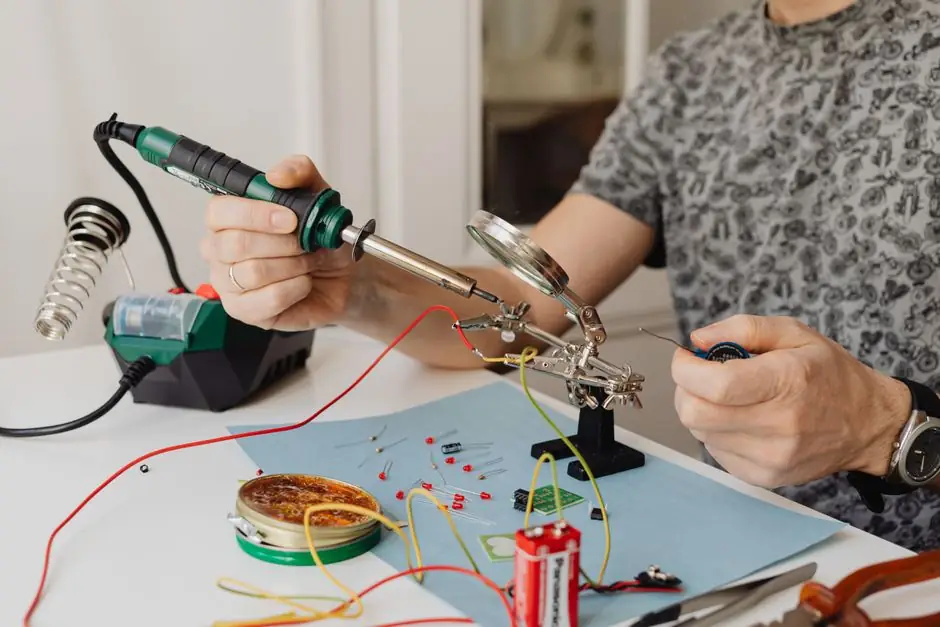
A clamp meter can measure small currents, including milliamperes, accurately [S5].
A clamp meter surrounds one conductor and infers current magnetically, which improves safety and convenience for live systems [S3][S4][S6].
Small-current accuracy starts with the measurement path
A multimeter measures current through its test leads, forcing measured current through an internal shunt or current-input circuit [S6]. That arrangement gives the instrument a direct path for comparing the input current with its internal reference.
A clamp meter uses magnetic sensing: its jaws surround a conductor, and the meter derives current from the magnetic field produced by that conductor [S3][S6]. The sensed field must be strong enough to resolve against the instrument's noise floor, calibration error and display resolution.
Clamp meters are described as more accurate than multimeters, with smaller measurement error and the ability to detect very weak currents [S4]. A digital multimeter is the stronger instrument for precision checks at milliamperes, microamperes and component-level currents.
Why the magnetic approach loses precision at the low end
Small conductor current produces a weak magnetic field. A clamp meter's usable accuracy therefore depends on its sensing technology, measurement range, conductor position and the resolution of the selected range [S3][S6].
Many clamp meters are designed around high-current service, where the magnetic field is strong and the practical benefits of non-contact measurement outweigh sensitivity at the bottom of the range [S3]. A low-current clamp can measure milliampere values, but that capability should be confirmed from the instrument specification rather than inferred from the jaw design.
This does not create a universal accuracy rule, but it demonstrates why a clamp's native scale may not suit precision work at low current.
Multimeter versus clamp meter by decision criterion
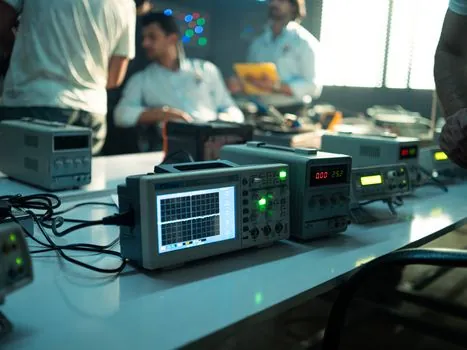
For milliamperes, a multimeter normally wins on measurement sensitivity and direct connectivity. For amperes on energized conductors, a clamp meter offers improved safety and convenience through non-contact current measurement [S3][S4]. The decisive criteria are current magnitude, circuit access, required precision and measurement type. [S3]
The comparison also changes when a multimeter is fitted with a current clamp accessory, because the electrical measurement moves back into the magnetic-sensing arrangement [S1].
Where the multimeter is the correct tool
A multimeter is the correct instrument for bench commissioning, electronics troubleshooting, sensor-loop checks and fault-finding where current is in the milliampere range or below [S3][S5]. It can measure voltage and resistance with the same instrument, reducing tool changes during diagnosis [S3].
Milliampere readings are especially common in control and instrumentation work, where signal currents must be distinguished from power-current levels. The manufacturer's accuracy statement should be read at the selected range rather than at full-scale percentage alone, because resolution, percentage error and additional digits all affect the smallest trustworthy result.
Source S5 identifies small-current measurement in milliamperes as a multimeter strength for electronics work, where the circuit may need to be opened to place the meter in series [S5]. The cost is operational rather than metrological: the circuit is interrupted, so the connection must be made at a suitable point and protected against an accidental short.
Where the clamp meter remains the better tool
A clamp meter is the better tool for fast current checks in live installations, large conductors and high-current circuits because the conductor can remain connected [S3][S6]. Clamping one conductor avoids breaking the circuit, which also reduces the chance of creating an unintended low-resistance path [S3].
The related explanation of why multimeters stop at 10 A while clamps reach 1000 A expands on that division.
AC and DC capability also requires model-level verification. Some clamp meters measure both AC and DC [S3], while an AC-only clamp based on electromagnetic induction cannot measure DC with the same sensing method [S4]. A digital multimeter can be selected with dedicated AC and DC current ranges [S4].
Errors that can reverse the expected result
Small-current readings can be wrong even when the meter has adequate nominal resolution. Measurement setup, lead contact, burden voltage, display rounding and unsourced error specifications all affect confidence in the result. [S4]
Three practical checks matter. First, compare the meter's specified accuracy at the used range, not its headline resolution. Second, use the lowest practical current range for greater display resolution. Third, confirm that the conductor under test is isolated from parallel paths, since a clamp around a cable containing multiple conductors can include unwanted current.
The contradiction in Source S4, which calls clamp meters more accurate and describes their measurement error as smaller than that of a multimeter, does not align with Sources S2 and S3 or with the physics of magnetic low-current sensing [S2][S3][S4]. The defensible conclusion is narrower: clamp accuracy is model-dependent, while standard multimeters generally have the advantage for low-current work.
Choose the instrument from the measurement requirement

Choose a multimeter when the target is a small current, the circuit can be opened safely and the result must support a precision diagnosis. Choose a clamp meter when the conductor must stay live, the current is relatively large or a rapid trend reading matters more than low-level resolution [S2][S3][S6].
For defensible small-current work, record the measured value, selected range and instrument accuracy specification, then verify a suspicious result with a second method where practical. A clamp meter with a documented milliampere range can provide a non-contact cross-check, but it does not automatically outperform the multimeter.