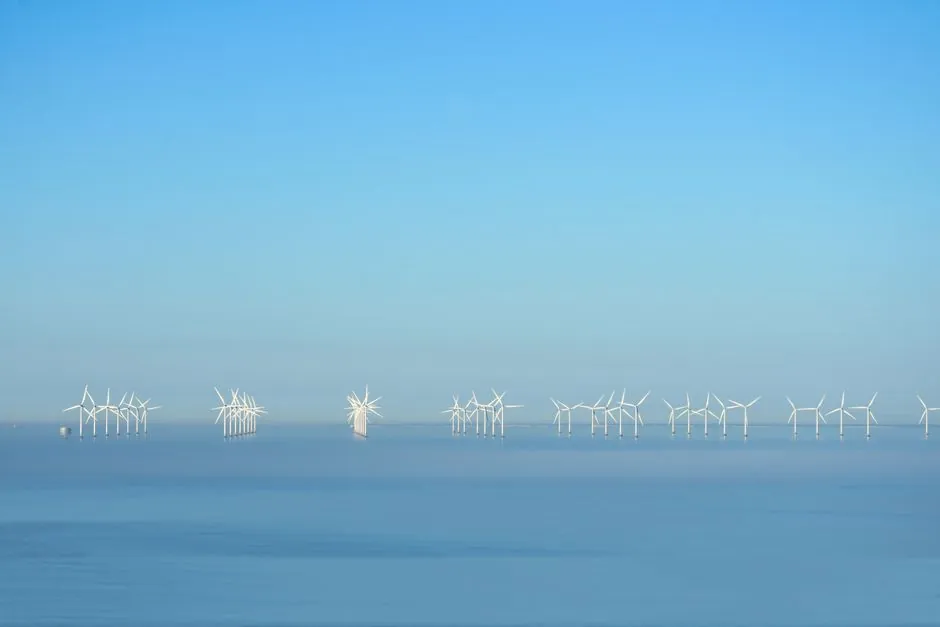
The submarine power cable market was forecast to rise from USD 8.42 billion in 2025 to USD 19.06 billion by 2034, a 9.50% compound annual growth rate across 2026–2034 [S1].
Offshore wind, cross-border HVDC links, island connections and offshore platform supplies are driving demand, while specialized cable lines and installation vessels remain constrained [S1][S5].
Market Scope and Forecast Range
Submarine power cables are undersea HVAC and HVDC transmission systems used for offshore wind export, cross-border interconnection, island-grid connection and offshore-platform supply [S1].
Published estimates differ materially. One forecast projects the submarine power cable market to grow from USD 8.42 billion in 2025 to USD 19.06 billion by 2034 at a 9.50% CAGR, while another estimates growth from USD 12.12 billion in 2025 to USD 23.95 billion by 2031 at a 12.02% CAGR [S1][S5]. The spread indicates that market definitions and forecasting assumptions differ, so buyers should not treat vendor-supplied forecasts as interchangeable [S1][S5].
A broader submarine-cable forecast covering power and communications places 2026 revenue at USD 3,304.7 million and 2033 revenue at USD 8,794.2 million, with a 6.3% CAGR [S2]. Within that scope, power cables account for 61.5% and installation for 68.4% of forecast 2026 revenue [S2].
Offshore Wind and Interconnectors Drive Demand
The global offshore wind industry added 8 GW of capacity in 2024, while wind-energy installations are projected to almost double to more than 2,000 GW by 2030, with offshore wind capacity additions reaching 140 GW [S2][S5]. The global shift toward renewable energy increases the need for subsea infrastructure to connect offshore wind farms and other offshore renewable energy facilities to onshore grids [S5].
Cross-border interconnectors add a second demand stream because they support energy security, renewable balancing and international electricity trading [S5].
HVAC and HVDC Selection Criteria
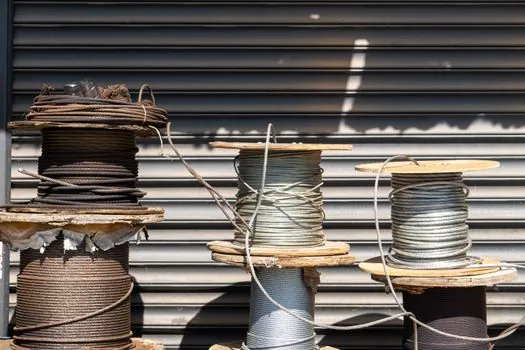
HVDC becomes more attractive as export distance, offshore wind-farm size and required transmission capacity increase, because it supports efficient long-distance transmission with reduced conversion stages compared with HVAC systems [S4][S5].
Factory Capacity and Installation Vessels Are Constraints
The market is not constrained by demand alone. A shortage of specialized production lines and cable-laying vessels is delaying projects and raising costs, with manufacturing bottlenecks limiting how quickly announced offshore-wind and interconnector projects can enter delivery [S5]. Long-lead-time cable manufacturing also constrains schedules across the project pipeline [S1].
Five cable manufacturers named in the 2026 market review were Prysmian Group, Nexans, NKT, Sumitomo Electric Industries and Furukawa Electric, with LS Cable and System, Hellenic Cables, Viscas, Hengtong Marine, ZTT International and Belden also identified [S1]. The presence of multiple suppliers does remove concentration risk, but qualification, vessel booking and route engineering remain project-specific constraints [S1][S5].
Dynamic Cables Extend Floating Wind Requirements
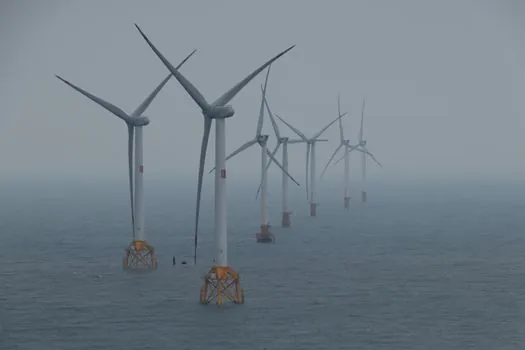
Floating wind is the fastest-growing application category in the offshore grid connection market, with an 18.6% forecast CAGR through 2033, compared with 89.4% of 2026 revenue still coming from fixed-bottom wind farms [S4].
For fixed-bottom arrays, static 66 kV array cable remains the common product family, while 132 kV and 150 kV classes support higher-capacity collection systems, and 220 kV, 275 kV, 320 kV and 525 kV export systems address transmission duties [S1]. Voltage selection must be tied to the circuit rating, route length, fault level and project configuration rather than turbine nameplate capacity alone.
Procurement Must Follow Delivery Constraints
Subsea cable buyers should separate three linked decisions: transmission architecture, cable-system specification and delivery strategy. HVAC versus HVDC determines converter and platform requirements, cable voltage determines current-carrying and installation demands, and manufacturing or vessel availability determines the credible project date [S1][S4][S5].
Interconnector packages should be secured before detailed equipment release where schedule sensitivity is high, because specialized factories and installation vessels can become the binding constraint even when turbine and converter orders are in place [S5]. Cable length, route condition, burial method, junction requirements, repair strategy and crossing agreements should be developed as one package, not isolated line items [S1].
Traceable procurement signals are the move toward standardized 2 GW, 525 kV systems, HVDC growth of 9.2% through 2033, and continued floating-wind expansion at 18.6% [S4]. These indicators identify where investment is moving, while factory-line and vessel availability determine whether advertised project schedules can be delivered [S1][S4][S5].