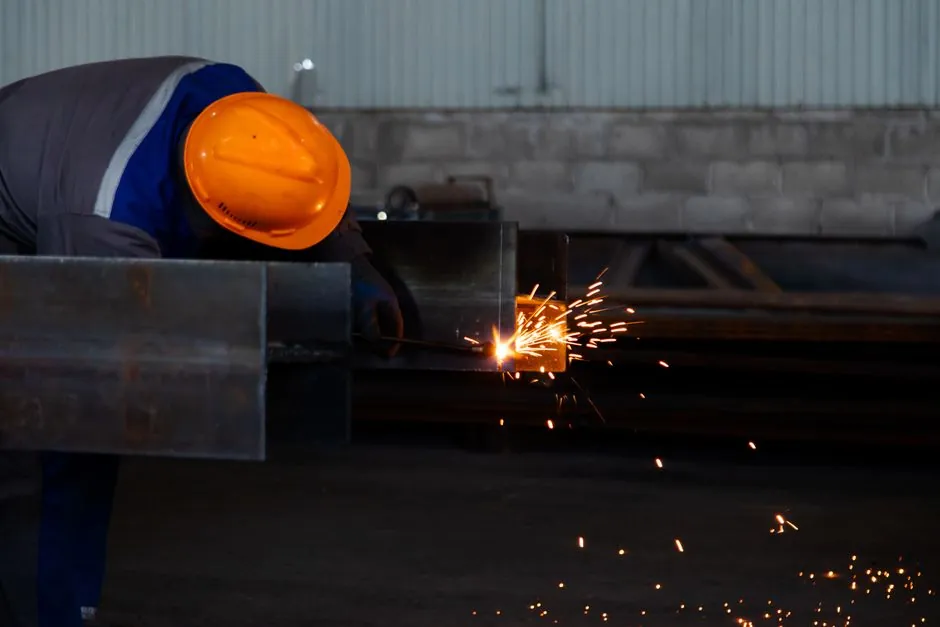
Global zinc ingot demand was valued at USD 32.46 Billion in 2025 and is projected to reach USD 36.57 Billion by 2035 at a 1.20% CAGR, while competing forecasts place the 2024 base at USD 18.21 Billion growing to USD 29.87 Billion by 2035 at a 4.6% CAGR [S3][S5].
The market is consolidated around seven to nine vertically integrated smelters, with Hindustan Zinc, Nyrstar, Glencore, Korea Zinc, Teck Resources, Boliden Group, and China Minmetals named as the principal producers competing on capacity, purity grade, and delivery consistency [S3].
Producer Concentration and 2024-2025 Volume Baseline
Global zinc ingot output reached 12.27 Million Tons in 2025, providing the physical-volume baseline against which individual smelter capacity is benchmarked [S8]. The market's high-purity sub-segment, defined by grades from Zn > 98.7% up to Zn > 99.999%, was valued at USD 1.32 Billion in 2024 and is projected to reach USD 2.83 Billion by 2032 at a 10.0% CAGR, more than double the growth rate of the broader commodity ingot market [S4].
Asia-Pacific dominated high-purity zinc ingot share in 2024, driven by Chinese and Korean electrolytic capacity, while Europe held 22.4% regional share in 2025 supported by automotive galvanizing demand in Germany, France, and Sweden [S2][S7]. North America is forecast to grow fastest in the overall zinc ingot market through 2035, reflecting reshored steel and battery-grade zinc requirements [S3].
Identified Key Manufacturers and Their Competitive Posture
The producer set cited across the most recent forecasts is consistent: Nyrstar NV, Hindustan Zinc Ltd., Glencore, Teck Resources, Korea Zinc, Boliden Group, and China Minmetals are named as the principal global zinc ingot suppliers [S1][S3]. Hindustan Zinc and Nyrstar are explicitly called out as key vendors in the high-purity segment alongside the broader player list [S3].
On the regional and trading-company side, RotoMetals, Pushpa International, ExportersIndia, and Industrial Metal Supply Company are listed as additional market participants, primarily serving North American and South Asian distribution rather than primary smelting [S1]. Nexa Resources, a Luxembourg-headquartered operator with assets in Brazil and Peru, was awarded BRL 200 million (USD 38.47 million) from Brazil's BNDES in April 2025 to implement decarbonization across its zinc value chain, signalling the capital expenditure direction among mid-tier integrated producers [S3].
Product Type Comparison: Purity Grades and Form Factor

Manufacturers compete across five physical product types: Standard purity zinc, Extra-high purity zinc, Electrolytic zinc, Cast zinc ingots, and Rolled zinc ingots, with cast and rolled formats dominating 2024 share in the high-purity sub-segment [S2]. Purity bands from Zn > 98.7% (commodity galvanizing grade) up to Zn > 99.999% (semiconductor and pharma grade) define the price-performance trade-off producers must serve, and the Zn > 99.5% and Zn > 99.99% bands are the fastest-moving tiers because of semiconductor and zinc-air battery demand [S4].
Application segmentation also shapes producer positioning: Galvanizing remains the largest end-use, while Die casting, Chemical manufacturing, Electronics, and Alloy production are the fastest-growing downstream channels [S2]. Producers supplying zinc die casting machine operators and industrial valve brass foundries are tied directly to the Zn > 98.7% to Zn > 99.5% range, whereas electronics and battery customers require the Zn > 99.99% and above bands.
Selection Criteria for Specifying a Zinc Ingot Manufacturer
The first decision is purity band versus end-use: hot-dip galvanizing lines typically accept Zn > 98.7%, brass and zinc die casting machine feed stocks require Zn > 99.5%, and semiconductor or pharmaceutical users must specify Zn > 99.99% with trace-metal certificates [S4]. The second criterion is delivery form: cast ingots suit remelting operations and large galvanizing kettles, while rolled zinc ingots and electrolytic zinc shot are preferred for continuous feed systems and high-purity dissolvers [S2].
The third criterion is regional logistics and lead time: Asian producers dominate Asia-Pacific high-purity supply, European smelters (Boliden, Nyrstar's European assets) serve the 22.4% European share, and North American buyers rely on a mix of Nyrstar's Clarksville operation, Korean imports, and distribution houses like Industrial Metal Supply and RotoMetals [S1][S7]. Fourth, decarbonization credentials are emerging as a procurement filter, with BNDES-backed Nexa and EU smelters publishing scope-1 reduction roadmaps after April 2025 [S3].
Demand Drivers and Capacity-Constrained Growth Outlook
Five structural drivers underpin the 2025-2035 expansion: steel industry galvanizing demand, electronics and semiconductor growth, corrosion-protection regulations, alloy demand from automotive lightweighting, and general industrial growth in developing economies [S2]. Renewable energy and zinc-ion battery development are flagged as the highest-growth untapped opportunities, while price volatility, environmental compliance cost, and raw material sourcing remain the binding constraints [S2].
Volume growth diverges sharply by segment: the broad zinc ingot market grows at 4.01% to 4.6% CAGR depending on forecast source, whereas the high-purity sub-segment compounds at 6% to 10.0% across the major 2024-2035 forecasts [S2][S3][S4][S6]. This gap implies that producers lacking electrolytic refining capacity and ultra-high-purity finishing lines will progressively lose share to integrated players such as Korea Zinc, Boliden, and Hindustan Zinc, who already command premium positions in the Zn > 99.99% and Zn > 99.999% bands [S4].
Limitations, Failure Modes, and Standards Exposure
Purchasers should note the wide spread between competing market sizing: USD 18.21 Billion (2024) versus USD 32.46 Billion (2025) base years, and 1.20% versus 4.6% versus 4.01% CAGR estimates, meaning single-source forecasts should not be used for capex justification without triangulation [S3][S5][S6]. Producer share percentages are not disclosed in the available research; competitive position must therefore be inferred from named-vendor lists and regional volume patterns rather than precise market share figures.
Quality risk concentrates in the boundary between commodity Zn > 98.7% and high-purity Zn > 99.5% grades, where Bismuth, Lead, and Cadmium trace contamination can disqualify batches for brass and industrial valve applications, and cause die-casting defects in zinc die casting machine cells. Producers serving battery and pharmaceutical end-markets must additionally demonstrate consistency across ASTM B6 (zinc metal ingot) and ISO 752 purity frameworks, though specific revision dates are not detailed in the available research.
Sourcing Channels and Cross-Reference for Buyers

Procurement teams should cross-reference the named integrated smelters (Hindustan Zinc, Nyrstar, Glencore, Korea Zinc, Teck Resources, Boliden, China Minmetals) against regional distributors (RotoMetals, Pushpa International, Industrial Metal Supply Company) to map both primary and secondary supply routes [S1][S3]. For projects requiring matched pressure transmitter and flow meter instrumentation on galvanizing lines and die-casting cells, the ingot spec sheet should be requested alongside melt-loss and trace-metal certificates before order release.
Trackable signals to watch through 2026-2027: BNDES-funded Nexa decarbonization milestones from April 2025 onward, additional Asian electrolytic capacity announcements from Korea Zinc and China Minmetals, and any high-purity sub-segment M&A between integrated smelters and battery-materials specialists [S3]. A separate forecast from Chemanalyst places the broader zinc ingot market at USD 35,001 million in 2025 expanding to USD 53,735 million by 2036 at 4.01% CAGR, the most aggressive of the available growth projections and worth monitoring for methodology updates [S6].
This topic is covered further in Counter-Drone Market Snapshot: Deployment Dollars, Patent Filings, and a 191,000-sq-ft....