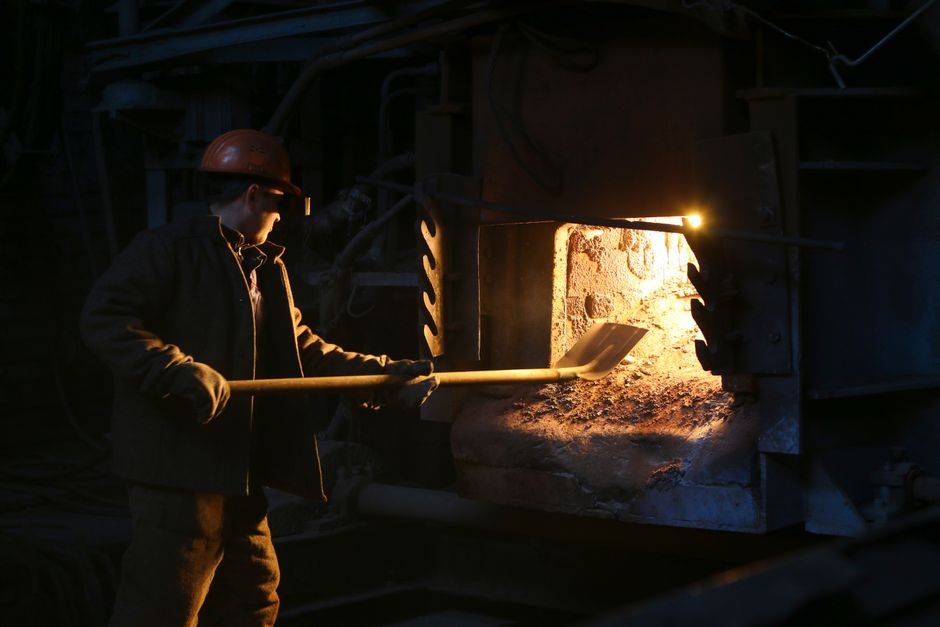
Globally, the 2025 zinc ingot market reached 12.27 million tons and IMARC Group projects 15.63 million tons by 2034 at a 2.7% CAGR (2026-2034), with end-use spread across galvanizing, die-casting alloys, brass, zinc oxide, and energy storage [S3]. A short list of primary producers — Nyrstar, RotoMetals, Industrial Metal Supply Company, Advameg Inc., Phoenix Industries Ltd., and Focus Technology Co., Ltd — anchors the supply side, while Thomasnet, Global Sources, and regional trading desks fill the distributor tier [S1][S3][S5].
The practical buyer question is which grade-and-form combination matches a specific downstream process, then which supplier can deliver against that spec on a defined incoterm. Everything else — brand, country of origin, ESG marketing — is secondary unless the spec gate forces it.
Spec Gates: HG 99.995% as the Default, Then the Six-Impurity Ceiling
For tube, wire, sheet, or general galvanizing, the working spec is High Grade Zinc at 99.995% minimum Zn, with six controlled impurities capped as follows: Pb ≤ 0.003% (typical 0.0021%), Cd ≤ 0.003% (typical 0.0005%), Fe ≤ 0.002% (typical 0.0003%), Sn ≤ 0.001% (typical <0.0004%), Cu ≤ 0.001% (typical 0.0002%), Al ≤ 0.001% (typical 0.0002%), total of the six ≤ 0.005% (typical <0.0038%) [S2]. Where buyers need ≥ 99.99% pure zinc for superior performance in continuous galvanizing and alloy master batches, the higher-purity tier is the procurement target [S4].
That same HG 99.995% grade cross-references four standards on a single line of a datasheet: ISO 752:2004 grade ZN-1, GB/T 470:2008 grade Zn99.995, EN 1179:2003 grade Z1, and JIS H2107 highest pure zinc metal, with ASTM B6:07 covering the UNS designation in the US [S2]. For engineering reference, the physical constants are fixed: solid density 7.14 kg/dm³, liquid density 6.62 kg/dm³ at 419 °C, melting point 419 °C, surface tension 0.78 N/m at 450 °C, melting enthalpy 100 kJ/kg, and specific heat 460 J/kg·K solid / 628 J/kg·K liquid [S2]. Any zinc ingot upstream or downstream discussion in this guide is built on these same numbers and the zinc ingot upstream/downstream map expands on the grade chain.
Form Factor: Slab, L Block, G Block — Pick by Melting-Furnace Footprint
Form is a furnace-handling decision more than a chemistry decision. The 99.995% HG datasheet lists four standard packagings: 26 kg slab (480 x 240 x 39 mm), 1040 kg slab bundle of 40 slabs (960 x 480 x 430 mm), 1135 ± 45 kg L block (1820 x 455 x 260 mm), and 1089 ± 30 kg G block (1410 x 460 x 290 mm) [S2]. Jumbo versions of the L and G blocks reuse the same nominal mass and dimensions and exist for high-throughput induction and crucible furnaces where charge density and stacking footprint drive melt-rate economics.
For galvanizing lines feeding continuous sheet or wire, the 26 kg slab and the 1040 kg bundle minimize cold-charge handling time. For die-casting alloy melters and brass mill feeders, the L and G blocks cut the number of charge cycles per shift. For an aluminum ingot sourcing comparison the aluminum ingot suppliers map walks through the same form-factor logic on the aluminum side.
Supplier Tier Map: Primary Producers, Specialty Distributors, Trading Desks
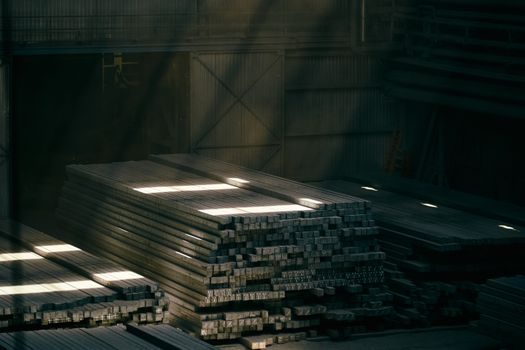
The cleanest working map has three tiers. Tier 1 is integrated primary smelters — Nyrstar is the reference name, marketing primary low-carbon zinc and recycled zinc with differentiated GHG claims [S6]. Tier 2 is the specialty and mill-product distributor tier that holds inventory in slab or block form and stocks multiple grades against a published spec; Thomasnet and the Allure Merx export desk sit here, with purity stated as ≥ 99.99% and form available as ingots, granules, and shot [S1][S4]. Tier 3 is the trading-desk layer on Global Sources that aggregates 147 wholesale zinc ingot suppliers for smaller buyers and project shipments [S5].
Selection is not symmetric across tiers. Tier 1 is the right counterparty for multi-thousand-ton annual contracts with grade-traceable LME/SHFE-style documentation, particularly for galvanizing and die-casting alloys where consistency across heats matters. Tier 2 fits mid-volume buyers needing cut-to-size orders, mixed-form shipments (ingot + granule), and one-line datasheet documentation. Tier 3 fits spot procurement, project tonnage, and price discovery rather than repeat-grade reliability.
Process Routes and End-Use Fit
Process used in the typical zinc ingot plant runs through mining and extraction of zinc ore, roasting and electrolysis purification, melting and casting, controlled cooling, and packaging [S3]. End-use industries served are automotive, construction, electronics, manufacturing, and energy storage; applications split across galvanization of steel and iron, zinc alloy production, zinc batteries, zinc oxide for industrial chemistry, and die-casting in automotive and electronics [S3].
Die-casting buyers in automotive and electronics tend to be grade-sensitive on Pb, Cd, and Sn because finished-part limits on those elements drive the alloy spec, not just the base zinc spec. Continuous galvanizers on sheet, tube, and wire lines tend to be Fe- and Al-sensitive because those impurities change bath fluidity and dross rate. Brass mill buyers are the most forgiving on the impurity bundle and the most price-sensitive on the base Zn floor. The right ingot spec is downstream-defined before any supplier conversation starts.
Decision Criteria: Grade, Form, Documentation, Incoterm
Four criteria line the option set up against each other. Grade: 99.995% HG is the default for galvanizing and most die-casting; ≥ 99.99% is specified where continuous galvanizing line surface finish or alloy master-batch purity is a binding requirement. Form: slab/bundle for galvanizing, L/G block for alloy melters, granule/shot for chemical and zinc-oxide feed. Documentation: ISO 752 ZN-1, EN 1179 Z1, ASTM B6, GB/T 470 Zn99.995, and JIS H2107 all map to the same HG chemistry — a buyer should pick the one that matches their customer's audit trail, not multiple at once [S2]. Incoterm: primary smelters favor CIF or FOB vessel-load contracts; distributors often hold EXW or DDP inventory for short lead-time orders.
Project economics from the IMARC 2026 DPR: a typical zinc ingot plant runs 10,000-50,000 MT annual capacity with gross profit margins in the 15-25% range under normal operating conditions, supported by stable downstream demand and value-added processing [S3]. For a buyer, that margin band is also a useful signal: a distributor quoting 4-5% over LME has thin value-add, while a distributor quoting 12-15% over LME is bundling form conversion, certified documentation, and small-batch flexibility.
Limitations and Failure Modes in Sourcing
The most common failure mode is grade mismatch at the certificate level — the supplier ships material that meets total Zn ≥ 99.995% but fails one of the six individual impurity caps. ASTM B6, EN 1179 Z1, ISO 752 ZN-1, and GB/T 470 Zn99.995 each carry their own impurity ceiling pattern; a cross-standard buyer must verify the test report line-by-line, not only the Zn floor [S2]. The second failure mode is form substitution without notice — a slab replaced by a notional equivalent block, or vice versa, breaks the furnace charge cycle that the production line is tuned to.
The third is documentation drift: a primary smelter issues a mill certificate tied to LME/SHFE special contract rules, while a distributor may issue only a commercial certificate. For continuous galvanizing, die-casting, and brass mill buyers, the difference shows up at customer audit, not at goods-in. The fourth is freight and handling damage on block shipments — L and G block dimensions are sized to container and truck bed footprints, and a damaged block cannot be charged to a closed-crucible furnace without rework.
Sourcing Signals to Track in 2026
Three trackable signals: (1) primary smelter ESG offerings — Nyrstar now markets a low-carbon zinc line and a recycled zinc line, with the differentiation stated as a reduction in GHG across the production and supply chain [S6]; (2) the published 2025-2034 market trajectory at 2.7% CAGR, which keeps zinc ingot on the long-cycle industrial input list rather than a speculative commodity [S3]; (3) the 147-supplier wholesale layer on Global Sources, which signals sustained distributor-side liquidity for small and mid-volume buyers rather than a tightening primary market [S5].
The next sourcing node worth tracking is the cross-grade reconciliation between ASTM B6, EN 1179 Z1, and GB/T 470 Zn99.995 datasheets for the same HG 99.995% chemistry — a buyer who locks that reconciliation once can reuse it across primary smelter and distributor tiers without re-validating on every contract.
Component reference pages worth checking: zinc die casting machine, pressure transmitter, and flow meter.