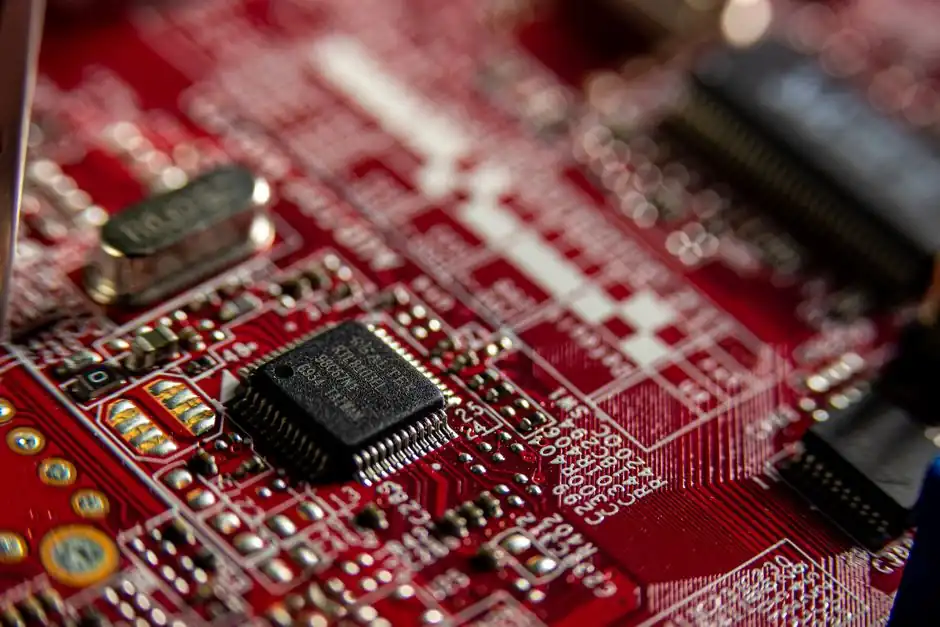
Industrial transient capture splits into two practical rate tiers: a 1 kHz class used for process-pressure surges and machine health, and a 100 kHz class used for impulse and vibration events where the signal bandwidth exceeds the audible range [S2][S6].
High-speed recorder platforms such as the Kistler 2529A push the rate ceiling much higher, with up to 20 MS/s per channel and charge-signal bandwidth of 500 kHz or more for crash and explosive events [S3]. Between those poles, the 1 kHz to 100 kHz window is where most engineers mis-spec equipment, either oversampling and drowning storage or undersampling and missing the leading edge of a fault.
What the 1 kHz Tier Actually Resolves
A 1 kHz pressure transient logger such as the SensorsONE Triton-IT samples at 1000 readings per second, but the trigger decision runs at 10 Hz against a threshold and only accelerates to 1 kHz once an upset is detected [S4]. At 1 ms per sample, the unit can resolve a water-hammer or pressure-relief-valve slam with adequate rise-time detail for network analysis [S4]. Memory is sized to the duty cycle: 1 million readings organized into up to 100 surge events, retained 10 years in non-volatile Flash, with a 1000-sample pre-trigger buffer so the cause of the spike is not lost [S4]. Battery life exceeds 5 years at the slow log rate, and continuous 1 kHz operation requires external power, a useful tell that 1 kHz is already at the edge of standalone logger economics [S4].
This is the right tier for SCADA-tied process signals where the sensor itself (see a typical pressure transmitter front end) is already band-limited. It is also the right tier for anyone using a data logger class instrument where the storage, power and cost budgets are tuned for months of unattended service rather than microsecond fidelity.
Where 100 kHz Becomes the Minimum
At 100 kHz, the per-sample interval is 10 microseconds, fast enough to capture vibration, acoustic emission, and most electromagnetic transients on power lines, but still inside the practical memory window of a stand-alone recorder [S2][S6]. Keyence vendor guidance places structural testing, pressure monitoring and machine diagnostics squarely in the 1 kHz to 100 kHz band, and reserves 100 kHz-plus for vibration and high-speed impulse work [S6]. HIOKI's memory-recorder product line advertises a DC to 100 kHz max input band as the defining envelope of the class, with sample rates stepped at 100 Hz, 1 kHz, or OFF depending on the measurement window [S7].
Counter-style high-speed logger modules are documented to top out near 100 kHz, which is the practical ceiling if you are staying inside a PLC rack rather than moving to a dedicated transient recorder [S2]. When a project needs both 100 kHz-class acquisition and control-loop integration, the architecture choice between a PLC fast-input module and a standalone recorder is the one that drives the spec, not the sample rate alone. For a deeper comparison of 500 kHz-class architectures, see the PLC vs Data Logger 500 kHz acquisition guide (note: that candidate URL is mismatched in topic, so a better cross-link for control-loop and recorder tradeoffs is the Modbus to MQTT gateway spec reference, which addresses the same publish-or-buffer architectural decision at the SCADA edge).
How the Two Tiers Compare on Decision Criteria
Settled, the engineering choice is not rate alone but rate, bandwidth, memory, and trigger architecture together. A 1 kHz pressure logger gives 1 ms sample interval, ~10 Hz threshold scan, 1 M-sample Flash, and 5+ year battery life, with 1000-sample pre-trigger capture [S4]. A 100 kHz memory recorder gives 10 microsecond sample interval, oscilloscope-like front-end bandwidth up to 100 kHz, and trigger modes tied to analog comparators rather than software thresholds [S7]. A 1 MHz transient-capture channel sits one tier above, delivering 1 microsecond per sample and 1000 samples per event, which covers 1 ms of impulse, or about 65 times more resolution than 256-samples-per-cycle waveform capture in the same instrument [S5]. For an apples-to-apples line-up: on cost, the 1 kHz logger is field-deployable for months, the 100 kHz recorder is bench-or-rack gear, and the 1 MHz transient module is a special-function add-on; on bandwidth, 1 kHz covers process surges, 100 kHz covers vibration and switching transients, and 1 MHz covers lightning-class impulses; on memory, lower rates buy longer window, higher rates buy finer detail of a short event.
What Each Tier Is For, and What It Is Not For
The 1 kHz class is the right pick for water-hammer logging, PRV and pump monitoring, and slow process-pressure transients in the 100 ms to multi-second regime [S4]. It is the wrong pick for impulse events faster than about 1 ms, which alias or get filtered to a single threshold crossing. The 100 kHz class is the right pick for machine diagnostics, structural modal testing, and most power-quality switching transients [S6][S7]. It is the wrong pick for sub-100-microsecond impulses such as lightning, capacitor-discharge, or airbag deployment, where 1 MHz to 20 MS/s is required [S3][S5].
Engineers should also note that high-frequency sensor data at 1 kHz to 100 kHz has moved out of the lab and into streaming analytics pipelines, where the bottleneck is no longer the sensor but the data pipeline that has to keep up with the sample stream [S8]. For lab-grade optical work, 100 kHz shot-to-shot detection has been demonstrated in transient-absorption spectroscopy since 2014, with full broadband detection on a single laser shot rather than averaged over k pulses, which matters for kinetics on the sub-picosecond to nanosecond scale [S1].
Limits, Failure Modes, and Storage Reality
At 1 kHz, 1 million readings equals roughly 16 minutes of continuous high-speed capture, which is why the 1 kHz logger is paired with a low-rate background log and trigger-conditional burst mode [S4]. At 100 kHz, the same memory budget buys only 10 seconds of contiguous data, so the recorder must rely on pre-trigger buffers and segment memory to avoid filling storage during a long test [S7]. At 1 MHz, 1000 samples cover just 1 ms, and a re-arm is needed if the disturbance persists beyond that window [S5]. High-bandwidth charge inputs above 500 kHz need IEPE or charge-mode conditioning and dedicated cabling, which is why the Kistler 2529A separates charge and voltage inputs on a per-channel basis and exposes a dedicated trigger input and output [S3].
Two failure modes repeat across all three tiers: undersampling, where the leading edge of the event is missed because the trigger sample is slower than the rise time, and oversampling, where the recorder captures the event in fine detail but cannot stream to disk in real time, so the engineer ends up with a 10 ms snapshot and no context. The fix in both cases is to match the recorder's pre-trigger depth and segment architecture to the expected event duration, not the sample rate alone.
Standards, Triggers, and Integration Notes
Trigger architecture is where the three tiers differ most and where datasheets are most often misread. The 1 kHz pressure logger triggers on a fixed level or rate-of-change threshold checked 10 times per second, with software-selectable trigger modes [S4]. The 100 kHz memory recorder triggers on analog comparator thresholds, often with a separate transient-capture input that cross-triggers a slower waveform capture on the same instrument [S5][S7]. The 1 MHz transient module triggers on a single bipolar peak-voltage threshold with a 1 microsecond decision time, captures 1000 samples for all channels simultaneously, and re-arms immediately if the disturbance continues [S5]. Where these instruments feed higher-level control, a variable speed drive or industrial valve actuator sees the same 4-20 mA or fieldbus signal regardless of which recorder captured it, so the recorder choice is a measurement decision, not a control decision.
Verifiable next nodes: a vendor comparison of 100 kHz memory recorders against 1 MHz transient modules in the same price band, and a power-quality test note comparing 256 samples-per-cycle waveform capture to 1 MHz transient capture on the same lightning impulse. Trackable signal: at least one 2026-vintage Hioki, Keysight, or Kistler datasheet that publishes both the analog input bandwidth and the per-channel maximum sample rate as separate, non-aliased numbers, which is the single best indicator that a recorder's headline rate is real and not an interpolated specification.