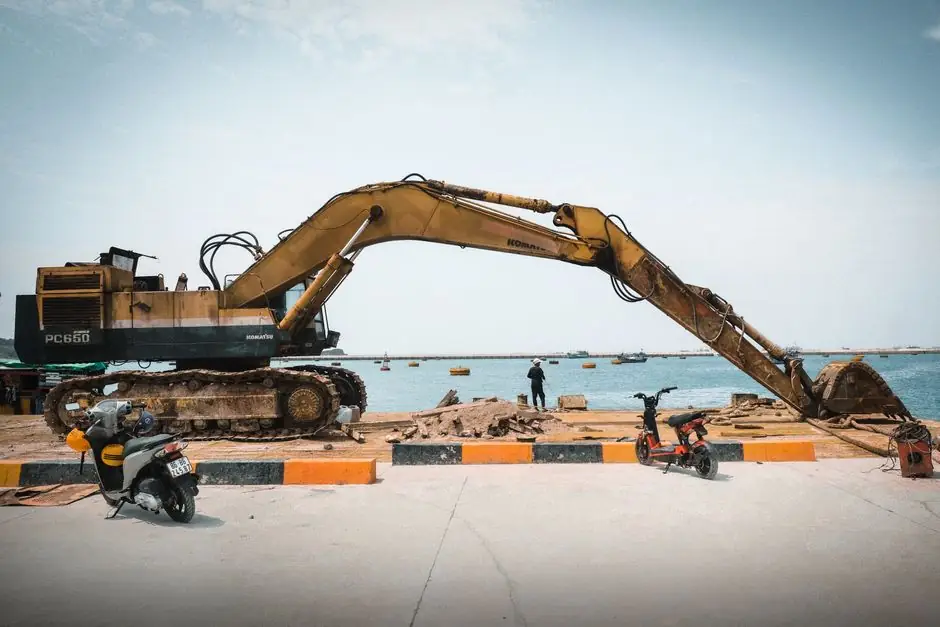
A standard excavator configured with a mono boom typically maxes out at 25-35 ft of horizontal reach, while a long reach boom-and-arm package extends that envelope to 40-100+ ft depending on carrier size and stick length [S2]. The mechanical difference is the front attachment: a longer main boom, an extended arm (stick), and on many models an additional boom section, paired with a heavier counterweight to keep the machine on the ground [S2].
For a 42-ton class machine, Volvo's EC380ELR long reach boom runs 27 ft 11 in (8.5 m) versus a 21 ft 2 in (6.45 m) standard boom and 16 ft 5 in (5 m) arm, putting maximum reach at 48 ft 5 in (14.75 m) [S3]. Tier-1 long reach working equipment is commonly quoted at boom lengths of 8.5-11 m with arms from 6 m to 8 m, yielding dig depths of 11.66-15.13 m [S5]. Reach gains come at a documented cost of roughly 40% versus a standard reach configuration, the inverse of the 40% reach uplift a super-long package delivers [S1].
Boom Geometry and Reach Envelope by Configuration
Standard mono booms (6.2 m mass-excavation or 6.45 m general-purpose) are the productivity default for crawler excavators because they pair a decent bucket size range with a short swing arc, and they let the machine run a larger bucket than long reach geometry allows [S3]. Two-piece booms add a knuckle that lets the operator change the boom bend for low-headroom work under bridges or inside buildings, and on wheeled carriers the two-piece layout is the more common factory choice [S3].
Long reach booms add 1-3 m of boom and 1-3 m of stick over the standard geometry, but the same mass and roughly the same hydraulic pressure at the bucket. For deep single-pass work, the 11.66-15.13 m dig depth range of factory long reach equipment sets the practical ceiling for this class [S5].
Counterweight, Hydraulics, and Carrier Stability
Long reach excavators are not just longer booms bolted to a standard machine. The counterweight is typically 20-40% heavier than a standard carrier's to offset the longer front moment arm, and on larger models the counterweight extends past the rear of the machine, growing the tail swing radius [S2]. Boom-arm pin joints use larger pins and bushings to absorb the higher torque, and the arm itself is often tapered to optimize strength-to-weight along its length [S2].
Hydraulic systems are reworked to maintain pressure and flow across longer hose runs. Long reach models use larger-displacement pumps and motors, longer-stroke cylinders, and reinforced seals to handle the additional leverage forces at full extension [S2]. Two-piece offset booms carry a separate caveat: on large machines the offset knuckle adds weight outboard of the boom pivots and measurably reduces lifting capacity, plus the additional cylinder and joint raise maintenance cost [S3]. For comparison, the industrial valve and fitting decision logic for high-pressure hydraulic circuits follows similar pressure-versus-flow tradeoffs when line runs get longer.
Selection Matrix: Standard, Long Reach, and Super Long Reach
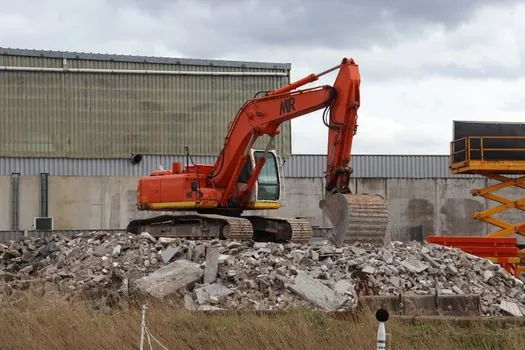
Standard mono boom is the right call when the job is mass excavation, truck loading, foundation digging on accessible ground, or any high-cycle dig where the operator needs a large bucket and a short swing. Cycle speed and lift at close radius both peak in this geometry, and the carrier can run a mass-excavation boom with a short stick for an even larger bucket [S3].
Long reach (boom 8.5-11 m, arm 6-8 m, dig depth 11.66-15.13 m) is specified for pond and canal cleaning, riverbank work, deep utility trenching across a roadway, slope finishing on a high embankment, and demolition of low-rise structures where the carrier must stand outside the debris envelope [S3][S5]. Super long reach, with up to 40% reach uplift over standard, covers dredging, large-quarry face work, and tailings-pond desilting where the working face is dozens of metres from solid undercarriage footing [S1].
Two-piece offset boom is the right answer in dense urban work, alleys, and utility corridors next to standing structures, where the operator needs to dig in line with one track rather than swing the house [S3]. A summary comparison, keyed to the decision criteria that show up in real bid packages:
1) Horizontal reach: standard 25-35 ft, long reach 40-100+ ft, super long reach up to ~40% beyond standard [S1][S2]. 2) Bucket capacity: standard largest, long reach roughly one size down due to leverage and stability limits [S3]. 3) Lift at radius: standard highest close in, long reach drops at full extension, two-piece offset drops further on large carriers [S3]. 4) Carrier mass: standard baseline, long reach +20-40% counterweight, super long reach typically on a heavier base machine [S2]. 5) Best fit: standard for mass dig and truck loading, long reach for water and embankment, super long reach for dredging and high face work, two-piece offset for confined urban digs [S1][S3].
Operating Costs, Transport, and Field Constraints
Long reach kits are sold both as OEM factory options (e.g., the "LR" designation on Volvo's EC380ELR) and as retrofit arm-and-boom packages from specialists such as HAWK Excavator, which ship extended front ends compatible with major carrier brands for hammering, scooping, crushing, picking, and dredging-pump work [S1][S3]. The longer boom changes road-transport dimensions: machines over the 3.5 m width and standard transport height routinely need permits, escorts, or partial boom removal, and the longer boom forces a larger tail-swing radius on site that has to be planned around overhead lines and adjacent structures.
Field failure modes differ from the standard carrier. Extended booms magnify the bending moment at the boom foot under off-axis loading, so operators are expected to load the bucket straight, not curled, when at full reach. Pins, bushings, and boom-foot welds are the higher-wear items, and HAWK specifically calls out the extended arm as engineered for "minimal attachment maintenance" under the extra stress of extended-reach work [S1]. For engineers mapping wear-part replacement intervals across a mixed fleet, the hard-bearing vs soft-bearing balancing machine decision matrix uses the same kind of stress-versus-throughput logic that governs boom inspection cadence.
Standards, Documentation, and Operator Considerations
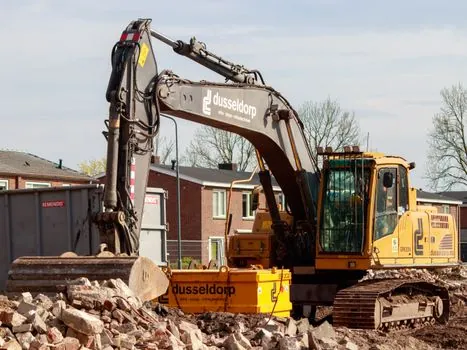
There is no single ISO or SAE standard that fixes a "long reach" threshold: the term is OEM-defined. The convention is to mark a long reach variant with an "LR" suffix (Volvo EC380ELR), a "SLR" suffix for super long reach, and to quote the boom length, arm length, and maximum dig depth on the nameplate rather than the reach percentage [S3]. Field operators are expected to follow the carrier and arm-package manuals, since the lift charts at full extension are unique to that boom-and-arm combination; HAWK's documentation explicitly tells users to "always refer to the operator's manual for optimal performance and safety" [S1].
From a procurement standpoint, ask the OEM for the load chart at the working radius the job actually requires, the transport width and height with the long boom pinned, and the counterweight configuration. If the spec sheet only quotes maximum reach and not the corresponding lift at that radius, treat it as a flag, because the same 14.75 m reach on the EC380ELR will lift a very different load at 6 m radius than at 12 m radius [S3]. For fleet owners cross-referencing carrier capability with excavator class size and attachment selection, the long reach decision is one of the few cases where the boom geometry, not the carrier mass, drives the productive envelope of the machine.
Trackable signals for the rest of 2026: watch the OEM long reach model releases on 30-50 ton carriers (the class where the 8.5-11 m boom band is most productive), and watch retrofit arm specialists (HAWK and peers) for new carrier-fitment certifications, since those kits are how most long reach machines in rental fleets are actually configured [S1].
Detailed specification references: reach truck.