A card reader and a credential must share the same carrier frequency to communicate, which is why 125 kHz HID Prox and EM4100 cards cannot be read by 13.56 MHz MIFARE/iCLASS readers, and vice versa, unless the reader is explicitly a multi-frequency model [S1].
125 kHz proximity cards (HID ProxCard II 1326, ISOProx II 1386, EM4100/4200, T5577 in EM emulation, 26-bit H10301 Wiegand) are passive RFID tags that transmit a fixed ID with no encryption; 13.56 MHz smart cards (MIFARE Classic 1K, MIFARE DESFire, iCLASS, iCLASS SE, Seos) support mutual authentication, encrypted sectors, and typically 1–10 cm read range on ISO/IEC 14443-A and ISO/IEC 15693 [S1][S2][S6].
Why Frequency Decides Compatibility, Not the Card Format
Every passive credential contains a tuned LC antenna, and the wall reader broadcasts at a specific carrier to power that antenna; if the tuned frequency does not match, the chip never wakes up and the reader simply never sees the card, regardless of plastic shape, chip capacity, or bit format [S1].
Operationally, that means you cannot reformat a 125 kHz HID Prox card into a 13.56 MHz MIFARE Classic 1K by re-encoding, and a generic MIFARE card will not drop into an iCLASS or Seos system even though both operate at 13.56 MHz, because HID's secure data model is proprietary rather than ISO 14443-A stock [S1]. Authentication method, key management, and OSDP (Open Supervised Device Protocol) vs Wiegand backhaul are separate decisions on top of the frequency choice [S3].
Two Reader Options When You Have Mixed Populations
For buildings with a legacy 125 kHz population, a dual-frequency (multi-tech) reader is the common path: it enumerates 125 kHz and 13.56 MHz credentials in the same antenna, so a single door can accept old HID Prox fobs while new MIFARE DESFire EV2/EV3 cards are issued [S3][S4].
The practical alternative is a phased swap, where new 13.56 MHz readers are installed door-by-door, employees carry both cards during the cut-over, and 125 kHz panels are decommissioned once the last legacy credential is reissued; this approach reduces reader unit cost but doubles the credential inventory during migration [S3]. Multi-frequency handheld duplicators in the $70–$80 range, supporting 125 kHz (EM4100, T5577, HID Prox) and 13.56 MHz (MIFARE UID, IC), are widely sold for elevator, parking, and attendance cloning, which is a security argument for retiring unencrypted 125 kHz stock [S4].
Decision Matrix: 125 kHz vs 13.56 MHz vs Dual-Frequency
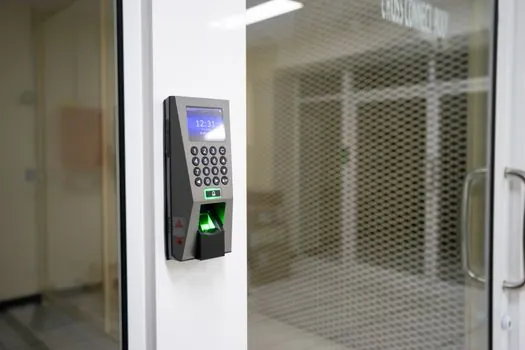
On security, 125 kHz sends a fixed ID in the clear, so it can be cloned with a $25 handheld duplicator in under a minute, whereas 13.56 MHz with MIFARE DESFire or Seos adds AES/3DES mutual authentication and per-sector keys that are not readable from a UID-only clone [S1][S2][S4].
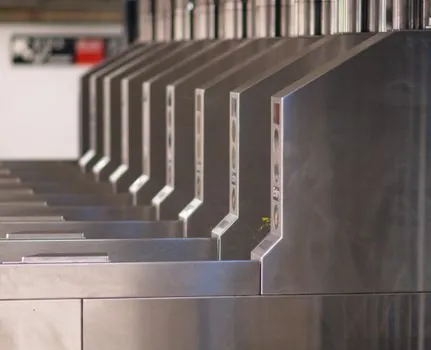
On read range, 125 kHz proximity readers typically reach 5–15 cm and are described by integrators as "forgiving" even through packaging or near metal, while 13.56 MHz is more sensitive to antenna geometry and metal backplanes but supports a tighter 1–10 cm read zone useful for turnstiles [S1][S5]. On credential cost, a generic 125 kHz clamshell is roughly one-third the price of a 13.56 MHz MIFARE DESFire card, and dual-frequency readers carry a 20–40% unit premium over single-frequency models in 2026 distributor pricing [S2][S4]. For a deeper side-by-side of the encryption gap, see the proximity card vs smart card encryption spec decision breakdown.
Who Should Stay on 125 kHz, Who Must Migrate
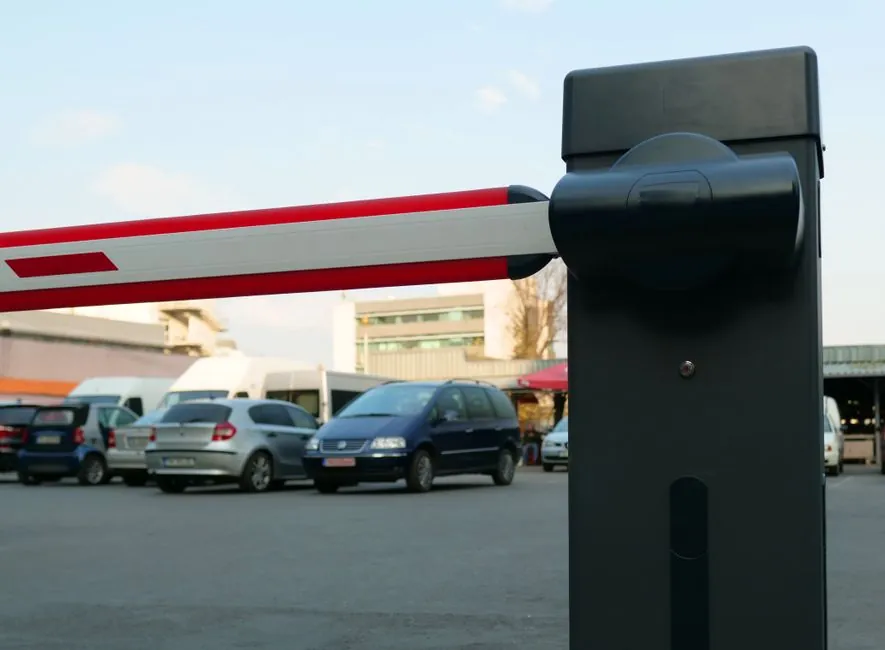
125 kHz is acceptable for low-sensitivity doors: storerooms, plant yards, parking gates, and warehouses where the worst outcome from a cloned card is a missing pallet, and where the existing Wiegand 26-bit reader population is large enough that a fleet replacement would not be amortised inside the panel lifecycle [S1][S7].
13.56 MHz with MIFARE DESFire, iCLASS SE, or Seos is the right call for healthcare, data centres, government, multi-tenant high-rise, and any site that must support mobile credentials, cashless vending, or secure print release on the same card [S2][S3][S6]. If a site is already on 125 kHz and cannot rip-and-replace, install dual-frequency readers at high-risk doors only and keep 125 kHz on the perimeter, then schedule a full migration on the next panel refresh; the migration cost per door is discussed in Access Control Expansion Cost Per Additional Door: 2026 Numbers, and per-door installed pricing across reader tiers is laid out in Access Control Per-Door Cost: 2026 Price Bands and the Drivers That Move Them [S3].
What a Spec Sheet Should Lock Down Before Order
Confirm four things before signing a PO: the supported carrier frequency list (125 kHz only, 13.56 MHz only, or both), the exact credential chip families the reader is certified against (HID Prox 1326/1386, EM4100, MIFARE Classic 1K, MIFARE DESFire EV2/EV3, iCLASS SE, Seos), the reader-to-controller protocol (Wiegand 26-bit legacy vs OSDP v2.2 with Secure Channel for encrypted backhaul), and whether the reader is listed for the relevant hazardous or outdoor enclosure rating if it is going on a perimeter gate [S3].
Two traps to avoid: first, "13.56 MHz" alone is not a sufficient spec, because a reader that reads only the MIFARE UID/CSN (Card Serial Number) gives no more security than 125 kHz and can still be cloned; the spec must say "authenticated sector read" or name the key model (AES, 3DES, EV1/EV2 diversified keys) [S1][S3]. Second, do not assume that an implant or NFC phone will behave like a card: 13.56 MHz implants such as the NExT ship with a T5577 configured in EM4100 emulation and therefore behave as 125 kHz to the reader, while phones need a credential issued through the reader vendor's mobile SDK rather than raw NFC [S5].
Standards, Reading Distance, and Limits to Know
13.56 MHz contactless smart cards in access control are governed by ISO/IEC 14443 (short-range, 10 cm typical, used by MIFARE Classic, DESFire, and most NFC phones) and ISO/IEC 15693 (vicinity, up to 1 m, used for some inventory/long-range reads); both standards define only the air interface and anti-collision, not the security model on top [S6].
OSDP, maintained by the Security Industry Association, is the modern replacement for Wiegand and supports 128-bit AES encrypted reader-to-controller links plus device supervision (keep-alive, tamper), addressing the Wiegand wire-tap weakness that any 125 kHz or 13.56 MHz install with a 100 m unshielded cable is exposed to [S3]. Practical limits worth pinning on the drawing: 125 kHz couplers are tolerant of metal backplanes and body-on-reader mounting, whereas 13.56 MHz readers need 25–50 mm of clearance behind the housing on a metal mullion or the read range collapses; for gate or vehicle applications, UHF (860–960 MHz) is a separate family entirely and not interchangeable with either 125 kHz or 13.56 MHz readers [S1][S3][S5].
Trackable next signals: monitor whether the installed site's reader firmware supports OSDP Secure Channel at v2.2 or higher (the threshold where reader-side authentication is mandatory, not optional) and whether the 2027 panel refresh is being scoped to retire 26-bit Wiegand simultaneously with the credential migration, since running 13.56 MHz cards over a Wiegand backhaul discards most of the security gain. The related Access Control Per-Door Cost: 2026 Price Bands and the Drivers That Move Them write-up gives the per-door budget envelope those two decisions sit inside.
Detailed specification references: access control, code reader, and access scaffold.
