Hyperscaler M&A activity in 2026 has shifted from securing long-term renewable power purchase agreements to direct ownership of generation, transmission-adjacent land, and factory-integrated grid-connection skids, with U.S. data-center power demand projected at 35-45 GW by 2030, roughly double 2024 levels [S1].
Grid interconnections are commonly taking up to four years, with regional queues stretching past seven years for gigawatt-scale campuses, which is why on-site and behind-the-meter assets are now the dominant M&A target rather than cloud capacity itself [S1][S5].
From PPAs to Direct Generation Acquisition
The strategic inflection point occurred in late 2024 and 2025, when hyperscalers began directly financing generation rather than signing virtual contracts. The December 2024 partnership between Google, Intersect Power, and TPG Rise Climate was sized at $20 billion to co-locate data centers with dedicated clean power generation, a structure designed to collapse development timelines [S2].
By December 2025, Google completed an acquisition of Intersect Power, taking direct ownership of generation assets, a level of supply security that a PPA cannot guarantee [S2]. Private equity followed: in October 2024, KKR and Energy Capital Partners launched a strategic partnership targeting $50 billion of investment across both data centers and the generation capacity required to support them [S2]. On-site power, the 62% of data centers that are power-constrained, is now treated as a deployable asset class that can come online in 2-5 years, versus 4-7+ years for utility interconnection [S2].
200 MW Grid-Powered Sites as M&A Inventory
Development sites sized for AI and high-performance computing workloads are now transacting as standalone M&A assets, separate from operating data centers. A 200 MW grid-powered development site in Ohio listed in late September 2026, on 14 acres at a $9 million asking price, shows the unit economics of a shovel-ready AI site: land cost is a small fraction of the grid interconnect and substation spend, which is why the deliverable being sold is the megawatt, not the real estate [S4].
Structured preferred equity and joint ventures remain the dominant deal format for these developments, with hyperscale tenants still preferred over neocloud GPU-as-a-Service operators for credit underwriting purposes, even though hyperscalers can no longer dictate terms the way they did before 2024 [S1]. For context on the generation hardware that gets bundled into these sites, a single factory-assembled Grid Connector for DC skid from PowerX delivers up to 2,331 kVA (single) or 4,602 kVA (double) at 6.6-22 kV MV, with a 2.5 MVA or 5 MVA oil-cooled Dyn11 transformer and integrated battery storage, the kind of unit a 200 MW campus needs replicated 40-80 times [S3].
Switchgear and Substation Footprint as the Real Bottleneck
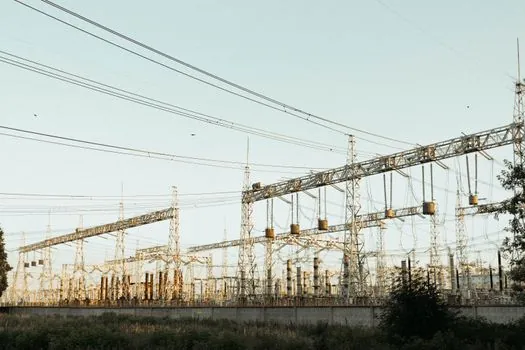
The electrical equipment, not the compute, is now the binding constraint. Hyperscale switchgear architectures for AI campuses typically run at 12 kV or 36 kV rated voltage, 2,500-4,000 A bus current, 25-50 kA for 3 seconds short-circuit rating, with arc-flash containment to IEC 62271-200 IAC AFL classification [S6]. Above ~250 MW campus load, air-insulated switchgear (AIS) substations become spatially prohibitive, requiring tens of acres of perimeter land, and modern designs standardize on SF6 or clean-air gas-insulated switchgear (GIS) to compress primary substation footprint by up to 85% [S5].
High-voltage bushing supply is the next choke point. A major U.S. transformer supplier reported an initial production plan of 3,500 units, with below-230 kV production this year, up to 550 kV next year, and first 765-kV bushings shipping in early 2028, with full initial capacity expected the year after [S7]. In practice, that means a hyperscaler who closes a 765 kV interconnect deal in 2026 will be waiting through 2028 for the bushings, a hard lead time that is showing up as a contingent liability in M&A diligence. Reference specs for the data logger class of instruments that grid operators are pairing with these new GIS bays show sampling rates and isolation ratings that match the IEC 61850 monitoring stack these substations require.
Inside-the-Fence Equipment: Racks, Cooling, and Medium-Voltage Distribution
The 200 GW inflection point RICEWIND projects for 2030 is being driven by a single-cabinet power step-function: legacy racks at 10-30 kW have moved to 80-150 kW, and next-generation liquid-cooled AI factory enclosures are scaling to 1-2 MW per cabinet [S5]. That density collapses the 480 V distribution model: 415 V step-down transformers must sit directly adjacent to the IT row end-caps to eliminate I²R copper losses, and primary compute distribution is migrating to 34.5 kV to 415 V/240 V transformation at the row [S5].
For checking and testing apparatus used to commission these MV-to-row transformers, the relevant test set is typically a multi-kVA AC source with harmonic content that matches the rectifier load profile of an AI cluster, not a generic 50/60 Hz supply. Closed-loop liquid-to-liquid heat exchangers are now specified for 1.2 MW continuous cabinet thermal extraction at 35°C to 45°C supply water, which means the cooling skid and the medium-voltage skid are sized as one system, not two [S5].
Grid Code Shift: Data Centers as Active Participants
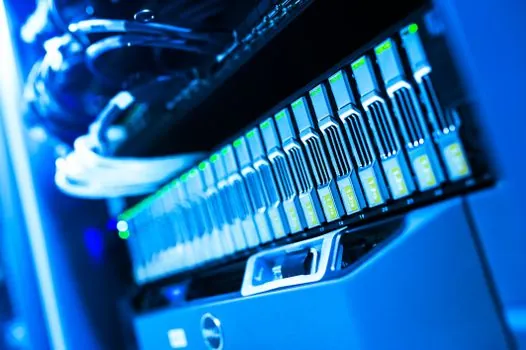
New grid code requirements are reclassifying data centers from passive loads to active grid participants, with rising expectations for reactive power support, fault ride-through, and dynamic power flow modeling at the point of common coupling [S8]. This regulatory shift, paired with regional N-1-1 static var and dynamic power flow modeling now required for interconnection requests above 250 MW, is changing the diligence checklist on M&A targets: a site's grid code compliance posture, not just its MW capacity, is now a primary valuation input [S5][S8].
Community opposition and permitting risk have moved into the same risk bucket: state-level standstills are a real risk absent active industry engagement, and the permitting timeline variance is now wide enough that some operators are separating BYOP financing from the data center component itself, tapping project finance markets for the power side and commercial real estate capital markets for the compute side [S1]. For related reading on the actuation layer below this grid interface, the Electric vs Pneumatic Actuators 2026 market split analysis is a useful parallel for how fast or slow a hardware class can move under capex pressure.
Selection Criteria: Compute Site vs Generation Site vs Behind-the-Meter
Three deal structures are competing for capital in 2026. A hyperscale powered shell (land + grid interconnect contract + shell) trades on MW of committed power, the Ohio 200 MW listing at ~$45/kW of land implied cost, with the real value in the interconnect queue position [S4]. A behind-the-meter generation asset (gas turbines, fuel cells, or BESS) trades on $/kW of nameplate and dispatchability, which is why the Google-Intersect Power and KKR-ECP vehicles are direct-asset structures rather than corporate acquisitions [S2]. A factory-integrated grid connector skid trades on time-to-power: PowerX's Zero-Day Connection model targets on-site work limited to installation and final connection, with a single skid at 2,331 kVA and 2,253 A DC at 1,040-1,500 Vdc [S3].
For investors, the trade-off is clean: powered shells offer the highest leverage to grid-queue value but the longest exit timeline, BYOP generation offers the fastest permitting but the most regulatory drag, and skid-integrated grid connectors offer the most predictable schedule but the least defensible market position. The hyperscale-tenant credit is the variable that bridges them: a firmly committed hyperscale offtake is now the precondition for any of the three structures to clear at institutional pricing [S1].
Limitations and Open Risk
Three failure modes are showing up in 2026 deal flow. First, the 80% cloud share of demand has no near- or mid-term path below 50%, which means a sudden AI training demand deceleration would leave behind a 35-45 GW infrastructure overhang by 2030 [S1]. Second, regulated utilities cannot socialize multi-hundred-million-dollar substation expansions onto residential rate bases, so the capex bill for gigawatt campuses lands entirely with the operator or its co-investors, with 15- to 20-year offtake agreements as the financing precondition [S2][S5]. Third, 765 kV bushing deliveries not arriving until early 2028 create a hard floor on how fast any 765 kV-class interconnect can be commissioned, regardless of how the M&A paper is dated [S7].
Trackable signals through the rest of 2026: any second hyperscaler following Google's December 2025 Intersect Power acquisition model, the first 765 kV bushing shipment milestone from the U.S. supplier referenced by POWER, and the first CMBS or 144A bond off-take sized against an operating AI campus [S1][S2][S7].
For component-level specifications, see construction machinery and equipment.