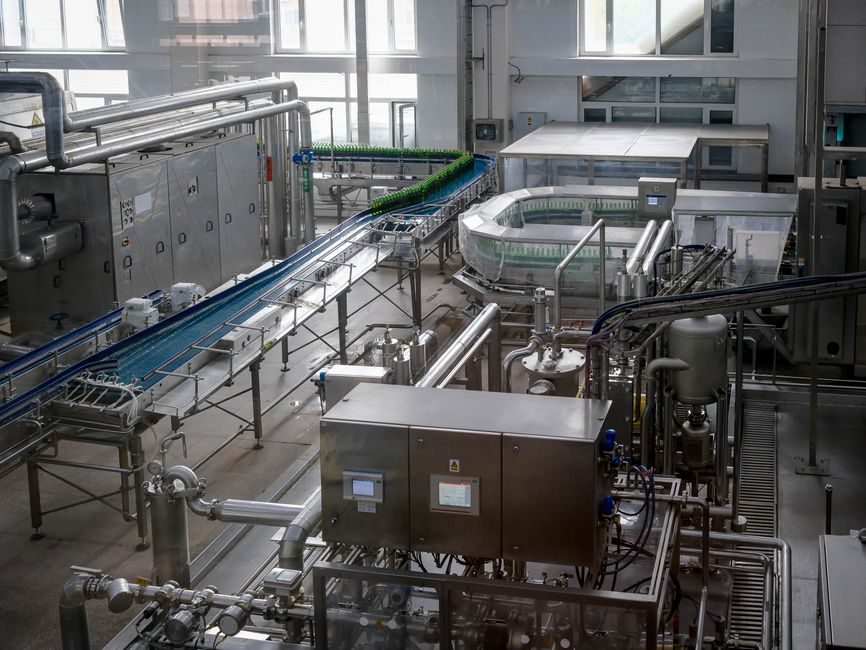
Three cell formats anchor new lithium battery production-line design briefs in 2026: prismatic (including blade cells up to 1.8 m), cylindrical in 18650/21700/4680, and pouch — each driving a different upstream electrode-prep and downstream PACK integration layout [S1][S3].
Turnkey line builders such as TMAX and SHINHOP now ship parallel product families covering pilot R&D (coin cell, flow cell, single-channel lab coaters) and gigawatt-scale pack assembly, with the cell-format decision cascading into every subsequent station from mixing to aging [S1][S3].
Line Architecture and Cell-Format Selection Criteria
A lithium battery production line is conventionally segmented into electrode preparation (mixing, coating, calendaring, slitting), cell assembly (winding or stacking, electrolyte filling, sealing), formation & aging, and PACK assembly (sorting, laser welding, BMS test, EOL) [S1][S3].
Cell format dictates the cell-assembly station: cylindrical lines use high-speed winding spindles for 18650/21700/4680, prismatic lines use stacking or large-format winding for blade cells, and pouch lines use aluminum-laminate forming and vacuum sealing [S1]. The format decision also sets the PACK architecture — cylindrical PACK lines favor module-to-pack (MTP) with series/parallel bus-bar laser welding, while prismatic and blade-cell lines increasingly adopt cell-to-pack (CTP) that removes the intermediate module stage to lift volumetric energy density [S3].
For plant owners evaluating molding line throughput analogies, the equivalent decision point is cycle time per station: a 30 PPM prismatic PACK line is to a battery line what a 30-cavities/hour automatic molding line is to a plastics shop — the bottleneck station, not the nameplate, defines real output [S3].
Throughput Bands: 15 PPM vs 30 PPM PACK Lines
SHINHOP's 2026 catalog splits PACK throughput into a 15 PPM industrial-storage line and a 30 PPM square aluminum-shell line, with the higher-throughput machine priced for power-battery and EV-cell volumes and the 15 PPM unit aimed at energy-storage system (ESS) cabinets [S3].
For upstream cell formation, similar logic applies: a cylindrical 18650 line typically runs 60–200 PPM at the winding station, while prismatic lines run 8–20 PPM because each station handles a heavier, larger-format part [S1][S3]. The 15 PPM industrial-storage PACK line uses modular cell-sorting upstream, laser welding at the bus-bar station, and a final CCD visual inspector plus BMS tester — a layout mirrored in TMAX's turnkey PACK assembly catalog (spot welder, laser welder, aging machine, comprehensive tester, BMS tester, CCD inspector) [S1][S3].
Engineers mapping a new line to a conveyor sorting line equivalent should think of the cell sorter as the cell-sorting + binning stage: cell OCV and IR data feed the sorter, which routes matched cells into parallel PACK trays before bus-bar assembly, the same way a conveyor-sorting line routes mixed SKUs into packed batches [S1][S3].
CTP Cell-to-Pack: Eliminating the Module Stage
Cell-to-pack (CTP) is a technique that reduces or eliminates the three-level Pack structure of "cell–module–pack" by directly integrating cells into the battery pack, optimizing space utilization, reducing components by omitting the module, lightening total pack weight, and enhancing energy density — per SHINHOP's published 2026 product description [S3].
The CTP approach implies process changes: stronger cell-housing tolerance, larger-format prismatic or blade cells (up to 1.8 m per SHINHOP's blade line), and direct laser welding of cell-to-busbar with no module frame. For plants running CTP lines, the line frequency furnace equivalent is the cell-formation aging channel: both are continuous, throughput-bound thermal/electrical conditioning stages where dwell-time uniformity drives final yield [S3].
TMAX's complementary catalog also lists a sodium-ion battery production line and a solid-state battery assembly line, signalling that 2026 line design must keep cell-format flexibility at the winding/stacking station because sodium-ion and solid-state cells use different separator and electrolyte handling steps than liquid-electrolyte Li-ion [S1].
Equipment Stack: Furnaces, Coaters, Laser Welders, MES
The 2026 lithium line equipment stack spans electrode prep (vacuum mixers, film/dip/spin coaters, rolling press, electrode cutter/slitter), cell assembly (stacking/winding, pouch forming, electrolyte filling, vacuum sealing, crimping), and post-treatment furnaces — muffle (400–1900 °C), tube, atmosphere, microwave sintering, CVD, PECVD, vacuum, debinding, and sintering furnaces [S1].
Downstream, PACK lines standardize on laser welding as the primary joining method: SHINHOP positions itself on "Casting Extreme Welding Process & Intelligent Laser Application Scheme" with 300+ technical R&D personnel and 100+ industry software copyrights, holding ISO, CE, and FDA certifications for the equipment [S3]. TMAX complements this with a battery pack spot welder, Al wire bonding machine, CCD visual inspector, and a battery tab/nickel strip supply chain, while SHINHOP adds an in-house MES (manufacturing execution system) providing work-level error-proofing, equipment management, traceability, enforced process flow, quality management, and dashboards [S1][S3].
For comparison, the resin sand line and V-process line references illustrate how MES-style process control travels across industries — both foundry lines and battery lines rely on enforced process flow, traceability, and station-level error-proofing to hold yield at high throughput [S1][S3].
Cell Format Comparison: Prismatic vs Cylindrical vs Pouch

Across the three dominant cell formats, decision criteria land as follows. (1) Energy density: pouch and prismatic (especially CTP) lead; cylindrical 4680 closes the gap via larger format. (2) Manufacturing cost per kWh: cylindrical 18650/21700 lines still have the lowest single-cell cost at scale; prismatic lines trade cost for higher pack-level density. (3) Thermal management: prismatic and CTP blade cells offer large flat surfaces for cooling plates; cylindrical cells rely on tab cooling or immersion. (4) Safety: pouch cells need rigid frames to prevent swelling; cylindrical steel/aluminum cans are the most mechanically robust [S1][S3].
WINA Green Power's LiFePO4-focused catalog (founded 2006, 2 GWh annual cell capacity, 100+ patents) shows the prismatic LFP path dominating China's energy-storage and explosion-proof-lithium applications, while SHINHOP's 30 PPM square aluminum-shell line shows prismatic is also the dominant power-battery path for CTP — making prismatic the highest-volume 2026 line design in published Chinese vendor catalogs [S2][S3].
Standards, Certifications, and Upstream Material Integration
Equipment-side, SHINHOP's lines carry ISO, CE, and FDA certifications on the laser welder and PACK assembly equipment; TMAX publishes the full UL/CE-compatible test stack including battery safety tester, BMS tester, charging/discharging tester, and aging machine, without naming a specific cell-level UN 38.3 or IEC 62133 test certificate per line [S1][S3].
Upstream, TMAX's materials catalog — cathode and anode active materials, electrolyte, separator and tape, aluminum laminate film, nickel strip, battery tabs, graphene materials, nickel felt, titanium fiber felt, current collectors, and conductive materials — means a 2026 turnkey line brief can be sourced as a single BOM, including lithium metal chips for solid-state R&D and perovskite-solar-cell pilot coaters as adjacent R&D lines [S1].
For background context on the upstream-to-cell cost split that drives line-design capex, see the Lithium Manufacturing Cost Breakdown: Upstream Resource, Refining, Cathode, Cell reference, and for the station-level process map that defines equipment sizing per line, see Lithium Cell Manufacturing Equipment: Process Stations, Spec Bands and Sourcing Map — both relevant when sizing a 2026 cell line.
Operational Signals: Capacity Saturation and Lead Times
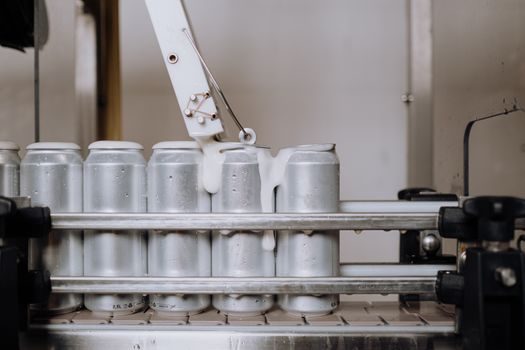
Guangxi Huayou Lithium's lithium-carbonate production line was reported at full capacity on 2026-04-02 and 2026-04-06 CCTV broadcasts, with 1.5 tonnes of lithium carbonate product coming off the line every 10 minutes and order books "lined up until June 2026" — a concrete data point on raw-material tightness that flows directly into 2026 cell-line capex planning [S4].
Two trackable signals for the rest of 2026: first, sodium-ion and solid-state pilot lines moving from lab (coin cell, single-channel coater) to prismatic/cylindrical pilot, and second, CTP blade-cell lines pushing beyond 1.8 m cell length as pack energy density targets climb. Both are visible in current vendor catalogs [S1][S3].