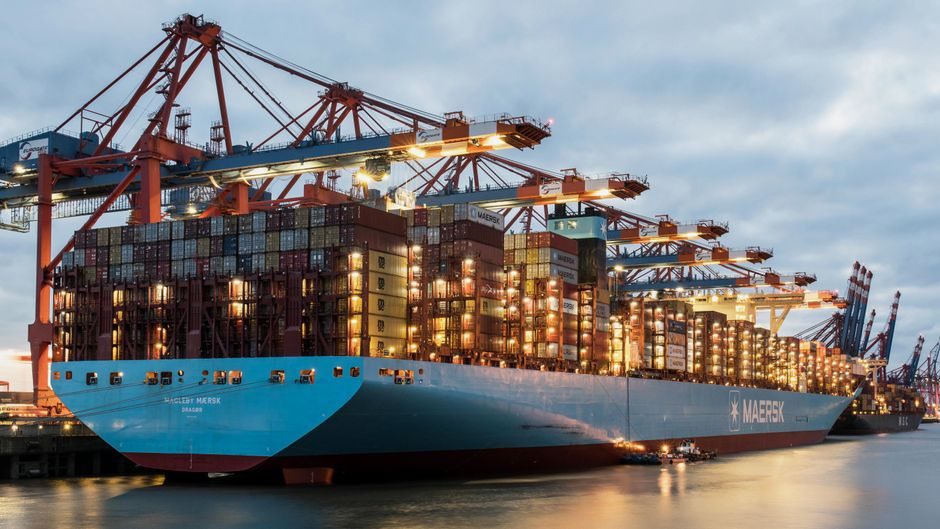
2026 is the inflection year of the global LNG super-expansion: roughly 40.7 million tonnes per year of new liquefaction capacity is scheduled to start up, pushing 2026-2030 cumulative additions to about 202 million tonnes, a ~40% lift versus 2025 and a compound annual growth rate near 6.8% [S7].
For the first time since 2020, supply growth is set to systematically outrun demand additions, putting the market into a substantively looser balance — though the loosest "peak slack" is delayed to 2027-2028 because Golden Pass, LNG Canada, Costa Azul, and the North Field expansion are running late [S7].
Capacity build-out by year and by country
The 2026-2030 build pipeline breaks down as 40.7 Mt (2026), 52.65 Mt (2027), 53.24 Mt (2028), 38.60 Mt (2029), and 16.47 Mt (2030), totalling roughly 202 Mt — a 40% step up from the 2025 base [S7].
Concentration is the headline: the US alone supplies 46.6% of new volumes, Qatar 23.8%, Canada 7.6%, the UAE 4.8%, and Argentina 3.0% [S7]. That puts the US-Qatar pair at ~70.4% of incremental liquefaction, accelerating the shift from a multi-polar LNG map to what industry observers now call a "US-Qatar dual-core" supply base [S7].
Russia's pipeline gas share is sliding toward 40% of global gas as it pivots "west-out, east-in" and the EU phases in Russian-gas sanctions, which cements LNG's role as the marginal swing supplier and shifts post-2026 gas price formation away from the historical Russian-pipe anchor [S7].
Where cargoes are handled: automation, receiving terminals, regas
On the plant side, integrated automation contractors are still being awarded decade-long scopes. Yokogawa was selected as main automation contractor (MAC) for the Ichthys LNG Project alongside INPEX and its JV partners, supplying sensors, analysers, control and information systems for one of the multi-billion-dollar LNG complexes still anchoring the global base [S1].
Receiving-side supply chain decisions — terminal slot allocation, FOB vs DES contracting, cool-down windows, BOG handling — are tightening around the same dual-core reality: a 2026-vintage spot cargo from the US Gulf is no longer an exception but a recurring procurement lane, so regasification terminals and downstream power, industrial, and bunker-fuel buyers are reorganising nomination cycles around flexible Henry Hub-linked indexed supply rather than oil-indexed long-term [S7].
Industrial procurement planners tracking this shift will recognise the same volatility pattern that drives just-in-time dc power supply sourcing for instrumentation racks at regas sites — long lead-times on the installed base, short windows for the capex phase.
What this means for supply chain planners and analysts
The planner role in an LNG context now spans demand forecasting across multiple SPA portfolios, inventory management of pipeline and storage assets, and logistics orchestration across shipping slots — the same three pillars that define the broader planner craft, applied to a commodity whose marginal molecule sets the price [S2].
Career and capability frames reinforce the data emphasis: the analyst track now foregrounds data storytelling, data cleansing, and data ethics, alongside classical supply-chain skills like critical thinking and logistics cost control [S2][S6]. For LNG specifically, the relevant upgrade is layering long-term weather, charter-rate, and feedgas-quality data on top of those fundamentals [S6].
Buyers, analysts, and planners comparing which software stack to deploy should score tools on four criteria: (1) native multi-modal handling for pipeline + LNG + storage, (2) scenario planning for delayed-startup projects (Golden Pass, LNG Canada, Costa Azul, North Field), (3) index-aware nomination logic that separates Henry Hub, TTF, JKM, and oil-linked baskets, and (4) audit-grade trade-compliance logging — the same control surface that audit-heavy supply chain manager postings in Thailand now demand [S3][S4].
Concentration risk: who gains, who is exposed
The US-Qatar duopoly creates a structural concentration that has direct counterparty and shipping implications: roughly 70.4% of new molecules flow through two political jurisdictions, two regulatory regimes, and two shipping chokepoints (US Gulf and Ras Laffan) [S7].
For procurement, the upside is cheaper molecules — peak slack is delayed only to 2027-2028, not cancelled, so spot and short-term buyers should see softening — but the downside is exposure to a single basin's hurricane-season outage window or a Qatari maintenance turnaround [S7].
End-users in Pakistan illustrate the counterparty side of the same risk: the Competition Commission of Pakistan approved the LNG supply chain component of the Share Purchase Agreement between Mitsubishi subsidiary Diamond Gas International Japan and Bison Energy FZCO through December 2025, channelling LNG into Tabeer Energy and a related local entity — a pattern of single-supplier SPA exposure that the 2026 capacity wave is designed to relieve [S5].
Cross-option decision matrix for 2026 LNG procurement

For a procurement team building a 2026-2028 portfolio, the four credible sourcing options line up against decision criteria as follows: long-term US Gulf Henry Hub-linked (lowest unit cost, single-basin hurricane exposure, FOB control), long-term Qatari oil-indexed (highest reliability, premium price, DES simplicity), spot/short-term JKM-indexed (no volume commitment, highest price volatility, opportunistic on the 2026-2028 slack), and pipeline gas blending (physical stability, limited by the EU-Russia phase-out and shrinking pipeline share to ~40% of global gas) [S7].
The 2026-2028 window tilts the matrix toward US-Gulf long-term and spot JKM hybrids, with Qatari tonnage retained as reliability ballast. The acceptance of single-supplier SPA exposure that ran through 2025 is now being actively diversified as 40.7 Mt of new nameplate appears in 2026 alone [S5][S7].
Trackable signals for the next 12 months
Track three concrete signals through 2026-2027: (1) first-cargo dates from Golden Pass, LNG Canada, Costa Azul, and the North Field expansion tranches — every slip pushes the peak-slack year by one; (2) US Gulf FOB vs JKM spot spread — a sustained negative spread confirms the dual-core has displaced oil-indexation as the global anchor; (3) the next round of EU Russian-gas phase-out milestones, which drive incremental LNG demand on top of the 2026-2030 supply wave [S7].
For component-level specifications, see switching power supply, and chain conveyor.
For related coverage, see Shaft Collar Buying Guide 2026: Bore, Material, Clamp Style.