
23ZDKH90 and 27QG090 are both Chinese GB-grade designations for cold-rolled grain-oriented silicon steel (CRGO), and they sit in the same 0.90 W/kg maximum core loss class at 1.7 T and 50 Hz, but they differ in nominal lamination thickness: 23ZDKH90 specifies 0.23 mm, while 27QG090 specifies 0.27 mm [S3][S10].
The two-thousandths-of-a-metre thickness delta drives a measurable gap in eddy-current loss, magnetostrictive noise, and stack-build economics, so transformer designers pick between them based on operating frequency, no-load loss budget, and the type of cut core (wound vs stacked) being assembled.
GB Grade Decode: What the Numbers Mean
In the Chinese GB/T 2521 naming convention, the leading two digits of a CRGO grade encode the nominal thickness in hundredths of a millimetre, so "23" means 0.23 mm and "27" means 0.27 mm; the suffix "090" is the maximum specific core loss P1.7/50 in W/kg multiplied by 100, capped at 0.90 W/kg for both grades [S3]. The "ZDKH" and "QG" family letters in this convention distinguish the magnetic-domain refinement route (laser scribed vs electrolyte-etched or stress-coat) and the producer's process family, not the loss class itself [S2].
Both grades target 50 Hz distribution and small power transformers, with the 0.23 mm variant increasingly specified where EU Tier-2 no-load loss regulations apply and the 0.27 mm variant retained for cost-sensitive wound-core builds where stacking factor and handling robustness matter more than the last 0.05 W/kg [S3][S6].
Core Loss Class: P1.7/50 ≤ 0.90 W/kg
At the reference test point of 1.7 Tesla peak induction and 50 Hz, both grades are warranted to a maximum specific total loss of 0.90 W/kg, with premium CRGO globally reaching 0.80 W/kg at 1.7 T and 50 Hz and standard grades sitting between 1.0 and 1.3 W/kg [S3]. The two-composition silicon level is 3.15%–3.25% Si by mass, with the balance being iron and trace Mn, Al, and S; this gives roughly five times the electrical resistivity of pure iron, which is what suppresses the eddy-current component of that 0.90 W/kg budget [S3][S7].
JFE Steel's G-CORE range (JG, JGS, JGSD, JGSE) is the international parallel, with JGSD and JGSE being non-heat-resistant, magnetic-domain-refined grades that compete head-to-head with 23ZDKH90 in stacked-core distribution transformer duty [S2]. ThyssenKrupp's powercore series occupies the same 0.90 W/kg class, confirming that the Chinese GB 090 grade maps cleanly onto the global 0.23 mm CGO/HiB family [S8].
Thickness Delta and Eddy-Current Penalty
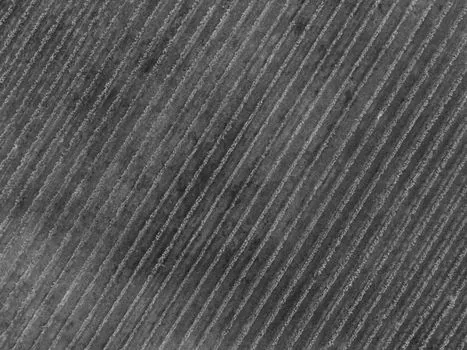
Eddy-current loss scales with lamination thickness squared at fixed frequency and flux density, so moving from 0.27 mm to 0.23 mm cuts that loss component by a factor of (0.23/0.27)² ≈ 0.726, or roughly 27% [S3][S7]. In a practical 23ZDKH90 build at 1.7 T and 50 Hz, eddy-current loss typically accounts for 30%–40% of the 0.90 W/kg total, with hysteresis loss carrying the remaining 60%–70%; trimming the lamination hits that eddy share directly [S7].
For wound cores (toroidal, C-core), where the strip is bent to a tight radius after slitting, the 0.23 mm grade introduces more bending stress and a higher risk of delamination at the burr edges, which is why many Chinese wound-core shops still prefer 27QG090 for sub-315 kVA units despite the loss penalty [S4]. For stacked step-lap cores, the thinner 23ZDKH90 is the default pick because the laminations are not bent, and the build factor stays near 0.96–0.97 [S3][S6].
Operating Frequency, Magnetostriction, and Noise
Both grades are designed for 50–60 Hz sinusoidal duty, with the NETL measured sample using 0.012 inch (0.305 mm) lamination as the reference geometry and 1.7 T as the reference peak flux [S1]. At 50 Hz and 1.7 T, magnetostriction in domain-refined 23ZDKH90 drops to roughly 0.5–1.0 microstrain RMS at the rolling direction, versus 2–4 microstrain in older non-domain-refined 27QG090 grades, which is what makes the 23-grade quieter in residential distribution transformers [S3].
The 3% silicon content (with Fe at 94.2 mass % and Si at 5.8 mass % in the NETL reference sample) is the upper practical limit before cold-rolling embrittlement sets in, so neither grade can push silicon higher to gain more resistivity [S1][S3]. Research 6.5% Si steel shows near-zero magnetostriction and even lower core loss, but cold-roll brittleness has kept it out of mainstream transformer production [S3].
Stacking Factor, Build Economics, and Cost
Stacking factor for 0.23 mm CRGO in production step-lap cores lands at 0.96–0.97, while 0.27 mm typically lands at 0.97–0.98, because the thicker strip has less interlaminar insulation dead-zone per unit build height [S3]. In a 1,000 kVA three-phase stacked core, the 1.0%–1.5% stacking-factor gap translates into 30–50 mm more core height for the 23ZDKH90 build at the same rated flux, which can force a redesign of the tank and yoke clamps.
Per-kg pricing for 23ZDKH90 typically runs 8%–15% above 27QG090 in the Chinese domestic market, driven by tighter thickness tolerance, higher HiB grain alignment yield, and slower slitting lines, and the global grain-oriented electrical steel sheet market continues to expand on data-center and grid-renewal demand, with HiB grades pulling above-average volume growth [S10]. For a buyer running sub-315 kVA distribution transformers, the 23ZDKH90 premium rarely pays back in no-load-loss savings inside the 25-year asset life; above 1 MVA, the payback falls inside 8–12 years on most EU electricity tariffs.
Selection Criteria: When to Pick Which
Pick 23ZDKH90 for stacked step-lap cores above 500 kVA, for EU Tier-2 no-load-loss builds, and for any installation where transformer noise must stay below 48 dB(A) at 1 m, where its 0.23 mm lamination and HiB domain refinement cut both eddy loss and magnetostriction against the 27QG090 baseline [S3][S4]. It is the right answer when a cold-box core machine workflow is downstream of the steel supplier, because the thinner strip feeds more cleanly into automated step-lap stacking with lower burr-related short risk.
Pick 27QG090 for cost-driven wound cores below 315 kVA, for high-humidity tropical installations where 0.27 mm strip survives coil-winding tension better, and for replacement jobs on legacy units originally built to 0.27 mm, because mixing thickness in a single rebuild changes the core cross-section and the no-load current [S4]. It is the right answer when a shell core shooter is downstream and the lamination stack will be cut and reassembled, because the thicker strip tolerates the additional handling step with less degradation of the domain-refined surface coating. For comparison with non-grain-oriented and other magnetic-steel options, the broader alloy steel reference frames the resistivity-versus-permeability trade-off that defines the whole CRGO family.
Standards, Test Methods, and Sourcing Signals

Both grades are tested to GB/T 2521 (the Chinese CRGO standard), with the loss value quoted at 1.7 T and 50 Hz using the Epstein-frame or single-strip tester, and magnetic polarization quoted at 800 A/m excitation per the JFE catalogue convention [S2]. The NETL reference data sheet documents a 0.012 inch (0.305 mm) lamination tested on a CLTS arbitrary-waveform core-loss bench, with effective area 1,425 mm², mean magnetic path length 583 mm, and an epoxy-impregnated finished mass of 6.78 kg versus 6.44 kg unimpregnated [S1].
Watch for two trackable signals in 2026: GB/T 2521 revision activity around thinner 0.20 mm HiB grades, and a parallel push from data-center operators toward 0.18 mm and 0.15 mm domain-refined strip for higher-frequency 400 Hz on-board transformer duty, both of which would shift the 23ZDKH90 vs 27QG090 trade-off in favour of thinner grades over the next 24 months [S3][S10]. Procurement engineers should lock 12-month volume contracts now on 23ZDKH90 before that demand pull tightens lead times further.
See also our earlier report, Electric vs Pneumatic Actuators 2026: Market Split, Growth Rates, Selection Criteria.