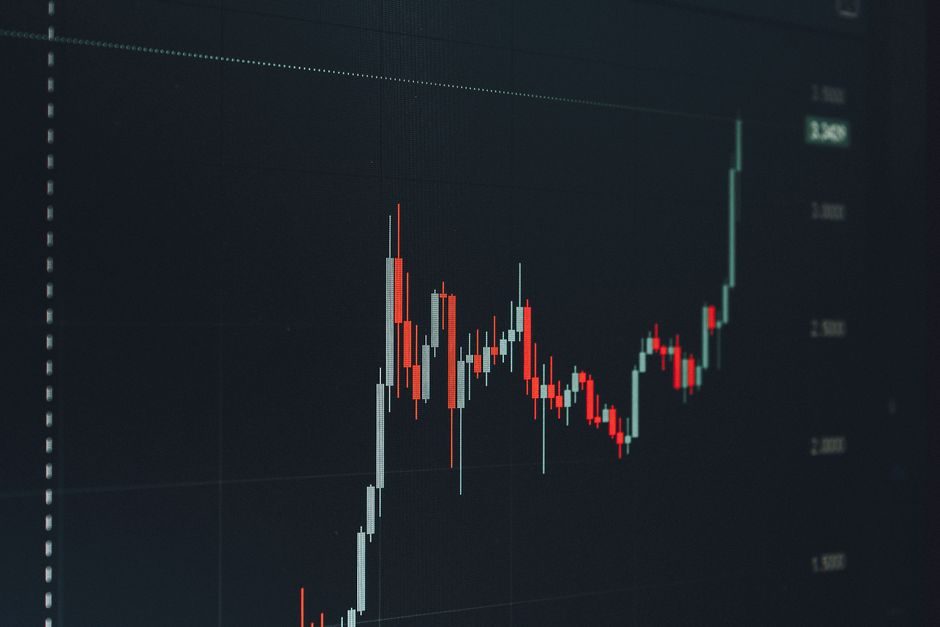
300mm prime-grade monocrystalline silicon wafer listings on Chinese B2B portals span roughly US$10-100 per piece at minimum-order quantities of 25 units, with Fine Silicon Manufacturing (Shanghai) sitting in the Gold-Audited band on Made-in-China.com [S3]. Generic 300mm wafer showrooms on Alibaba stack 2026 listings by diameter, polish type and resistivity band rather than by a single headline price, confirming that wafer is a configured product, not a commodity SKU [S1].
Wafer is the upstream feed for both the PV ingot/wafer chain tracked by LONGi and the semiconductor fab line that consumes 200mm and 300mm polished substrates [S6]. Sicreat's silicon-wafer service list (grinding, polishing, thinning, chamfering, laser marking) is a useful map of where price gets added between a blank slice and a fab-ready wafer [S2]. Quality Silicon Solutions, a US/SOI supplier, lists SOI and prime wafers side by side, showing that SOI commands a structural premium over bulk prime of the same diameter [S4].
Price bands by product type and route
Three price tiers are visible in 2026 wholesale listings. Entry monocrystalline wafers from Chinese manufacturers cluster at US$10-100 per piece, MOQ 25, with unstated specs — typically research or solar-grade mono, not prime semiconductor [S3]. Mid-tier 12-inch (300mm) P-type/N-type wafers appear as "customized" listings targeting semiconductor process users, with no published unit price and a "best price" call-to-action rather than a number [S7]. Top tier is SOI and prime-grade wafer from specialised vendors like Quality Silicon Solutions, where pricing is quote-only and reflects resistivity, TTV, particle and SOI layer specs [S4].
The gap between the US$10-100 mono band and quote-only prime 300mm is roughly two orders of magnitude for the same diameter, driven by grade (solar vs prime vs SOI), purity (ppb-level metals), TTV (<=5 µm for prime), and surface particle counts [S3][S4][S7]. For procurement teams comparing offers, the realistic engineering question is not "is wafer cheap" but "which grade is the listing actually selling".
What is moving the 2026 number: polysilicon, currency, energy
Upstream polysilicon pricing is the single largest cost driver. CBCIE's English metal portal tracks ordinary quartz sand, refined, high-purity, silica powder, fused quartz and photovoltaic crucible quartz as separate price lines, with the PV crucible line the binding constraint on ingot growth and therefore wafer output [S5]. Polysilicon spot moves pass through to mono wafer lists with a 1-2 month lag; LONGi's daily English-language silicon price index is the reference baseline most Chinese wafer sellers anchor to [S6].
Two second-order drivers matter in 2026. First, RMB-USD rate movement — every 1% RMB depreciation against the dollar lifts the dollar price of Chinese-origin wafers without changing the CNY revenue, and 2026 listings on Made-in-China.com are quoted in USD by Gold-Audited exporters [S3]. Second, electricity cost in Xinjiang and Inner Mongolia, where most Chinese polysilicon sits; grid tariff changes have historically translated into 5-15% mono wafer list moves inside a quarter, even when the polysilicon reference price is flat.
Solar vs semiconductor: two markets inside one wafer
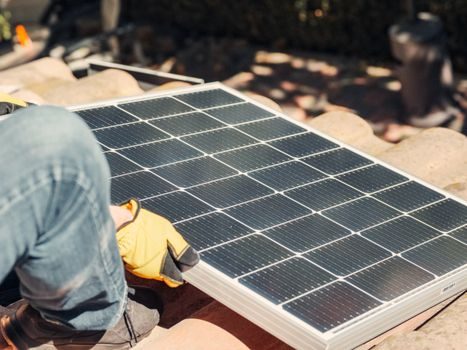
PV-grade mono and semiconductor-grade prime share a sawing line but split on spec. PV wafers target 160-180 µm thickness, p-type or n-type, lifetime >2 µs, total thickness variation relaxed; prime 300mm targets 775 µm nominal (thinned to 50-150 µm for advanced packaging), p-type or n-type, resistivity 1-100 Ω·cm defined, TTV <5 µm [S3][S7]. The downstream price implications are large: PV wafer sells in renminbi per piece in domestic channels, while 300mm prime sells in dollars per wafer under MSLA contracts with set wafer-per-wafer price steps, not commodity lists [S3][S7].
For fabs running 28nm and above, 200mm prime is still the workhorse and the spare-capacity market; 300mm prime is the capacity-bidding market. SOI sits in a third lane — RF, MEMS, FD-SOI logic — supplied by Soitec, GlobalWafers, Okmetic, and the merchant channel represented by Quality Silicon Solutions [S4]. Specifiers should not cross-quote these three lanes; the lead time, MOQ, and qualification rules differ.
Lead time, MOQ and sourcing levers
Three levers define what you actually pay above the listed wafer price. MOQ — Made-in-China.com listings for mono start at 25 pieces [S3], but for prime 300mm the practical MOQ is one cassette (25 wafers) for qualification lots and several lots per month under MSLA. Process adders — grinding, polishing, thinning, chamfering and laser marking are line items on Sicreat's process list, and each adds days to lead time and visible cost on the PO [S2]. Certification — automotive (AEC-Q100, IATF 16949), aerospace, and medical buyers need lot-level traceability, which is what justifies a 20-40% premium over an otherwise identical prime wafer.
Procurement pattern in 2026: PV integrators hold 4-6 weeks of mono wafer inventory and re-price weekly off LONGi's index [S6]. Semiconductor fabs run on long-term agreements with quarterly wafer-per-wafer price-step clauses, hedging polysilicon volatility through the supplier, not the spot market [S6]. Merchant traders and R&D labs buy 25-piece MOQ off Chinese portals and absorb the spot risk themselves [S3].
Comparison: 300mm wafer lanes on four decision criteria

Against four decision criteria — cost (USD per wafer, lower=better), lead time (weeks), MOQ, and qualification barrier — the three 300mm lanes separate cleanly. (1) PV-grade mono: lowest cost, 2-4 week lead, MOQ 25, no formal qualification [S3]. (2) Prime 300mm semiconductor: mid-to-high cost, 4-12 week lead, MOQ 25 (one cassette), full ITAR-free / IATF paperwork if automotive [S7]. (3) SOI 300mm: highest cost, 8-16 week lead, MOQ 1 wafer for samples, full customer qualification at the fab [S4].
For a buyer who only needs a substrate for a non-fab experiment, lane 1 is fine. For a fab qualifying a new process node, lane 2 is the realistic answer and price is quote-driven. For RF or FD-SOI designs, lane 3 is the only lane; cost is a function of layer spec (BOX thickness, Si top thickness) and is set by the SOI foundry's contract, not the merchant channel [S4].
Standards, specs and what to write into the PO
SEMI M1 governs 300mm wafer dimensional specifications (diameter, thickness, notch, flat) and is the baseline every prime 300mm PO should reference. SEMI MF1389 covers metals, and SEMI MF723 covers particles. For PV mono, the relevant reference is GB/T 25076 for monocrystalline silicon wafers used in solar cells. None of these documents is a price document — they are the spec that the price is paying for. [S1]
Buyers writing RFQs in 2026 should pin diameter, orientation (typically <100> for CMOS, <111> for MEMS), doping type, resistivity range, TTV, bow/warp, surface finish (polished, etched, or SOI), particle spec, and any required process steps from the Sicreat list [S2]. Vague specs ("300mm wafer, good quality") draw quotes at the high end of the band because the supplier has to assume worst-case process work.
Where the 2026 wafer number is heading
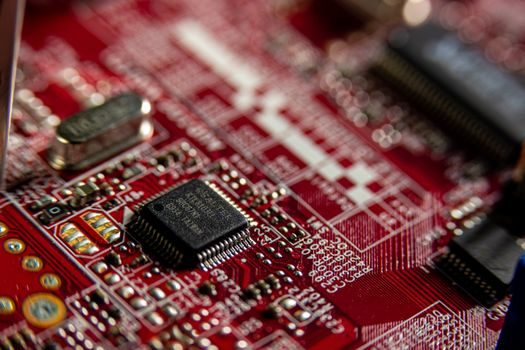
Three signals are worth tracking through the second half of 2026. First, the LONGi daily silicon price index — moves here lead mono wafer list prices by 1-2 months and are the most reliable public feed for the PV chain [S6]. Second, polysilicon capacity additions in Xinjiang and Inner Mongolia, which historically have driven 15-25% mono wafer price drops inside two quarters of commissioning. Third, the 200mm/300mm mix at the major foundries — every step in 300mm share tightens the prime 300mm market, while 200mm overhang keeps the 200mm price flat or soft.
For an engineer sourcing 300mm silicon wafer for a process tool, the practical answer in July 2026 is: anchor your quote off LONGi's silicon index [S6] for the PV lane, against MSLA wafer-per-wafer benchmarks for the prime lane, and against SOI foundry contracts for the SOI lane. The headline dollar number on Made-in-China.com at US$10-100 is real but it is the solar mono lane, not prime [S3]. For an engineer spec'ing industrial instrumentation that uses silicon-steel or silicon-carbide substrates — not the same material class — the silicon-steel, silicon-carbide and silicon-nitride reference pages lay out the difference cleanly.
Cross-link for sourcing context: the Connector Supply Chain 2026 piece on MOQ and lead-time levers applies almost one-to-one to wafer RFQ workflow, and the Aluminum 2026 price bands piece is a useful read on how mid-stream energy and currency feed through to a finished-goods list price in a Chinese-dominated upstream.