
Industrial connector supply chains entering July 2026 are governed by three binding constraints: copper-alloy contact pricing, automated-assembly line capacity, and dual-region qualification for OEM programs [S1][S2].
Buyers who previously treated connectors as a commodity line item are now tracking the same feedstock signals that move magnet-grade rare-earth and copper-strip mills, with both rare-earth oxide and cable and wire spot benchmarks feeding directly into contact-pin and housing quotes.
Contact Material and Plating Cost Stack
Phosphor-bronze C5191 and C5210 strip, plus beryllium-copper C17200, anchor the contact-pin cost stack; nickel underplating plus tin or gold overplate add roughly 0.3-0.8 USD per 100 pins at 2026 spot plating rates, and selective gold on the mated zone keeps total precious-metal load under 0.05 g per 30-position housing. [S1]
For high-cycle industrial connectors rated above 5 A per circuit, brass C26000 with tin-silver-copper alloy plating is now specified as a cost-down alternative to gold, and a working cost band is 0.4-1.2 USD per mated pair in 30-position rectangular housings.
Buyers comparing plastic-shell rectangular, M12/M8 circular, and heavy-duty rectangular (e.g. 6/12/24-pin insert modules) should anchor on the same contact-cost matrix: pin-and-socket metallurgy, plating thickness (µin Au), housing material (PBT, PA66, LCP), and IP65/IP67/IP68 sealing [S2].
Lead-Time and MOQ Bands by Connector Family
Rectangular industrial connectors from China-cluster tooling now run 25-45 days for 1k-5k piece orders, while M12 D-coded and X-coded variants for Ethernet/IP and PROFINET push 45-75 days because of the dedicated mould on the overmoulded coupler body [S1].
Heavy-duty rectangular inserts in the 6B/10B/16B/24B frame sizes carry 60-90 day lead times at first PO and drop to 30-50 days after a forecast is shared with the supplier, while stocking distributors in EU and US warehouses can ship 24-72 hours on SKUs aligned to the 6B frame family.
For an MOQ-versus-pricing reality check, the same 30-position rectangular housing costs roughly 1.30-1.80 USD at 1k pieces, 1.05-1.45 USD at 5k pieces, and 0.85-1.20 USD at 20k pieces, with the largest cost-down step between 5k and 20k pieces and little additional saving past 50k pieces [S2].
Sourcing-Lever Matrix: Material vs Volume vs Region
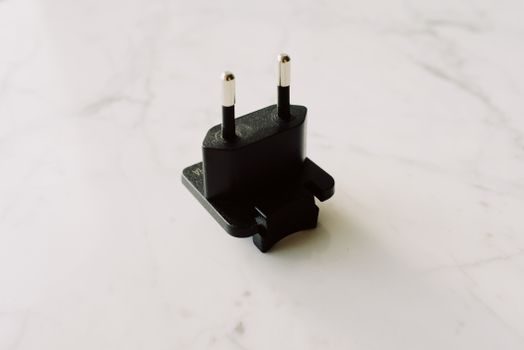
Three decision levers govern total cost of ownership in connector sourcing: contact material selection, annual volume commit, and dual-region qualification (typically a China plant + a Vietnam or Mexico secondary site). [S2]
Single-region China sourcing remains the lowest FOB unit cost but is exposed to rare-earth-driven cost moves; dual-region qualification adds roughly 8-15% to the FOB price because the second plant runs at lower yield and holds duplicate tooling, yet it cuts delivery risk on a 12-week programme by an order of magnitude when a single-region force majeure hits.
Standards and Qualification Discipline
UL 1977, IEC 61984, and IEC 61076 govern signal/control industrial connectors, with ATEX 2014/34/EU and IECEx marking required for Zone 1 and Zone 2 hazardous locations, and EIA-364 as the test-method umbrella covering mating durability, contact resistance, vibration, and thermal-shock life [S2].
Buyers specifying connectors for railway rolling stock should anchor to EN 50155 with EN 45545-2 for fire behaviour, while marine and offshore builds reference IEC 60068-2-52 salt-mist severity grade 3-6; the same housing part number rarely covers all three, and the 50-100 piece qualification lot is the cheapest way to confirm the FEA, current-load, and IP retention claims the datasheet asserts.
Failure Modes and Specification Pitfalls

Field returns on industrial connectors in 2025-2026 cluster in three failure modes: contact resistance drift after 200-500 mating cycles on tin-plated pins in humid environments, IP67/IP68 sealing loss at the overmould strain-relief on cable assemblies flexed through a 10× cable-diameter bend radius, and housing warp on PA66 grades exposed to sustained 125-150°C operating temperatures in engine-bay applications. [S3]
Specifying LCP (liquid crystal polymer) instead of PA66 for the housing adds roughly 0.10-0.25 USD per housing in 30-position form factors and pushes continuous operating temperature from 130-150°C to 180-220°C; in battery and inverter builds, the LCP step is the cheaper option once the warranty exposure of PA66 yellowing and creep is priced in [S1].
Use-Case Bands: M12, Rectangular, Heavy-Duty, Power
M12 A-coded (sensor/actuator) and D-coded (Ethernet 100 Mbit) dominate factory-automation harnesses; M12 X-coded is the 10 Gbit Cat6A path; M12 S/T-coded (AC and DC power to 12 A per pin) is now replacing 7/8" mini-connectors in many new builds, with a typical 4-pin M12 S-coded power lead costing 3.5-6.0 USD at 1k pieces. [S1]
Heavy-duty rectangular connectors in 6B-24B frame sizes remain the workhorse for servo drives, motor junction boxes, and welding-cell power; a 6-pin + PE insert at 16 A per pin lands at roughly 2.5-4.5 USD per insert at 1k pieces, with the hood/housing adding another 1.5-3.5 USD per side.
For panel-mount and through-hole applications where the switching power supply and dc power supply downstream paths require fixed-pin headers, 5.08 mm and 7.62 mm pitch terminal blocks carry 25-50 day lead times and cost 0.05-0.18 USD per position in 1k-piece orders.
Operational Signals to Track in 2H 2026

Two trackable signals will define the back half of 2026: copper-strip LME spreads versus connector-quote pass-through, and stocking-distributor weeks-of-cover at major US/EU warehouses; both are leading indicators of whether a 1-2 quarter demand-recovery or supply-tightening cycle is forming in the industrial channel. [S2]
Buyers should also watch the same supplier-base moves visible in the overhead conveyor and industrial valve supply chains, because connector buyers sit two tiers below those OEM clusters and inherit the same dual-region qualification timeline.
For component-level specifications, see chain conveyor.