
Current 32X automatic levels from Spectra Precision, K-LEVEL, David White, GeoMax and Doyen specify working ranges of 100-120 m and standard deviations of 1.0-2.0 mm per 1 km double-run leveling, with 32X magnification as the dominant high-end option in 2026 catalogs [S1][S2][S4][S5][S6].
The optical-auto level, sometimes still called a dumpy level, is the workhorse instrument for transferring horizontal elevations, setting concrete forms, and checking grade on building and road sites. Practical use cases and the working-range ceiling that separates 24X, 28X and 32X instruments are detailed in the automatic level reference.
Where 100 m of working range actually comes from
Manufacturers rate working range as the maximum sighting distance at which the staff image and stadia lines remain usable under average daylight; it is not a hard optical limit, so the 100 m threshold is a product-marketing line, not a physics boundary [S1][S6]. The 24X SitePro SK24X is rated to 90 m (±1.5 mm at 45 m), the 28X SK28X extends to 105 m (±1.5 mm at 60 m), and the 32X SK32X reaches 120 m (±1.5 mm at 76 m) [S1]. The David White AL8-32 sits at 120 m (400 ft) working range with 1.0 mm accuracy at 30 m [S6]. These three numbers, 90 m, 105 m and 120 m, are the practical decision thresholds a contractor should memorize before comparing brands [S1][S6].
32X instruments compared side by side
Across the 32X class, the spec sheets converge on magnification but diverge on the rest of the spec envelope. The Spectra Precision AL32A is one of four models in the AL family (20X, 24X, 28X, 32X), available with either magnetic or air-damped compensators, double-sided continuous horizontal tangent drives, and stadia lines for distance measurement [S2]. The K-LEVEL KAL-32 adds 32X erect-image optics, an air-damped compensator with ≤0.5 arc-second setting accuracy, IP54 sealing, a 0.5 m shortest sighting distance, 40 mm objective lens, and an operating temperature range of -20 °C to +50 °C [S4]. The Doyen AL32 lists 32X magnification, 2.0 mm standard deviation per 1 km double-run, 0.6 m shortest focus, 100 stadia multiplication constant, ±15' compensator range, and 8' per 2 mm circular level sensitivity [S5]. The David White AL8-32 differentiates itself with 1.0 mm accuracy at 30 m, a transport lock-out for the compensator, and an infinite tangent screw for fine pointing [S6].
Magnification versus distance: how to read the spec
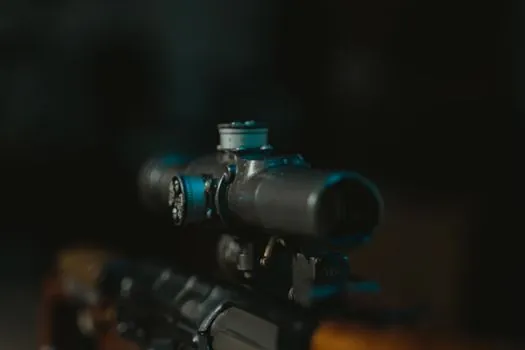
Higher magnification does not linearly extend working range, because air shimmer, staff contrast, and lighting dominate at long sight lines. Spectra Precision offers 20X, 24X, 28X and 32X so a buyer can pick the optical power that matches typical sight-line length rather than defaulting to maximum [S2]. The SitePro line shows the same lesson: jumping from 24X to 32X adds 30 m of working range, about 33 percent, while the leveling accuracy envelope only widens from 45 m to 76 m reference distance for the same ±1.5 mm figure [S1]. A useful rule of thumb is to read the compensator accuracy spec in arc-seconds and the working-range number in metres, then check whether your longest required sight line falls comfortably inside the latter.
Compensator behavior and what setting accuracy means
All five 32X instruments use an automatic compensator, but the damping medium and the published setting accuracy vary. The SitePro 32X specifies a compensator range of ±15' and a compensator setting accuracy of ±0.3", which is the residual tilt error after the pendulum settles [S1]. The KAL-32 publishes a compensating error of ≤0.5" with air damping, while the Doyen AL32 lists a 0.5" setting accuracy with a ±15' compensating range [S4][S5]. The Spectra AL family explicitly lets the buyer choose magnetic or air damping, since air-damped units are quieter but magnetic units can settle faster on vibrating sites such as bridge decks or near heavy plant [S2]. Field guidance on reading these numbers without getting misled is covered in compensator accuracy in arc seconds, and the practical limit before the unit throws an out-of-range warning is mapped in compensator working range before out-of-range error.
Who 32X is for, and who should pick 24X instead
A 32X instrument pays off on long sight lines (90 m and up), on topographic work with frequent long backsights, and on sites where the crew is running a single instrument instead of leapfrogging. The 24X to 28X tier is the right pick for typical foundation, slab and short-run road work, where the longest sight line rarely exceeds 60-70 m, and the lighter, less-expensive 20X instruments cover interior build-out and landscaping. Builders and contractors on tight schedules often standardize on the 28X because it is the cheapest model whose 105 m working range covers nearly every residential and light-commercial site without forcing extra setups [S1][S2]. GeoMax positions the ZAL100 series (ZAL120 20X, ZAL124 24X) at the same daily-task segment, with IP54 sealing and 2.0/2.5 mm per 1 km double-run standard deviation for general construction duty [S1].
Mechanical and environmental spec envelope across the 32X tier
Looking only at the 32X SKUs, the KAL-32 lists the widest published environmental envelope with -20 °C to +50 °C operation, IP54 sealing, 0.5 m minimum focus, and a sealed aluminum body [S4]. The David White AL8-32 lists 1.0 mm at 30 m as its accuracy benchmark, which is the tightest 1 km-projected number in the comparison set, while its 120 m working range matches the SK32X [S6]. The Doyen AL32 lands in the middle with 2.0 mm/km, 0.6 m minimum focus, 100 stadia constant, ±15' compensator range and 2 kg net weight [S5]. All five 32X models share 1:100 stadia lines, a horizontal circle graduated in 1° increments, three precision leveling foot screws, and a metal or sealed housing rated at least to IP54 for dust and water spray [S1][S2][S4][S5][S6]. The category-level trade-offs for builder and surveyor procurement are summarized in the construction machinery and equipment reference.
Trackable near-term signals: any 2026 update to the Spectra AL series adding a 36X or higher SKU would reset the working-range ceiling in this product class, and a new IEC or ISO standard revision specifically targeting automatic-level compensator testing would change how setting-accuracy numbers are reported across all five brands.