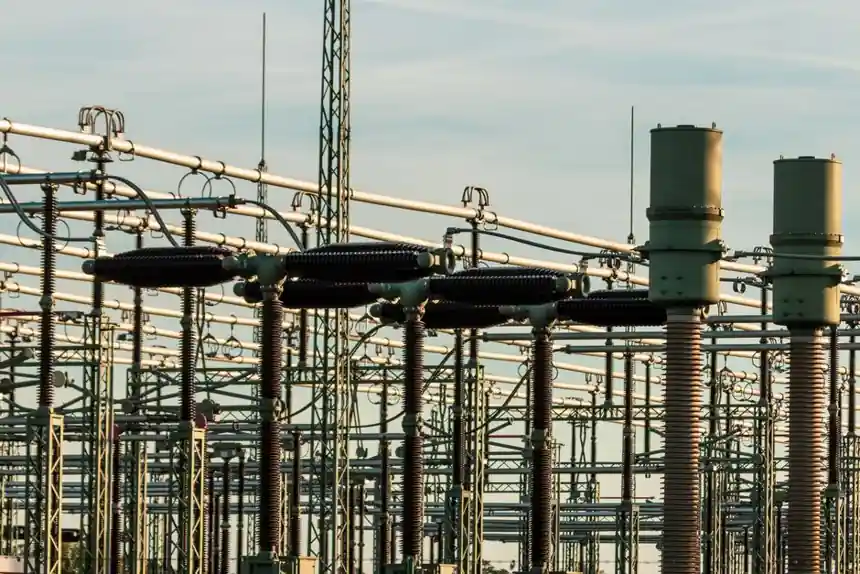
A three-phase arc welding power source holds voltage ripple below roughly 5% under load because three overlapping AC waves fill the zero-crossing valleys, while a single-phase input pulses at about 120 cycles per second and shows visible bead variation on thin-wall sanitary and aerospace tube [S1][S3].
Single-phase welders dominate the 110-240 V residential and light-commercial range; three-phase units are the default above roughly 230 V at 200 A and beyond, with common North American industrial inputs at 230 V, 460 V, and 575 V [S2][S3].
How Phase Changes the Arc at the Workpiece
Three-phase power supplies a near-constant combined instantaneous power to the welding power source, which is why three-phase transformer-rectifier machines show a smoother arc than single-phase units running the same nominal current [S1][S4]. A single-phase input crosses zero twice per cycle, and that ripple translates into small heat-input swings that show up as uneven bead appearance on thin-wall tubing, a real issue for pharmaceutical sanitary welding and semiconductor gas-line orbital work [S1].
Inverter-based single-phase machines have closed much of that gap on light-gauge work because the front-end rectifier and switching stage isolate the arc from the input ripple, but at high output current the three-phase input still wins on arc stability and duty cycle, per the consensus across both dealer and forum sources [S3][S5]. For a deeper look at breaker sizing and generator headroom for a 200 A output, the arc welder power sizing guide lays out the kVA math.
Input Voltage and Service: What Your Shop Can Plug In
Most North American residential and small-shop service is 120/240 V single-phase, three-wire split-phase, which is a single-phase configuration even though it delivers two hot legs 180 degrees apart [S2][S4]. Multi-family and light commercial buildings sometimes see 208 V three-phase, while industrial sites typically have 230 V, 460 V, or 575 V three-phase available [S2][S3].
Many newer industrial multi-process machines are auto-voltage and dual-rated, accepting 230/460 V or 208/230/460 V, but transformer-style welders are usually single-voltage and single-phase-or-three-phase only, so the nameplate rules, not the salesperson [S2]. In the U.S., a single-phase connection typically tops out near 26 kW (about 108 A at 240 V), which sets a hard ceiling on the size of single-phase welder a shop can run without upgrading service [S5].
Decision Matrix: Three-Phase vs Single-Phase Welder
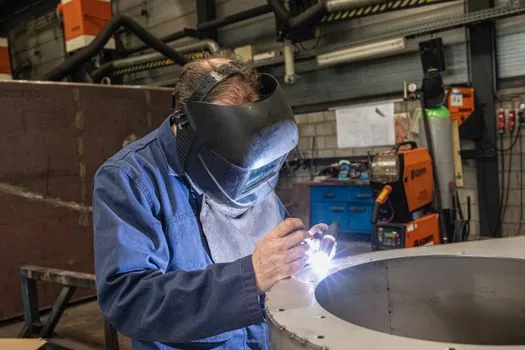
Use the following criteria to match input phase to work. All values are pulled from the cited comparison material, not invented. [S2]
1) Output and duty cycle. Three-phase industrial MIG, flux-cored, submerged arc, and multi-process machines are rated for higher output and longer duty cycle at that output, which matters for structural steel, thick plate, and multi-shift production [S3]. Single-phase inverters handle repair, light fabrication, farm, and training work fine, but run out of headroom on heavy wire at high amperage [S3].
2) Arc quality on critical welds. Three-phase holds ripple under roughly 5% on orbital and sanitary tube, versus the visible pulse behaviour of single-phase on the same joints [S1]. For full-penetration welds on heavy-wall power-gen pipe, three-phase input is the default for code-driven shops [S1][S3].
3) Installation cost and facility fit. If the building already has three-phase service, the marginal cost of a three-phase machine is mostly the machine itself; if it does not, adding three-phase service or a phase converter is a capital project that has to be justified by utilization [S3][S5]. Single-phase welders plug into existing 120/240 V outlets, which is why mobile welding contractors and small repair shops default to them [S1][S3].
4) Machine technology. Transformer-rectifier welders show the biggest arc-quality gap between single-phase and three-phase inputs; modern IGBT inverter welders largely close that gap for light and medium work, leaving three-phase mainly as a duty-cycle and input-current win [S3][S5].
Who Three-Phase Is For, and Who Should Skip It
Three-phase arc welding power sources are the right call for production fabrication shops, structural and heavy-equipment manufacturers, power-generation pipe work, semiconductor gas-line orbital welding, and any cell running long high-amperage MIG or submerged-arc beads where duty cycle and arc stability drive throughput [S1][S3].
Single-phase is the better fit for repair shops, farm and ranch work, training booths, mobile welding contractors, light fabrication, and any facility without three-phase service that does not want to pay for a service upgrade or a rotary phase converter [S3]. The rule of thumb from the field: if you can weld everything you take on with an inverter single-phase machine, paying for three-phase service just to run a welder is a payback project that rarely closes [S5].
Failure Modes and Spec Pitfalls
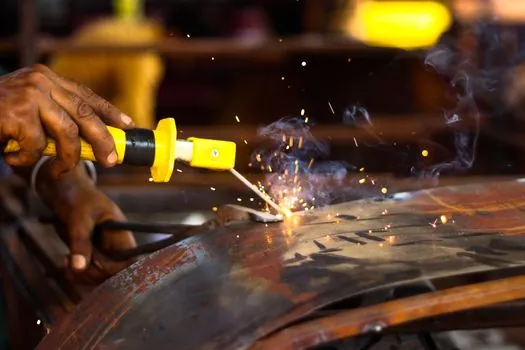
Two spec pitfalls cause most of the misapplication calls. First, a three-phase machine rated 230/460 V will not auto-adapt to a 208 V three-phase service without checking the nameplate, and a 240 V single-phase machine plugged into 208 V will run hot and derate heavily [S2][S3]. Second, transformer welders are not field-convertible between single-phase and three-phase, so a cheap used three-phase transformer machine on single-phase-only service is effectively a non-starter unless a phase converter is in the budget [S2][S5].
Single-phase machines pushed past their input-current limit trip breakers or, worse, overheat the service wiring before the welder's own thermal switch trips, which is the classic failure mode on a 100 A residential panel asked to run a large 240 V inverter [S5]. For the broader question of what the welder itself draws and how to size breakers, the arc welder power sizing guide walks through the kVA and headroom calculation.
Reference Standards and Sourcing
Welder input ratings and duty-cycle statements on the nameplate are governed by IEC 60974-1 for arc welding equipment, and installation rules in the U.S. follow the National Electrical Code (NFPA 70) for branch-circuit sizing and overcurrent protection. Voltage-ripple and arc-stability behaviour described in this article is sourced from the comparison material cited inline [S1][S3].
Trackable signals to watch: new IGBT inverter platforms narrowing the single-phase to three-phase arc-quality gap on thin-wall tube, and UL 60974-1 / CSA C22.2 No. 60 listing changes for dual-rated 208-230-460 V multi-process machines entering the wholesale channel through 2026 [S3].
Component reference pages worth checking: three phase asynchronous motor, arc welder, and single girder crane.