Additive manufacturing (AM) builds parts layer-by-layer from CAD geometry rather than subtracting from a stock blank, and as of mid-2026 industrial users pick from seven process families standardised under ASTM F2792 [S3]. The technology has crossed from prototyping into serial production: shops now run polymer FDM, SLA/DLP, SLS and MJF for low-volume end-use parts, while metal LPBF (laser powder bed fusion) and DED (directed energy deposition) supply aerospace brackets, medical implants and casting patterns [S3][S5].
Selection is no longer "printer or not" — it is process family against material, tolerance, batch size and post-processing load. Powder-bed metal lines, ceramic AM service bureaus for investment-casting cores, and in-house SLA cells for jigs all sit on the same procurement shortlist [S5]. A 2026 buyer should treat AM like any other qualified process line, with simulation, MES and powder-handling controls, not as a lab tool [S4][S6].
Seven Process Families Under ASTM F2792 and What Each Is For
ASTM F2792 groups every commercial AM technology into seven families, and matching the family to the job is the first engineering gate [S3]. Vat Photopolymerisation (SLA, DLP, LCD) cures liquid resin pixel-by-pixel or laser-by-laser and delivers the smoothest surface finish, typically ±0.05 mm on small features, making it the default for dental models, jewellery patterns and visual prototypes [S3]. Powder Bed Fusion splits into polymer SLS/MJF (nylon 12, TPU) and metal LPBF/EBM (maraging steel, Ti-6Al-4V, Inconel 718) and is the workhorse for functional end-use parts [S3].
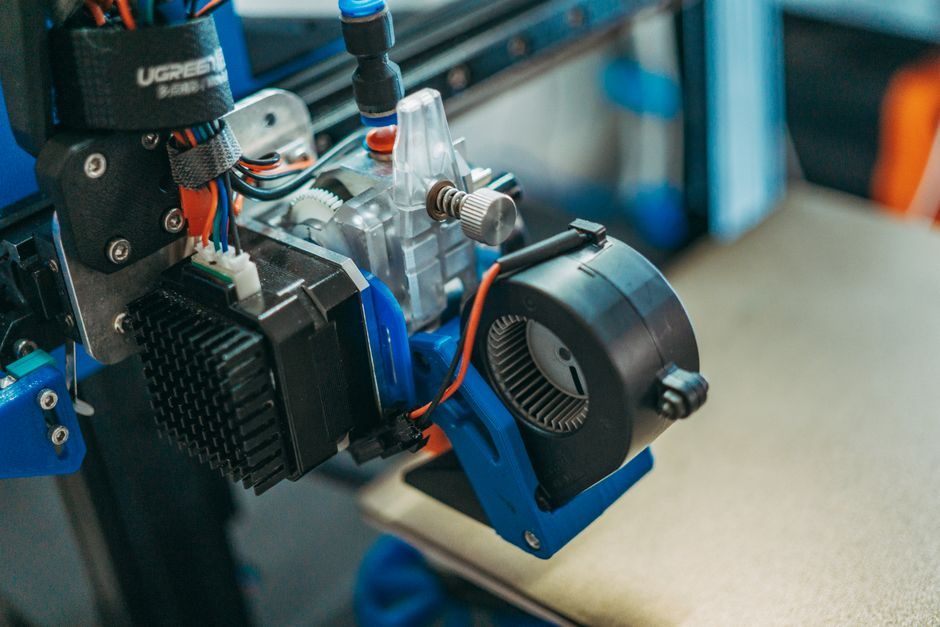
Material Extrusion (FDM/FFF) melts thermoplastic filament through a heated nozzle and remains the lowest-cost entry point; it dominates in-house jigs, fixtures and the manufacturing-aid category that Formlabs reports as one of the highest-ROI shop-floor use cases. Material Jetting prints photopolymer droplets UV-cured on the build plate and is reserved for full-colour prototypes and silicone-like moulds. Sheet Lamination bonds foils or paper (LOM, UAM) for low-cost large parts, and Directed Energy Deposition (DED) feeds powder or wire into a laser or plasma arc to repair turbine blades and add features to existing metal parts [S3].
Polymer, Metal, Ceramic and Composite: Material Bands That Decide the Process
Polymer systems still drive unit volume. FDM runs ABS, PLA, PETG, PA-CF and PEI/ULTEM for jigs and tooling; SLA/DLP run tough, clear, flexible and castable resins with measured shrinkage that designers compensate in CAD [S3]. SLS uses nylon 12 (PA2200, PA2201) for functional parts and nylon 11 for flexible hinges, with HP MJF offering similar nylon parts with a slightly different surface character [S3].
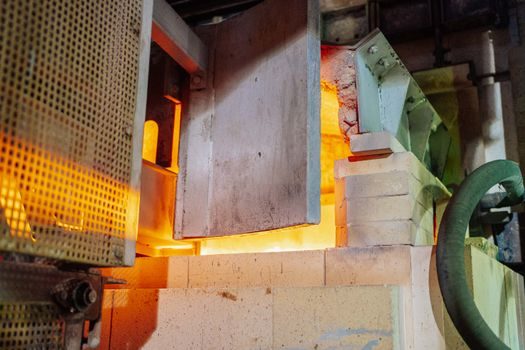
Metal LPBF is the headline serial-production process, with maraging steel (1.2709), 17-4 PH stainless, Ti-6Al-4V (Grade 5) and Inconel 718 covering roughly the bulk of aerospace, medical and oil-and-gas service work [S3]. Ceramic AM is a narrower niche but is firmly industrial: PERFECT-3D's service bureau prints ceramic cores, moulds and filters used by foundries producing investment castings for aerospace and defence, leveraging binder-jetting of silica- and alumina-based feedstocks [S5]. The academic literature also documents 3D-printed glass (silica, soda-lime, fused silica) via stereolithography and extrusion routes, with sintering windows that demand temperature-stable binder burnout before reaching the 1000 °C+ densification step [S2].
Spec Gates: Tolerance, Surface, Build Volume and Post-Processing Load
Tolerance bands still split the families. SLA/DLP hits ±0.05–0.1 mm on small parts, SLS sits around ±0.2–0.3 mm with grainy surface from powder sintering, MJF lands near ±0.2 mm with marginally better surface, FDM is worst-case ±0.3–0.5 mm dependent on nozzle and material, and metal LPBF lands in the ±0.1–0.2 mm band before support removal and HIP [S3]. Surface roughness tracks the same axis — SLA near Ra 1–5 µm, SLS/MJF Ra 10–20 µm, FDM visible stair-stepping, LPBF as-built Ra 5–20 µm that typically needs bead blasting or machining on functional faces [S3].
Build volume is a hard gate. Desktop FDM frames are typically 200–300 mm cube, industrial SLS/MJF reaches 380 × 380 × 430 mm (HP Jet Fusion 5200 class), and metal LPBF industrial frames top out around 400 × 400 × 450 mm with multi-laser overlap; large sand binder-jetting systems reach 1000+ mm for casting patterns [S3][S5]. Post-processing load is the hidden cost: every metal LPBF part needs depowdering, support removal, stress relief, optional HIP, and machining on datums — so buyers should always price a part at the "out-the-door" state, not the "as-built" weight [S3][S4].
Simulation, Software Stack and the In-House Manufacturing-Aid Pattern
Ansys Additive Suite and Additive Print/Additive Science/Additive Workbench span the workflow — predicting distortion, optimising support strategy, simulating powder spreading, and validating final residual stress against the OEM printer's melt-pool data [S4]. On the operations side, 3DPrinterOS-style cloud software orchestrates fleets, queues parts to specific machines, tracks powder and resin stock, and pushes ISO-aligned quality data back to the MES, which is now table-stakes for shops running 10+ printers across multiple process families [S6].
The fastest in-house ROI is the manufacturing-aid pattern: custom jigs, fixtures, soft jaws, assembly tooling, ergonomic aids and replacement brackets printed in fibre-reinforced or engineering-grade polymer (PA-CF, PETG, ABS) on FDM, or in tough SLA resin for higher accuracy. Formlabs explicitly markets this as the on-ramp to "bring 3D printing in-house" with documented gains in lead time, cost and shop-floor ergonomics. The same logic drives the broader additive manufacturing material selection question — engineers choose feedstock chemistry before printer brand, and the powder or resin spec drives the post-processing chain.
Use Cases That Pay Back vs. Use Cases That Don't
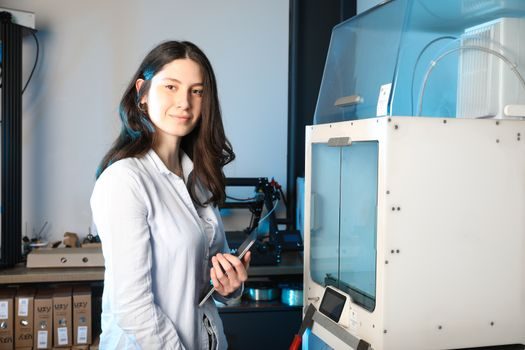
Strong fits: low-volume serial production (100–5,000 parts/year) where injection moulding tooling is uneconomic, mass-customisation where each part is unique (dental, prosthetic, patient-specific orthopaedic guides), jigs and fixtures with non-standard geometry, repair and feature-add on high-value metal parts via DED, and rapid iteration of geometry during NPI [S3][S5]. The medical literature documents patient-specific surgical guides 3D-printed in sterilisation-tolerant polymer and sterilised by hydrogen peroxide plasma, a workflow now standard in many teaching hospitals.
Weak fits: very high volumes (millions per year) where injection moulding cycles of seconds win on unit cost, very large structural parts beyond the printer's envelope, applications demanding ultra-tight tolerances under ±0.05 mm, and optical-grade surfaces without secondary finishing [S3]. The Cornell-style fabric/yarn-knitting robots highlighted in late-2025 New Atlas coverage sit firmly in the "novelty" lane, not industrial substitution. Buyers chasing generic 3D scanner data should also note that reverse-engineering accuracy is limited by the scanner, not the printer.
2026 Procurement Checklist and Trackable Signals
State required as-built tolerance band, surface finish Ra target, critical-feature orientation in the build volume, and post-processing chain (stress relief, HIP, machining, bead-blast, tumble). Require ASTM F2792 process-family compliance, ISO/ASTM 52900 series for test artefacts, and a sample coupon or first-article inspection report on the production part [S3][S4]. For aerospace and defence work, insist on material-traceability certification and powder-batch records; for medical, demand sterilisation-method compatibility on the specific polymer.
Watchable signals for the rest of 2026: a service-bureau price reset on metal LPBF as more multi-laser platforms come online, expansion of binder-jetted ceramics beyond aerospace cores into broader industrial castings [S5], and tighter integration between AM simulation, MES and the multifunction process calibrator loop on plants that co-locate 3D printing with instrument-repair shops [S4][S6]. Related coverage on robotics-driven production cells, including the robotics manufacturing process cell types and 2026 selection criteria, maps directly onto the same spec-gate logic now applied to AM.