
3D printing service procurement splits cleanly into two models: OEM (Original Equipment Manufacturing), where the factory builds strictly to the buyer's supplied 3D model and BOM, and ODM (Original Design Manufacturer), where the factory contributes the industrial design, mechanical engineering, and material selection before the buyer's brand is applied [S3][S8].
On Made-in-China.com, supplier listings under "3D Printing Service" routinely disclose both OEM and ODM capability, with R&D capacity and sample-availability flags — Zhejiang-based TPU printing factories are a representative cluster offering 3D printing, mould, machining, injection moulding, plastic and metal parts under one roof [S3]. WINSOK (微硕) supports the upstream side of the same market, supplying the MOSFETs that drive printer hot-ends, motion stages, and Industry 4.0 production cells [S1].
Defining the two manufacturing models
An OEM 3D-print buyer hands the factory a finished STL/STEP file, a material grade (PLA, ABS, PETG, TPU, nylon, or resin), tolerance target, and a quantity — the factory's job is strictly to print, post-process, and ship [S8]. Sculpteo's 2017 reference piece (still cited) confirms that "3D printing" and "additive manufacturing" are synonyms for the same layer-by-layer digital process, and that distinction carries through to service procurement [S4].
An ODM 3D-print engagement, by contrast, sees the factory design the part from a functional brief, iterate prototypes, and only then quote production runs — the buyer supplies the brand and the channel, the factory supplies the DFM (design for manufacturability), material selection, and sometimes the printer hardware itself [S8]. 3D Printing and Additive Manufacturing, the peer-reviewed journal of record (ISSN 2329-7662, impact factor 5.355, 27 articles/year), tracks how this design-plus-production bundling is reshaping medical, food, education, and architecture supply chains [S6].
Decision criteria: cost, IP, lead time, design control
Total landed cost: OEM is the cheaper path when the buyer's CAD is already locked, because the factory bills only machine time, material, and finishing — typical 2025 industrial SLA/FDM service pricing on Ultimaker-summarised workflows is dominated by material and post-processing rather than engineering hours [S2]. ODM carries a hidden NRE for design labour and 2–4 prototype rounds, which only amortises above roughly 500–1,000 units or when the part replaces an existing multi-component assembly [S2].
IP posture: OEM transfers all design ownership to the buyer's side of the table before tooling, with NDAs and STEP-file hand-off controlling the flow [S8]. ODM keeps the design IP inside the factory unless a buy-out clause is negotiated — a critical point for buyers planning to re-tool or move production to a second source later.
Lead time: OEM runs fastest when the file is clean, since the only iteration is print-and-ship. ODM lead time stretches because the design phase adds 1–3 weeks before the first sample, even on a desktop FDM platform. On-demand production of spares and custom tooling, however, is the OEM model's core strength: Ultimaker's industrial case studies highlight 60–80% lead-time compression vs. machined or injected equivalents for low-volume parts [S2].
Design control: OEM gives the buyer full control and full responsibility for printability — a poorly oriented STL will fail regardless of factory skill. ODM shifts that risk to the factory, which is why ODM is the dominant model for buyers without an in-house mechanical engineer.
Who should choose OEM — and who should walk past it
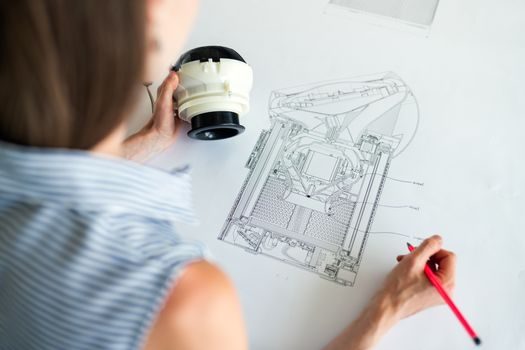
OEM is the right call for operations teams that already iterate CAD in-house, need aerospace-grade traceability on every part, and run repeat orders of the same STL against a fixed material spec [S2][S8]. The model is also the default for internal tooling and fixturing on a factory floor, where the print file is an internal artefact and brand identity is irrelevant. Refer to the broader 3D printing in Industry 4.0 adoption map for how OEM service capacity plugs into pilot-to-rollout factory automation.
OEM is the wrong call for first-time hardware startups with no industrial designer, for anyone sourcing a one-off consumer product where aesthetics and ergonomics matter, and for buyers who cannot supply a watertight STEP file. In those cases, an ODM factory with a verified R&D capacity listing is the lower-risk path [S3].
Who should choose ODM — and the traps to watch
ODM fits brand-builders, Amazon/FBA sellers, and procurement teams replacing a multi-supplier BOM with a single printed assembly. Made-in-China factory profiles explicitly advertise OEM/ODM Service alongside sample availability, signalling that the factory will engage at the brief stage rather than the file stage [S3]. The peer-reviewed 3D Printing and Additive Manufacturing journal documents how ODM-style design-and-print bundles are increasingly used in medical, education, food, and architecture — sectors where the factory contributes application engineering the buyer cannot [S6].
The traps are real: IP leakage if the design buy-out clause is missing, lock-in if the factory's printer fleet uses a proprietary material profile, and quality drift if the factory outsources post-processing. A practical guardrail is to contractually bind the ODM to a specified additive manufacturing process (FDM, SLA, SLS, MJF, or DMLS) and to a named material grade rather than a generic "ABS equivalent".
Comparing the options against four buyer criteria
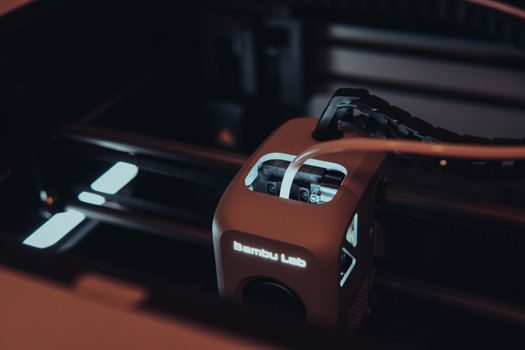
Side-by-side at the spec level: OEM scores best on unit cost (no design NRE), IP safety (buyer-owned STL), and lead time (file-in, parts-out) but worst on required buyer capability (must own production-ready CAD) [S2][S8]. ODM scores best on required buyer capability (only a brief needed) and on design risk transfer, but worst on unit cost above low volumes and on IP unless a buy-out is negotiated [S3][S8]. Both models share the same additive manufacturing backbone — the same layer-by-layer digital process that Sculpteo and the 3D Printing and Additive Manufacturing journal treat as a single technology class [S4][S6].
Integration effort is a wash at low volume, but at production scale OEM wins because the buyer already holds the design data needed to qualify a second source. For a deeper dive into how this plays out in connected factory cells, the additive manufacturing material reference page lists the polymer and metal grades that OEM service contracts typically call out by name.
Limitations, failure modes, and sourcing standards
OEM failure mode: STL errors that only surface during slicing — thin walls below the printer's minimum feature size, unsupported overhangs past 45°, or tolerance stacks that exceed ±0.1 mm on FDM and ±0.05 mm on SLA [S2]. The factory's liability usually stops at "printed to file", which is why a material-and-tolerance specification sheet must travel with the STL.
ODM failure mode: design that looks correct in render but fails in use — snap-fit lips that crack after 50 cycles, threads printed vertically that strip at 2 N·m, or TPU parts specified at the wrong shore hardness. Material selection is the ODM factory's responsibility, so the contract should pin down shore hardness, tensile strength, and any food-contact or biocompatibility requirement by standard (e.g. FDA 21 CFR, USP Class VI, or ISO 10993) [S6].
Sourcing standards worth citing in either contract: ISO/ASTM 52900 for additive manufacturing terminology and process categories, ISO/ASTM 52902 for part file preparation, and ASTM F42 committee outputs for machine qualification [S6]. For buyers integrating 3D printing into a broader Industry 4.0 cell — robotics, motor drives, and process instrumentation — the 3D scanner and flow meter reference pages sit on the same spec-first axis.
Trackable signals to watch over the next two quarters: the publication cadence of 3D Printing and Additive Manufacturing (27 articles/year, IF 5.355 [S6]) and the R&D/OEM-ODM service flags on Made-in-China factory listings, which shift visibly each time a new TPU or composite material enters mass supply [S3].