
3D printer pricing in 2026 is stratified by printer type and technology, with The Business Research Company's January 2026 global outlook covering desktop and industrial systems across SLA, FDM, SLS, DMLS, PolyJet/MJP and binder jetting/inkjet processes at a list price of US$4,490 for the 150-page report [S1]. Per-part economics, by contrast, are tracked at the component level by cost calculators that split machine, electricity and filament as discrete inputs [S2]; for cells that start from a physical part rather than native CAD, the upstream 3D scanner cost should also be amortised into the same per-part model.
At the consumer-artifact tier, Made-in-China.com lists Shenzhen Yonglixing Printing Ltd. as a Gold Member audited supplier offering 3D pop-up postcards at US$0.05–0.30 per piece with a 100-piece MOQ, CE-certified and on file since 2025-08-15 [S4]. On the digital-asset side, STLTrend's 3D-printing marketplace opens at a US$2 starting price for STL models, advertises 55,000+ files for CNC router, relief and laser workflows, and runs a "CMBF30" -20% first-purchase coupon [S5]. Hobby STL bundles sit at ¥619 per pack on 3DKitbash, covering multi-figure downloads [S3].
Machine Price Bands by Printer Type and Technology
Industrial 3D printer list prices sit an order of magnitude above desktop units, and the 2026 global outlook explicitly segments the market by printer type (desktop vs industrial) and by technology stack (SLA, FDM, SLS, DMLS, PolyJet/MJP, inkjet printing) [S1]. The published 150-page research package is priced at US$4,490 with a 2–3 business-day delivery window that includes a pre-dispatch data refresh [S1], a procurement pattern that signals how often the underlying machine-pricing assumptions are being re-indexed.
For buyers comparing technologies, the decisive price drivers remain build envelope, laser count for metal systems, material compatibility, and software licensing terms; these four variables are the same ones flagged across the report's segmentation [S1]. Industrial DMLS and PolyJet/MJP systems command premiums tied to multi-laser optics, inkjet head counts and inert-gas chamber controls, while desktop FDM remains the entry-level benchmark for amortised per-part cost and is often the first machine that a PLC controller on a small-batch line will be asked to drive.
Per-Part Cost: Machine, Electricity and Filament as Separate Line Items
The 3DPrintPrice v1.0.0 cost calculator forces buyers to itemise each print job into machine cost, electricity cost and filament cost as separate line items before summing a total [S2]. That decomposition matters because the three inputs scale differently: machine cost amortises over service hours and depreciable life, electricity scales with heater and motion power, and filament scales linearly with extruded mass and material grade [S2].
For process engineers running side-by-side quotes, the same calculator logic applies to SLA resin and SLS powder once the unit-of-consumption is changed; the line-item discipline is the part that transfers, not the default substrate assumptions [S2]. Buyers building a 2026 cost model should treat machine amortisation hours, kWh rate and material density as the three input cells, not bundle them into a single "per-hour" rate; on closed-loop extrusion cells a pressure sensor reading at the nozzle can be added as a fourth line when defect rates are part of the cost target.
Consumables and Digital Assets: STL, Postcards and Hobby Packs
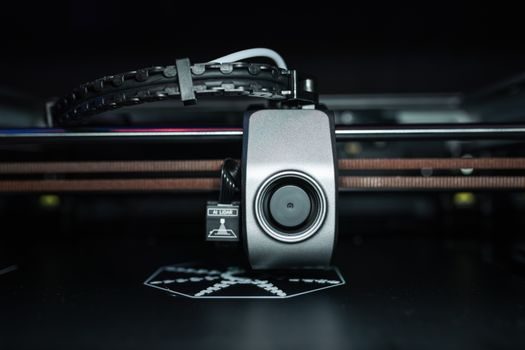
At the consumable and digital-asset layer, 2026 retail anchors cluster around three price points. STLTrend offers 55,000+ model files starting at US$2 with a 20% "CMBF30" first-purchase discount [S5]. Made-in-China.com wholesales 3D-printed floral pop-up postcards from Shenzhen Yonglixing Printing Ltd. at US$0.05–0.30 per piece on a 100-piece MOQ with CE certification valid since 2025-08-15 [S4]. 3DKitbash sells multi-character STL bundles such as Boon's Party Pack at ¥619 per download pack [S3].
These three price tiers — sub-dollar promotional print products, single-digit dollar digital models, and multi-hundred-yuan curated STL packs — define the floor of the consumer 3D-printing market. Sourcing managers comparing China-wholesale postcard output to in-house desktop printing should benchmark on the US$0.05–0.30 per-piece range, the published MOQ of 100 pieces, and the supplier's CE status before committing to volume runs [S4].
Market Context: From US$13.2B (2020) to a US$94.0B 2030 Projection
Allied Market Research's long-horizon framing valued the global 3D-printing market at US$13.2 billion in 2020 and projected US$94.0 billion by 2030 at a 22.1% CAGR from 2021–2030 [S6]. Cloud, business-user and enterprise licences for that dataset are listed at US$1,175–US$10,995 with stated 15–30% discounts applied at publication (2020-03) [S6], a useful precedent for how tiered research access is priced in this segment.
The 2020 baseline matters for any 2026 sourcing decision because installed-base size determines the secondary market for used desktop and industrial machines, the depth of service-network coverage, and the maturity of filament and resin supply chains. A 22.1% CAGR backdrop through 2030 implies continued downward pressure on per-kilogram material costs and steady upward pressure on industrial-system throughput [S6].
Comparison Table: 2026 Price Anchors Across the 3D-Printing Stack

Across the four 2026 price anchors published in the research, the cheapest unit is the wholesale 3D postcard at US$0.05–0.30 per piece with a 100-piece MOQ and CE certification [S4]; the most expensive single line item is the 150-page global market report at US$4,490 with a 2–3 business-day refresh window [S1]. Digital STL assets open at US$2 with a 20% first-purchase coupon on a 55,000+ file library [S5], while curated hobby STL packs list at ¥619 per download [S3].
The right benchmark depends on the question being asked: per-part production cost is anchored by the postcard and filament line items [S2][S4], capital expenditure is anchored by the market report's industrial-vs-desktop segmentation [S1], and amortised run-rate cost is best modelled through the three-line calculator (machine, electricity, filament) [S2]. Process engineers specifying equipment for a 2026 cell should read across all four anchors, not just the machine list price.
What to Watch Next: Refresh Cadence, MOQ Floors and Certification Status
Three trackable signals will move 2026 3D-printing prices. First, market-report refresh cadence — the 2–3 business-day pre-dispatch update built into the US$4,490 package indicates how often machine and material list prices are being re-indexed [S1]. Second, MOQ and certification floors on Chinese wholesale channels — Shenzhen Yonglixing's 100-piece MOQ and CE valid since 2025-08-15 [S4] are the kind of supplier-level data points that shift when capacity tightens. Third, digital-asset discount stacking — the "CMBF30" -20% first-purchase coupon on a US$2 starting price [S5] is a leading indicator of how aggressively marketplaces are competing for new accounts in 2026.
For related coverage, see Industrial Robot Global Output by Country: Capacity, Installed Base and Sourcing Reality.