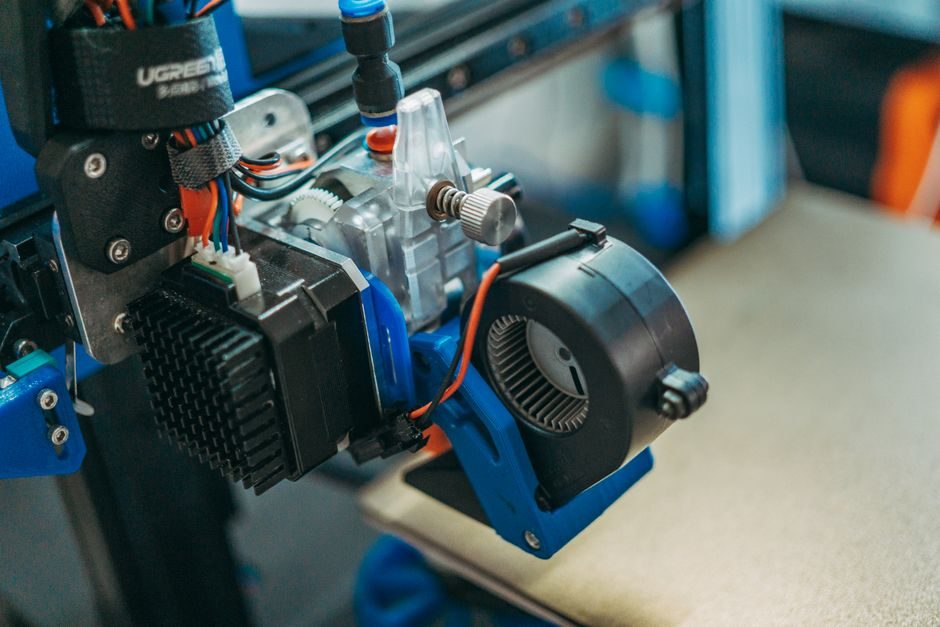
Additive manufacturing in 2026 is no longer a prototyping sideline — it is wired into the MES layer, with INTAMSYS releasing INTAMSUITE on 2026-06-11 as an enterprise-level platform covering demand analysis, print scheduling, post-processing handoff, and delivery for FFF cells [S4].
The 3D printing process stack rests on the additive-manufacturing definition codified across industry literature: a digital model file drives a printer that joins powder or filament layer by layer, replacing the subtractive cut from a billet [S1][S2]. Smart-manufacturing wrappers now sit on top of that physical process, pulling build-prep, job-queue, in-process monitoring, and QA into a single dashboard rather than a folder of STL, G-code, and operator logs [S4].
INTAMSUITE Architecture: What the 2026-06-11 Release Actually Covers
INTAMSUITE is positioned as a "smart and connected platform" that goes beyond sliced-file management, with the vendor describing it as a complete solution from demand analysis to product delivery and an explicit bridge between additive and subtractive processes on the same factory floor [S4]. For process engineers evaluating it, the concrete payload is: FFF print-prep, queue orchestration across multiple machines, integration hooks into factory software, and a delivery-tracking layer — i.e. the typical MES functions re-skinned for polymer extrusion cells [S4].
The platform's "open and interconnected" framing matters for procurement: buyers are not locked to a single OEM's printer fleet, and the same job-prep pipeline can drive mixed-vendor FFF hardware [S4]. That is the gating difference between a 2023-era print-server and a 2026 smart-manufacturing platform — the latter must speak to ERP/MES on the plant side, not just to the printer [S4].
Underlying Process: From STL to Layered Build
The physics layer has not changed: a digital model is sliced into layers, and a printer joins powder metal, plastic filament, or curable resin layer by layer into a near-net-shape part [S1]. In mold manufacturing and industrial design, 3D printing is still widely used to produce prototype models, but direct part production is now a stated use case rather than an exception [S2].
Continuous-fiber laser equipment — including the STRONGEST LASER fiber-laser systems catalogued in 2026-06-04 — sits in the metal-AM lane, where a laser source melts powder bed or wire feedstock in inert atmosphere; this is the hardware tier that pairs with the software orchestration above [S2]. For a plant-level view of how these cells hand off to a digital thread, the broader framing in the additive manufacturing material reference covers the polymer, metal-powder, and resin feedstocks that drive material-selection decisions on the line.
Selection Criteria: Hardware Tier vs Software Wrapper

A buyer in 2026 has to separate two decisions that used to be bundled. The first is the print process itself: FFF (filament), SLA/DLP (resin), SLS/MJF (powder polymer), SLM/DMLS/L-PBF (laser powder-bed fusion metal), or directed energy deposition — each with its own tolerance band, build envelope, and post-processing load [S1][S2]. The second is the software wrapper: print-server, fleet manager, or full MES-integrated smart-manufacturing platform [S4].
For polymer-only job shops running 3-10 FFF machines, a fleet manager with queue balancing is usually enough. For plants integrating metal AM into a CNC-heavy cell, the platform must hand off near-net-shape blanks to a 5-axis mill for finish-machining — the additive/subtractive blend that INTAMSUITE explicitly targets [S4]. In both cases, three concrete gates should be checked: (1) does the platform speak the same OPC UA / MQTT profile as the plant MES; (2) does it support the OEM's build-prep file format without lossy conversion; (3) does it record in-situ monitoring data (melt-pool, chamber thermal, layer imaging) into a traceable per-part record [S4].
Who Smart-AM Is For — and Who It Is Not
Smart-AM platforms in 2026 pay back fastest in three profiles: (a) contract manufacturers running 5+ FFF or metal-AM machines across multiple shifts who need queue load-balancing and operator-handover tracking; (b) aerospace and medical device producers who must tie every build parameter to a per-part trace record for certification; (c) job shops feeding metal-AM near-net shapes into a subtractive finishing cell [S4].
Where the stack does not earn its keep: a single-printer prototyping lab, an education cluster with sporadic usage, or a buyer whose bottleneck is material cost rather than throughput. In those cases a slicer plus a cloud print queue covers the actual need, and a full smart-manufacturing platform is over-spec [S4]. A related procurement view — comparing how a 3D-printed prototype cell sits beside a vacuum die casting cell for short-run metal parts — is laid out in the vacuum die casting machine price and cost guide, where chamber size, alloy, and vacuum class replace layer height and material density as the decision drivers.
Comparison: Platform Wrappers in 2026
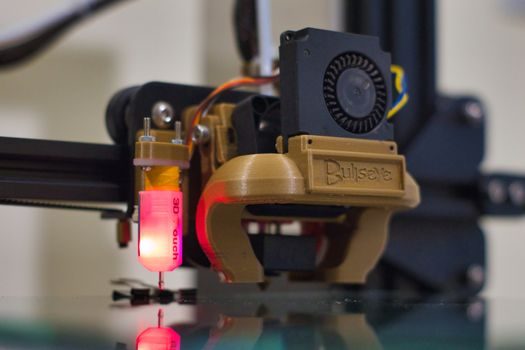
Three wrapper tiers are in market. (1) Print-server / cloud-slicer: lowest cost, single-machine scope, no MES hooks — fine for prototyping labs. (2) Fleet manager with queue balancing across mixed FFF hardware: mid-tier, suited to 3-10 machine polymer job shops, supports basic job tracking but limited in-situ data [S4]. (3) Enterprise smart-manufacturing platform with additive/subtractive integration, ERP/MES hooks, and per-part traceability: the tier INTAMSUITE occupies, aimed at regulated or high-mix plants that need full process records [S4].
On four decision criteria — fleet scale, MES integration, in-situ data capture, additive/subtractive hand-off — the tiers line up as: cloud-slicer scores low across the board; fleet manager covers fleet scale and basic data; enterprise platform covers all four at higher license and integration cost [S4]. The published journal-tier signal in 3D Printing and Additive Manufacturing (Q1 Industrial and Manufacturing Engineering, 2024-2025 impact factor 2.1, 5-year impact factor 2.9) shows the underlying R&D base is healthy and the field is consolidating around peer-reviewed platforms, not ad-hoc tooling [S3].
Failure Modes and Limits Buyers Should Price In
Three failure modes recur in 2026 deployments. First, build-prep format drift: a platform that does not natively read the printer OEM's latest slicer output will silently re-mesh the part and shift tolerances by tens of microns — a hard pass for medical or aerospace work [S4]. Second, in-situ sensor coverage gaps: a platform that records chamber temperature but not melt-pool imaging cannot reconstruct a build anomaly for a failure-analysis report, and that gap is exactly what certification auditors flag first [S4]. Third, additive/subtractive handoff latency: if the platform queues a finished AM blank for a CNC mill but does not reserve tool paths in advance, the cell loses the throughput advantage that justified the platform in the first place [S4].
A complementary view of where AM sits inside a wider smart-factory roadmap — across turbine, casting, and other discrete-process cells — is mapped in the wind turbine smart manufacturing and automation 2026 field map, which lines up the same MES/IoT pattern against a heavier discrete-parts workflow.
Sourcing, Standards, and Trackable Signals

Two reference data points anchor the 2026 sourcing picture: the 3D Printing and Additive Manufacturing journal (ISSN 2329-7662, E-ISSN 2329-7670, CiteScore 7.10, JCI 0.39, h-index 16) remains the only peer-reviewed journal dedicated to the field, with a 2024-2025 self-citation rate of 4.8% — a clean indicator that editorial selection is not citation-laundering [S3]. A second-tier data feed (sciqk.com, 2026-06-08) lists the same journal with a higher reported impact factor of 5.355 and 27 articles per year, illustrating that impact-factor figures diverge by aggregator and should be cross-checked against the publisher's own release [S5].
Trackable signals for the next buying window: (1) platform vendors releasing OPC UA companion specs for AM cells, since the open-protocol gap is the main lock-in risk in 2026 [S4]; (2) the 2024-2025 impact-factor split between LetPub's 2.1 reading and sciqk's 5.355 reading for the same journal — a useful reminder to pin impact factor to the publisher's release before benchmarking a vendor's R&D [S3][S5]. The broader factory-floor integration question, including how 3D scanners and inline metrology tie into the same digital thread, is covered in the 3D scanner reference entry.
For component-level specifications, see smart camera.