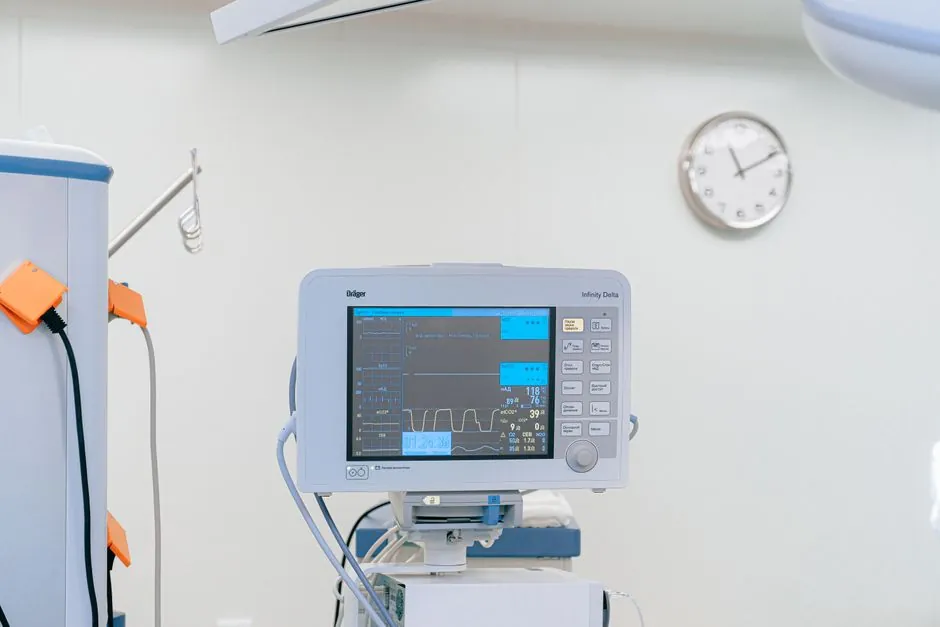
For a standalone machine room housing one or two hazard gases, a 4-channel gas alarm controller is the standard specification, with 8-channel units reserved for rooms that mix two gas types with a third point (oxygen, CO2, or fire-gas tie-in) or for facilities consolidating several rooms onto one panel [S1][S2][S5].
Channel count on fixed detection controllers is the most consequential sizing decision after the sensor list itself: undersizing forces you to abandon channels mid-installation, while oversizing inflates per-channel cost, wiring labour, and the number of programmable relay outputs that must be documented for the authority having jurisdiction [S1][S7].
What a 4-Channel and 8-Channel Panel Actually Contain
A 4-channel unit such as the HEFA 4-channel gas control panel provides four independent 4-20 mA input channels, each configurable for its own gas type, range, and two alarm thresholds (Alarm 1 and Alarm 2), with two potential-free alarm relays, an independent fault relay, display units in ppm / LEL% / vol%, time-stamped event logging, and integrated battery backup [S5].
An 8-channel unit such as the HEFA 8-channel variant, Teledyne's 7200+/7400+ 4-channel control unit with graphic display (which is the 2/4-channel class), or the PureAire 8-channel controller that "remotely operate[s] and power[s] 8 oxygen, carbon dioxide, toxic, and LEL gas monitors" shares the same firmware base and the same relay philosophy, but doubles the analog input layer and the enclosure footprint [S2][S3][S5].
On the configurability axis, modern multi-channel controllers in the R.C. Systems line scale from 1 to 64 channels (ViewSmart 400 at 4 channels, ViewSmart 1600/1600 Plus at 16, WaveLink Wireless Receiver at 32, ViewSmart 6400 at 64), confirming that the 4 vs 8 question is a sub-decision inside a much wider channel-count matrix [S1].
Decision Criteria: When 4 Is Enough and When You Need 8
A 4-channel controller is the right pick when the machine room is single-hazard (e.g. natural gas or LPG only) with two detection points at the valve train and two at the ventilation intake, giving a clean 1:1 channel-per-detector mapping plus relay headroom for ventilation cut-off and a siren/flasher [S5][S7].
An 8-channel controller becomes justified when the same room carries two hazard gases (combustible + toxic, or CO + CO2 in a generator room), requires a third point type such as oxygen deficiency or a CO2 cylinder-leak sensor, or when the room shares a panel with an adjacent mechanical space and the wiring topology makes a single 8-channel termination cheaper than two 4-channel panels in different locations [S1][S3][S6].
For very large machine rooms or multi-room plants, controller channel counts extend to 8, 16, 24, and 32 points in a single GasDog-style enclosure, with 16-channel wall-mounted units such as the Teledyne 8800 and 32-channel systems such as the MCX32-TP sitting one tier above the 8-channel class [S2][S6].
Side-by-Side Comparison on Selection Criteria
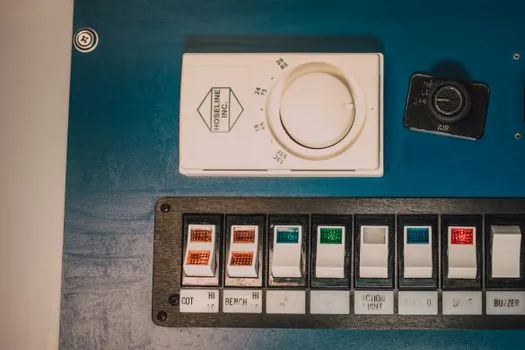
Comparing the two options criterion by criterion: (1) Channel count: 4 vs 8, both offered in the same firmware family on the HEFA reference design, with the 8-channel unit differing only in input layer and enclosure size [S5]. (2) Detector compatibility: identical, both accept any industrial 4-20 mA gas detector regardless of brand, including electrochemical and pellistor/catalytic sensor families, eliminating vendor lock-in [S5]. (3) Relay outputs: same architecture on both, two alarm relays (Alarm 1, Alarm 2) for ventilation cut-off, siren/flasher, or gas shut-off valve, plus a dedicated fault relay for line break, out-of-range 4-20 mA, low supply voltage, or internal firmware errors [S5]. (4) Per-channel cost: the 4-channel unit carries lower cost per channel only if all four channels are used; an under-loaded 8-channel panel has worse channel utilisation and a larger enclosure footprint, which can affect wall space in tight machine-room risers [S1][S5]. (5) Expandability headroom: the 8-channel unit absorbs one or two future points (a third gas, a second CO2 cylinder, a ventilation probe) without forcing a controller swap [S1][S5].
Use Cases in Real Machine Rooms
Boiler rooms and small chiller rooms with a single natural-gas or LPG supply typically install a 4-channel panel with one detector at the gas train, one at the burner intake, and one at the floor level for heavier-than-air leak pooling, leaving one spare channel for an oxygen detector if combustion air is mechanically controlled [S3][S5].
Generator rooms burning natural gas commonly need both combustible-gas detection at the engine bay and CO monitoring at the exhaust manifold, which is a 4-to-6 channel application; if CO2 fire-suppression cylinders are also present, the cylinder-room leak detection pushes the count toward 8, justifying the larger panel from the same product family [S3][S5].
Compressed-air equipment rooms that share a wall with a battery-charging alcove often end up at 8 channels because the hydrogen-from-battery-off-gassing point, two toxic-gas points, and the combustible-gas point all converge on one wall-mounted enclosure rather than splitting into two controllers in different rooms [S1][S5].
Limitations, Failure Modes, and Standards Touchpoints
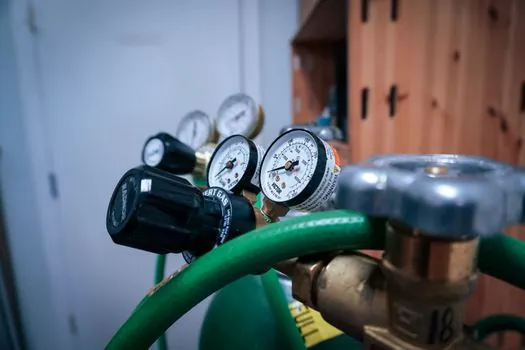
The fault relay on a 4-20 mA multi-channel panel is what keeps a missing sensor from looking like a clean reading: it triggers on sensor line break, 4-20 mA signal outside the defined range, low supply voltage, or internal firmware errors, which is the active fail-safe that authorities having jurisdiction look for during commissioning sign-off [S5].
For European builds, the controller plus detector chain should carry ATEX EN 50271 certification and meet the metrological performance bar of EN 60079-29-1 for combustible-gas and toxic-gas detection, while in North America NFPA 72 governs the interface between gas detectors and the fire alarm system, and NFPA 70 (NEC) governs the hazardous-location wiring and equipment listing [S2][S3].
For a higher-tier fixed system, NFPA 715 now carries the newest fuel-gas detection installation provisions in the U.S., and SIL-rated controllers in the Teledyne line (5 of 17 listed products carry SIL) are the typical spec when the gas detection chain is part of a Safety Instrumented Function rather than a simple alarm loop [S2][S3].
Commissioning, Calibration, and Integration Notes
Both the 4-channel and 8-channel panels ship with field-configurable Modbus or BACnet communication parameters, which is the typical integration path into a BMS or SCADA front-end, and both accept time-stamped event logging that the commissioning agent will sample for alarm and fault history [S4].
Bump testing and calibration are the same workflow on either panel size: the FCS family test-function videos and cGas detector calibration procedures cover 4-20 mA loop checks, relay exercise, and standard calibration gas mixtures (O2, CO2, CO, combustible) at documented intervals, so selecting a larger panel does not change the maintenance cadence [S4].
For hazardous-location installations, most multi-channel controllers in this class are rated for outdoor and Division 2 hazardous areas, and the 8-channel PureAire description explicitly notes remote powering of detectors, which removes the need for local power at each sensor head and simplifies conduit runs in retrofit machine rooms [S1][S3].
Practical Sizing Rule for a Single Machine Room
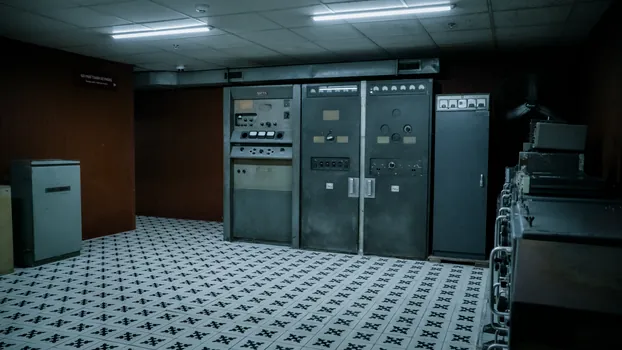
Count points first: one detector per hazard gas per zone, plus one per distinct physical location (valve train, burner, floor, ventilation intake, cylinder storage), then add one or two spares for future gas additions or code-driven re-evaluation. If the count is 4 or fewer, specify the 4-channel controller; if it lands at 5-6 with a credible near-term path to 8, jump to the 8-channel unit to avoid a controller swap when the next hazard is added [S1][S5][S7].
Two channel-counts above 8, a standalone machine room should usually look at a 16-channel wall-mounted unit (Teledyne 8800-class) or a 32-channel MCX32-TP-class system only if it is consolidating several rooms, because the per-channel cost typically improves above 16 points and the relay, logging, and display subsystems are sized for that workload [S2].
Track the next decision node on the controller datasheet: confirm the exact relay count and contact rating (e.g. 2 alarm relays + 1 fault relay, potential-free), the supported display units (ppm, LEL%, vol%), the language set for the local operator interface, and the backup-battery hold-up time, all of which appear in the same spec table on both the 4-channel and 8-channel HEFA-style datasheets and drive the final PO line [S5].
Detailed specification references: open channel flowmeter, and perimeter alarm.
Related analysis: Underdeck Suspended Platform vs Truck-Mounted Bridge Inspection Unit: Spec Decision Matrix.