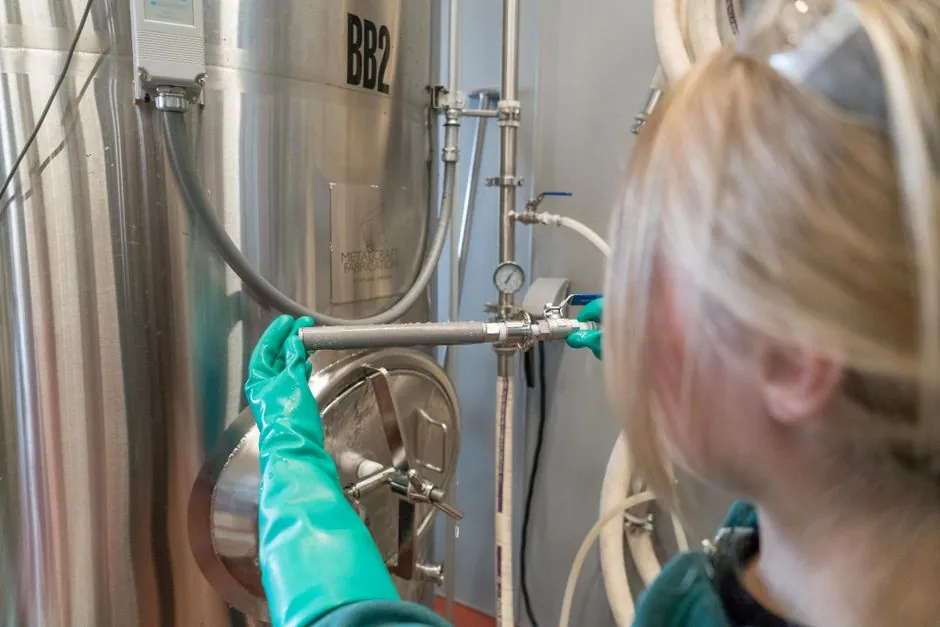
316L stainless steel is the dominant housing alloy for offshore-platform, FPSO, and marine-vessel CCTV, selected because of its 2-3% molybdenum addition that resists chloride pitting and crevice corrosion in saltwater spray zones [S3]. Compared with 304 stainless, 316L contains 16-18% chromium, 10-14% nickel, 2-3% molybdenum, and a maximum 0.03% carbon, the low-carbon cap being the reason for the "L" designation and for improved weldability without grain-boundary carbide precipitation [S2][S3].
For surveillance integrators, the practical question is not whether to pick stainless, but which alloy grade, which ingress rating, and which classification-society approval line up with the installation zone. Salt-spray exposure, UV load, splash-zone immersion, and Zone 1 hazardous-area presence each shift the answer, and the housing spec must be locked at the camera-station level, not at the camera-body level [S1][S4].
316L Composition and Why It Outperforms 304 in Saltwater
304 stainless steel contains approximately 18-20% chromium and 8-10.5% nickel with a maximum 0.08% carbon, sufficient for general indoor or mild outdoor service but vulnerable to chloride attack in marine air [S3]. 316L raises nickel to 10-14% and adds 2-3% molybdenum, the molybdenum being the metallurgical reason chloride-induced pitting and crevice corrosion are suppressed in continuous salt-spray exposure [S3].
The 0.03% carbon ceiling on 316L, versus 0.08% on standard 316, is what makes the alloy weldable without sensitisation, meaning welded camera housings, sun-shield brackets, and wiper-shaft penetrations do not lose corrosion resistance in the heat-affected zone after fabrication [S2]. The cost premium over 304 is real and tied to the higher nickel and molybdenum content, and integrators should treat it as a lifecycle premium, not a procurement penalty, for any installation within roughly 500 m of a saltwater shoreline or on a platform splash zone [S3][S5].
Offshore Compliance Stack: IP68, DNV, Lloyd's Register, and ATEX
A 316L marine CCTV camera built for harsh offshore service typically carries IP68 ingress protection, meaning dust-tight and continuous-submersion-rated sealing, plus DNV Type Approval covering vibration, temperature, and material traceability requirements for classed vessels and platforms [S4]. Pelco's Esprit Anti-Corrosion Fixed line uses a heavy-duty stainless housing and has obtained Lloyd's Register Type Approval, with an operating envelope of −40°C to 65°C (-40°F to 149°F), a useful benchmark for cold-north-sea and hot-tropical-deck service alike [S8].
For hazardous-area zones, the housing also has to carry an ATEX or IECEx marking separate from the camera body; the housing material is only one leg of the compliance stack. ALLWAN SAS offers ATEX camera enclosures in the same corrosion-resistant stainless family as their standard industrial housings, and several Sidus Solutions / Hernis-Eaton stations, including the EX270, EX286, and EX291 lines, combine 316L construction with explosion-proof certification for marine and hazardous-area service [S1][S2]. Where Zone 1 gas or dust is present, the housing spec must be paired to the Ex d or Ex e rating of the lamp/sunshield assembly, not handled as a standalone material choice [S1][S2].
Material Trade-Off: 316L vs Aluminum vs Plastic in Coastal Service
Three housing families compete for coastal and offshore CCTV: 316L stainless, powder-coated aluminum, and UV-stabilised plastic. The trade-off is not about which is universally best, it is about which failure mode you can tolerate on a given site. The table below summarises the decision criteria a process engineer should apply at the bid stage [S3][S5].
Aluminum housings are lighter and cheaper but introduce two failure mechanisms in marine air: rust blooms on the substrate if the powder coat is breached, and galvanic corrosion at every stainless fastener interface unless a Noalox-style anti-oxidant is used at each joint [S5]. Plastic housings eliminate galvanic risk and will not rust, but they become brittle under UV-plus-salt exposure and tend to crack at cable glands after roughly 5-7 years in tropical sun, a real failure mode in Middle-East and Caribbean installations [S5]. 316L stainless housings avoid both failure modes but cost more upfront and add mass to the mount, which matters on cantilevered mast arms subject to vortex shedding [S3][S5].
Design Details That Decide Service Life: Wiper, Washer, Glands, Coatings
Raw 316L is necessary but not sufficient for a 25-year offshore service life. Real-world reliability comes from three details that integrators routinely under-spec. First, a wiper and washer pump option, supplied as an accessory on most 316L marine lines, is the single biggest contributor to image clarity in salt-spray conditions because salt deposits on the front window are the dominant cause of night-vision degradation [S5]. Second, cable entries must be IP68-rated stainless junction boxes, not standard plastic glands; the IP68BXS junction box family from ALLWAN is one example of a matching accessory line [S1].
Third, electropolishing or additional corrosion-resistant coatings extend the interval between wash-downs; the KAIDUNEX KDQ-EX-PTZ4012IR04 example highlights 316L enclosures "coated for corrosion resistance" as part of the DNV compliance package, not as a cosmetic upgrade [S4]. Electropolishing removes the iron-rich surface layer left by machining and improves the chromium-to-iron ratio at the surface, which directly raises pitting-resistance equivalent number (PREN) in the as-shipped condition. For unmanned platforms where manual maintenance windows are quarterly or less, these three details are the difference between a housing that survives one dry-dock cycle versus three.
When 316L Is Overkill and When It Is Mandatory
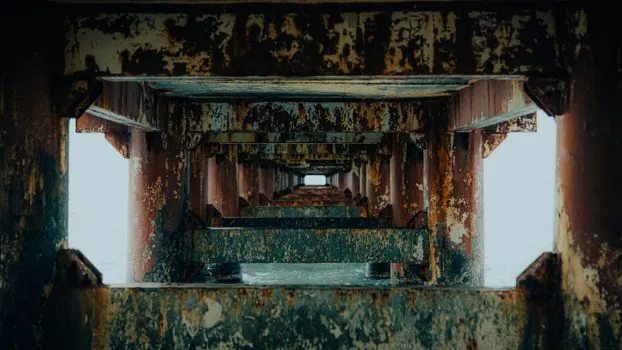
316L is overkill for inland rooftop CCTV, warehouse aisles, or any installation more than roughly 1 km from a saltwater shoreline, where 304 or powder-coated aluminum delivers adequate service at lower cost [S3]. It is also overkill for indoor Zone 2 industrial sites without chloride exposure, where a standard industrial camera enclosure with epoxy-coated carbon steel is a defensible pick.
316L becomes mandatory in three profiles: fixed installations on offshore platforms, FPSOs, and jack-up rigs within the splash or marine-atmosphere zone; CCTV on chemical-tankers and product-carriers where salt cargo residue combines with hydrocarbon mist; and any surveillance camera on a coastal perimeter within roughly 200 m of breaking surf. A useful sanity check is to ask whether the site requires DNV, Lloyd's, or ABS classification-society sign-off; if yes, the housing is almost always 316L by rule, not by preference [S4][S8]. For process plants near the coast that handle chlorides, the same 316L choice applies to the stainless pipe supports and instrument air manifolds, so the camera housing should track the same material logic for sparing consistency.
What 316L Does Not Solve: Optics, IR, and Network Side
Specifying a 316L housing does not protect the internal lens, IR cut filter, or image sensor from thermal cycling, vibration, or network-side failure modes. Marine-rated camera modules still need anti-fog heaters, vibration-damped mounts on the pan-tilt shaft, and surge protection on the PoE feed because induced lightning on offshore structures is a more common failure than housing corrosion [S4].
For sites where the requirement is remote visual identification rather than general area monitoring, integrators should also evaluate a smart camera edge-analytics module so analytics compute on-device and survive network drops to the control room. In tight mechanical envelopes, a line-scan camera inside a 316L tube housing is sometimes substituted for an area-scan dome where conveyor or riser inspection is the primary task, though this is a niche pattern in offshore oil and gas and more common in coastal bulk-handling terminals. The housing protects the optics; it does not compensate for misaligned network architecture or under-specified optics.
Trackable signals to watch over the next two quarters: any DNV revision to type-approval vibration test profiles for camera stations, and any new Lloyd's Register Environmental Category Update affecting SS316L enclosure material certificates, both of which would force a re-spec of installed 316L housings on classed vessels.
See also our earlier report, Two-Speed Gearbox Percussion Drill: Low Gear for Large Bits.