
Six-point hard hat suspensions add two extra crown anchor points over a four-point cradle, which measurably improves lateral stability and impact energy distribution for climbing, mining, and heavy industrial work; four-point designs remain the lighter, cooler default for general construction, warehousing, and short-duration tasks [S1][S2].
The decision is governed by ANSI/ISEA Z89.1, which sets a 1 to 1.25 inch minimum clearance between the wearer's head and the underside of the shell and certifies the shell-plus-suspension system for either Type I (top impact) or Type II (top plus lateral impact) duty; the suspension's job inside that envelope is to flex, stretch, and spread kinetic energy across the headband instead of concentrating it on one skull point [S4]. The "point" count is the number of keys or clips that lock the inner harness to the outer shell, so going from 4 to 6 to 8 points is essentially adding load paths between the shell and the head [S2].
Anatomy: What the Point Count Actually Anchors
A four-point suspension uses four connection keys, usually one at the front, one at the rear, and two at the sides, with the straps forming a simple X or cross over the crown; this is the configuration found on most general-duty cap-style hats and on standard bump caps used in low-clearance areas [S2][S3]. A six-point suspension adds two more anchors across the crown, creating a more balanced cradle that resists shell rotation and keeps the brim aligned when the wearer looks up, ducks, or leans; this is the configuration widely specified for industrial safety helmets, electrically insulating safety helmets, and high-altitude work safety helmets [S2][S4][S6].
An eight-point suspension goes further, typically pairing with heavier fiber-reinforced shells for mining, logging, and heavy industry where maximum force dispersion is the design driver [S2]. Across all three types, the suspension must keep that 1 to 1.25 inch clearance defined by ANSI/ISEA Z89.1, since the gap is what gives the straps room to flex and absorb energy before force reaches the skull; a crushed or over-tightened suspension shrinks that clearance and degrades protection even when the shell looks fine [S4].
Selection Criteria: Comfort, Weight, and Shift Length
For a worker wearing a helmet 8 to 12 hours per day, comfort is not a soft metric: it determines whether the PPE actually stays on the head. Six-point designs reduce pressure points because the load is spread across six anchors rather than four, and customer reviews of Milwaukee-style six-point ratchet suspensions consistently cite improved comfort and stability over the traditional four-point system [S2][S5]. Four-point hats weigh less and run cooler, which is why they remain the standard for general construction, maintenance, warehousing, and light manufacturing where mobility and reduced fatigue matter more than maximum impact dispersion [S1][S2].
Adjustment mechanism matters as much as point count. Ratchet suspensions adjust with a turn of a dial and tend to hold their setting through repeated on-and-off use, while pin-lock designs require removing and reinserting pins; most modern six-point industrial helmets ship as ratchet, and reviewers specifically call out the Milwaukee six-point ratchet for stable fit under active movement [S4][S5]. For crews who climb or work at height, a six-point ratchet suspension on a climbing-style shell, such as the Honeywell Fibre-Metal Climbing Style Safety Helmet, is the commonly recommended pairing because the extra crown anchors stop the shell from shifting when the wearer looks upward or sideways [S4].
Use-Case Fit Matrix: Where Each Point Count Wins
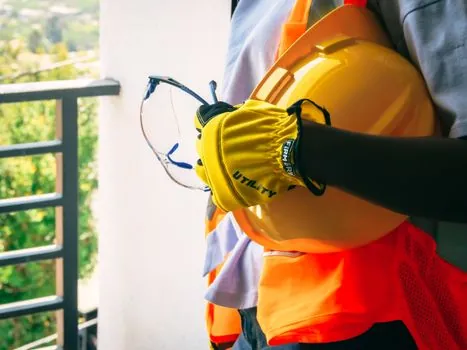
For ground-level general construction, maintenance, warehousing, and light manufacturing, the four-point suspension is the right pick: lighter, more breathable, lower cost, and adequate for the top-impact hazards typical of those sites; bump caps in low-clearance areas are essentially a four-point category as well [S1][S2]. For heavy construction, active industrial sites, electrical work needing an electrically insulating safety helmet, and any climbing or high-altitude work, a six-point suspension is the go-to: improved stability, better weight distribution over long shifts, and a more secure fit under sudden movements [S2][S6].
For mining, logging, and heavy industry where falling-object energy and lateral impact risk are both high, an eight-point suspension paired with a heavy-duty fiber shell is the maximum-protection option, though at a clear weight and cost penalty [S2]. The pattern is straightforward: more crown anchors buy more stability and impact dispersion at the cost of weight, heat retention, and price, so the right answer scales with hazard level and shift length, not with site prestige. A useful sanity check is the same one used in adjacent spec decisions: match the most demanding credible hazard on the site, not the average one, and remember that a suspension that has taken a direct impact must be replaced immediately even when the shell looks undamaged, since crushed straps no longer maintain the required clearance [S4].
Standards, Inspection, and Replacement Intervals
OSHA does not approve or disapprove specific hard hat brands; it requires that the hat meet the applicable ANSI standard, which for industrial head protection is ANSI/ISEA Z89.1 [S3][S4]. Under Z89.1, the suspension must hold that 1 to 1.25 inch gap between the head and the shell, the assembly must be classified by electrical rating (Class C conductive, Class G low-voltage up to 2,200 V, Class E high-voltage up to 20,000 V), and by impact type (Type I top only, Type II top plus lateral) [S3][S4].
Replacement cadence is annual under normal conditions, sooner under heavy UV, heat, or chemical exposure, and immediately after any direct impact; a pre-shift check should look for cracked or frayed straps, chalky plastic discoloration, a headband that will not hold size, or a ratchet that slips, and only the suspension needs to be replaced if the shell itself is still sound [S4]. Replacement suspensions are model-specific, so swapping a four-point cradle into a shell rated and sold as six-point will void the certification pairing and is not a legitimate cost-saving move on a regulated site [S4].
Decision Rule and Practical Sourcing Signals
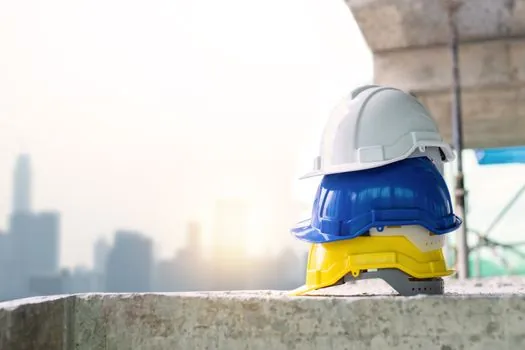
Use six-point when the site has climbing, lateral-impact exposure, electrical work above low-voltage, or 8 to 12 hour shifts; use four-point for ground-level general construction, warehousing, and short-duration tasks where weight and airflow dominate; use eight-point only when maximum force dispersion is the controlling design driver, such as mining, logging, or heavy industry [S1][S2][S4][S6]. A side comparison that comes up on similar PPE spec decisions, like the 4-Channel vs 8-Channel Gas Alarm Controller spec logic or the 1.6 m vs 2.0 m vs 2.5 m tower crane mast section sizing, shows the same pattern: scale the rating to the worst credible hazard, not the average one.
Two trackable signals for the next buying cycle: customer reviews of six-point ratchet suspensions continue to cite stability gains over four-point pin-lock designs as of mid-2026, and OEM guidance through June 2026 is consolidating six-point as the default for industrial, electrical, and climbing helmets while keeping four-point for general construction and bump-cap duty [S5][S6]. Plan replacements on an annual cycle and treat any impact event as an immediate full-suspension swap, regardless of the shell's visible condition.
Spec-level background on the components involved: pressure transmitter, flow meter, and industrial valve.