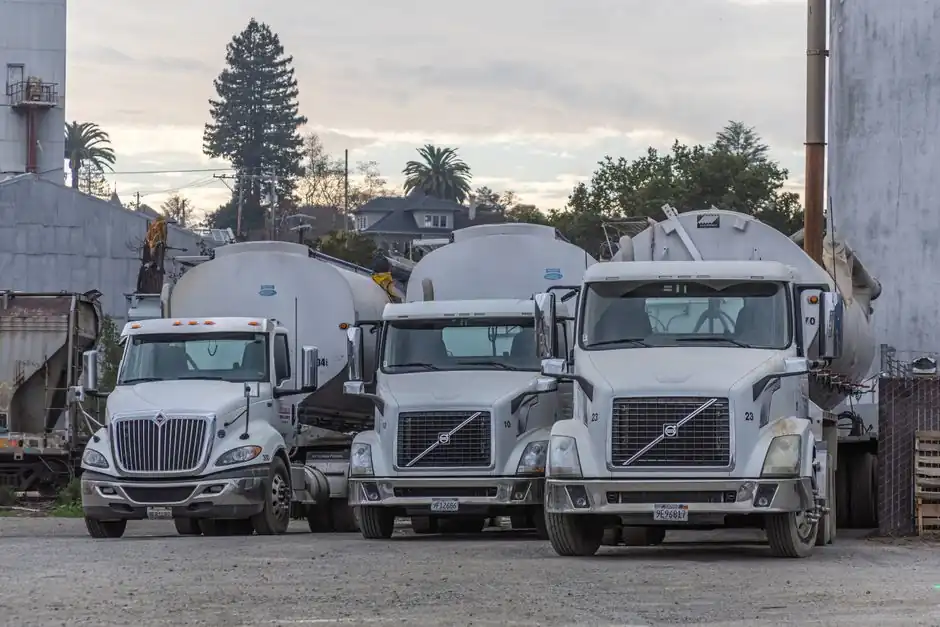
A loader crane truck on a 6x4 chassis is a three-axle rigid with one front steering axle and a driven tandem at the rear, typically rated 25-35 t GVW under most national axle load frameworks [S2]. The 8x4 variant adds a second front steering axle, lifting the typical rating to the 35-50 t GVW class while keeping the same two driven rear axles [S2].
The two configurations are not a performance ranking; the deciding variables are payload, route geometry, and the axle load law of the operating market [S2]. Both layouts use tandem drive, so traction per se is comparable, the meaningful delta is in axle load distribution, frame length, and turning circle [S1][S2].
Reading the notation, and why GVW class must travel with it
The first number counts wheel positions (twin wheels count as one), the second counts driven positions, which is why a 6x4 and a 8x4 both describe a tandem-drive truck, with the 6x4 carrying 10-12 wheel positions and the 8x4 carrying 12-16 [S1][S2]. The extra axle on an 8x4 is load-bearing, not a drive axle, so drive force output is comparable between the two [S2].
On a 6x4 the two rear axles share traction and load across a shorter wheelbase, which is why a comparable 6x4 turns tighter than an 8x4 of the same wheelbase, a practical advantage on confined yards and narrow loading bays [S2]. The 8x4 spreads the same load across an extra front steering axle, raising the GVW ceiling at the cost of a longer frame and a wider front track [S1][S2].
Payload and traction: where each configuration actually earns its keep
Payload classification from the public guidance is straightforward: 6x4 is rated for moderate loads, 8x4 for the heaviest bulk work, with the 6x4 typically holding the 25-35 t band and the 8x4 the 35-50 t band under most national frameworks [S1][S2]. For loader crane work specifically, the upper-body crane rating, the stabiliser spread, and the front-axle load under full reach are what convert those GVW bands into real procurement decisions, none of which are changed by swapping a 6x4 to an 8x4 if payload stays sub-30 t.
Traction is set by the number of driven axles, not by total axle count, so a 6x4 and a 8x4 deliver comparable drive-axle grip; the difference is in weight distribution, not in tractive effort [S1][S2]. Where the 8x4 pulls ahead is sustained soft-base running: the extra front steering axle spreads load, reducing ground pressure per tyre print, which is the property that makes 8x4 the standard for mine-site short-haul and heavy bulk mineral haulage [S2].
Selection criteria: cost, route, regulation, lifetime
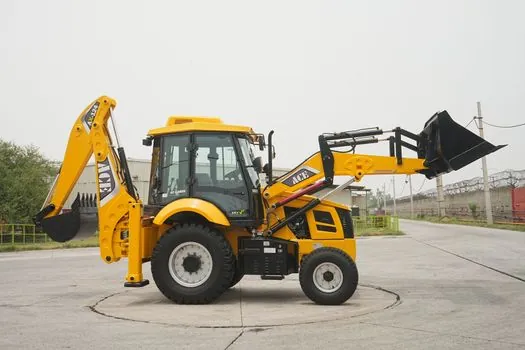
On first cost, the 6x4 is the lower entry ticket, with fewer wheel positions to replace, a simpler drivetrain, and a shorter wheelbase to manufacture [S1][S2]. Fuel consumption tracks the same axis: the 6x4 carries less drivetrain mass and dead weight, so on a sealed-road duty cycle it returns better km/L than an 8x4 doing the same payload (an 8x4 running under-loaded is the worst of both worlds, paying for an axle it does not need) [S1].
On route and geometry, a confined urban site, a short-haul sealed-road loop, or a yard with tight bell mouths belongs to a 6x4; a quarry haul, a mine access road, or any route where payloads consistently exceed the 6x4 ceiling belongs to an 8x4 [S2]. The midlift or tag-axle option common on 8x4 layouts can lift the extra axle when running empty, but the empty-running fuel penalty of an 8x4 versus a 6x4 at matched payload is well documented in fleet guidance [S1].
On regulation, the enforceable GVW ceiling in any given market is set by local axle load law, not by manufacturer rating, and that ceiling varies materially across China, Sub-Saharan Africa, and the Middle East, the three export markets where both configurations are routinely tendered [S2]. Specifying a 6x4 against a market that enforces an axle load below its rating is a procurement error; specifying an 8x4 against a market that caps two-axle groups below the 8x4's structural rating is a different kind of error, paying for capacity the law will not let you load.
Comparison matrix: 6x4 vs 8x4 loader crane chassis
Side by side on the four decision criteria that actually move the spec: [S1]
1) Rated GVW class: 6x4 = 25-35 t; 8x4 = 35-50 t. Difference is structural, not drivetrain [S1][S2].<br>2) Turning circle: 6x4 tighter at comparable wheelbase, three-axle layout wins on confined sites; 8x4 longer frame reduces manoeuvrability [S2].<br>3) Driven axles: both configurations run tandem drive, so tractive effort per se is comparable; 8x4 advantage is load distribution, not grip [S1][S2].<br>4) Operating cost: 6x4 lower purchase price, fewer tyre positions, lower fuel burn on sealed roads at matched payload; 8x4 earns its premium only on routes where payload or soft-base conditions would otherwise overload a 6x4 [S1][S2].
For a dump truck or truck-mounted crane duty cycle, the 6x4 is the default at sub-30 t payloads; the 8x4 becomes correct when payloads exceed that ceiling, when routes are sustained soft-base, or when local axle load law effectively forbids a 6x4 from carrying the required body plus crane plus load.
Use cases that pick each configuration cleanly
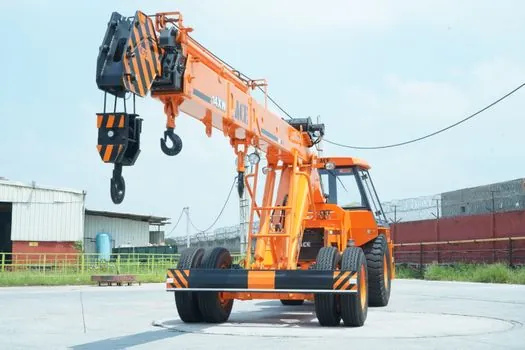
Pick a 6x4 for: urban construction material delivery with sub-30 t payloads, sealed highway loops, tight-site aggregate haul, and any duty cycle where the loader crane is sized under the 6x4's structural front-axle limit at full reach [S2]. Pick an 8x4 for: heavy bulk mineral haulage, mine-site short-haul, sustained soft-base routes at payloads above 30 t, and any market where axle load law makes the 6x4's two-axle-group rating the binding constraint [S2].
For a wheel loader fed-body or a container-handling rigid with a rear-mounted loader crane, the 6x4 is the common choice in the 25-35 t GVW band; the 8x4 shows up where the loader is feeding high-capacity bodies or where the body itself is sized above 30 t payload.
Limitations and failure modes of the wrong choice
An 8x4 on a 6x4 duty cycle pays three penalties: higher purchase price, higher fuel burn, and an extra set of tyres to replace, with no load benefit because the payload never approaches the 8x4's structural ceiling [S1][S2]. A 6x4 on an 8x4 duty cycle fails differently: it overloads the two-axle group, breaches axle load law in most markets, and either forces a payload reduction that wipes out the cost saving or forces a constant-margin overload that exposes the operator to enforcement and accelerated structural fatigue [S2].
The midlift/tag-axle option on some 8x4 layouts is not a free upgrade: it shifts axle load in use, but it does not change the structural GVW class, so it cannot rescue a 6x4 from a payload it was never rated for [S2]. The market that catches most procurement errors is one where the operator specifies 6x4 for a route that consistently runs 32-38 t; the correct response is not a midlift retrofit but a chassis re-spec to 8x4 [S2].
Standards, sourcing, and what to verify before signing
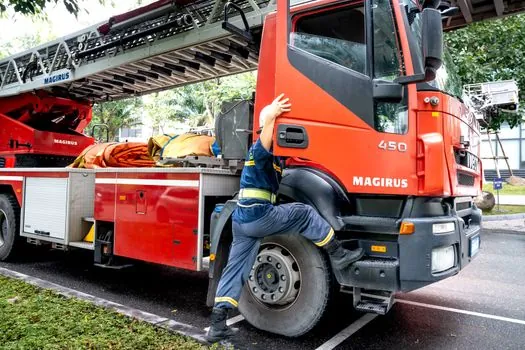
GVW class and axle load ceilings are set by national regulation in the operating market, not by manufacturer rating, so the enforceable numbers come from the local axle load law and must be confirmed before spec finalisation [S2]. The notation itself, total wheel positions over driven positions, is an industry convention shared across OEM literature and export-market tender documents [S1][S2].
For a backhoe loader or skid-steer loader towed on a rigid truck, the chassis choice follows the same rule: the 6x4 covers the sub-30 t towing envelope, the 8x4 covers the heavier towed-load envelope, and the wrong pick is expensive either way. The verifiable next node for any spec is the local axle load regulation in the destination market, paired with the planned annual km and average payload at full reach of the mounted loader crane, both of which determine whether the 6x4 is enough or the 8x4 is required.
Background reading: Green Sand vs No-Bake Sand Casting: Process Mechanics and Selection Matrix.