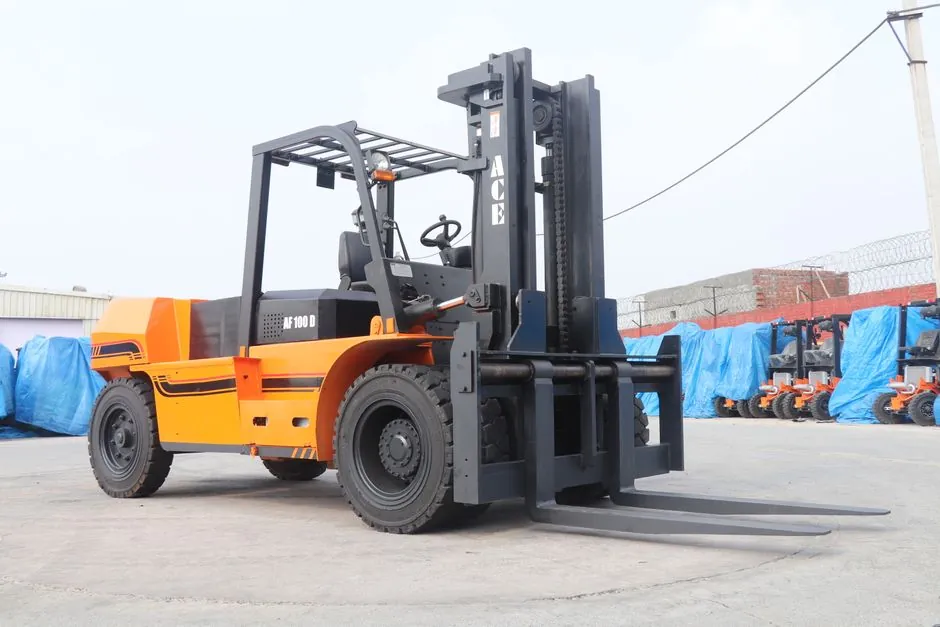
ISO 3691-1 specifies safety requirements and verification methods for self-propelled industrial trucks, excluding driverless trucks, variable-reach trucks, and burden-carrier trucks, which are handled in separate parts of the series [S1]. The base text, ISO 3691-1:2011, has been amended once with ISO 3691-1:2011/A1:2020 and is now circulating as ISO/FDIS 3691-1, signalling an active revision path [S1][S3].
Defining terms for the truck family sit in ISO 5053-1, while the verified "fork-lift truck" type, counterbalanced rider or pedestrian types, straddle, pallet, and reach trucks fall inside Part 1's scope [S8]. National implementations already exist: BS EN ISO 3691-1, EVS-EN ISO 3691-1:2015+A1:2020 (Estonia), and STN EN ISO 3691-1 (Slovakia) all carry the 2011 base text plus the 2020 amendment, mirroring the same baseline across Europe [S6][S9][S10].
Scope and the truck types ISO 3691-1 actually covers
Part 1 explicitly applies to self-propelled industrial trucks as defined in ISO 5053-1, including counterbalanced forklift trucks (ride-on and pedestrian), straddle trucks, pallet trucks, and reach trucks, but excludes variable-reach trucks, burden-carrier trucks, and driverless industrial trucks, which sit in Parts 2, 3, and 4 respectively [S1][S8]. Each of those excluded classes has its own dedicated safety standard: ISO 3691-2:2016 for variable-reach trucks, ISO 3691-3 for rough-terrain and earth-moving support roles referenced through ISO/TS 3691-8, and ISO 3691-4:2023 for driverless industrial trucks and their systems [S2][S4][S7].
For a process engineer sizing a fleet or auditing a site, the practical reading is: if the truck has a mast, rides on smooth concrete, and carries a human driver, ISO 3691-1 is the controlling safety standard; if it telescopes forward to stack at height, it is ISO 3691-2; if it operates without a driver, ISO 3691-4:2023 [S4][S7]. Related mobile equipment articles, including the forklift encyclopedia entry and the rough-terrain forklift reference, map the equipment-side vocabulary to these standard numbers.
Revision track: FDIS 3691-1 and the 2020 amendment
The ISO catalogue shows ISO 3691-1:2011/A1:2020 as the most recent published amendment, and the FDIS stage of the next revision was opened in 2025 under the catalogue entry "ISO/FDIS 3691-1" [S3]. EVS-EN ISO 3691-1:2015+A1:2020 confirms the European implementation pattern: national bodies take the base ISO 3691-1:2011 plus A1:2020 as a single harmonized package, so any FDIS success in 2025 will trigger a parallel EN adoption cycle [S9].
BSI's active project 2023-01279 is the UK mirror of that work, titled "BS EN ISO 3691-1 Industrial trucks - Safety requirements and verification - Part 1: Self-propelled industrial trucks, other than driverless trucks, variable-reach trucks and burden-carrier trucks," and it tracks ISO/TC 110/SC 2 output for the UK committee [S6]. The 2020 amendment, A1, has already been folded into the Estonian EVS text and the Slovak STN text, demonstrating how a single ISO amendment propagates through CEN national members in lockstep [S9][S10]. For a procurement or compliance team, the watch item is the FDIS ballot result and the subsequent EN ISO 3691-1:2025/2026 publication, after which equipment supplied under the old EN may need re-evaluation.
Adjacent parts: ISO 3691-2, -4, and the -8 technical specification
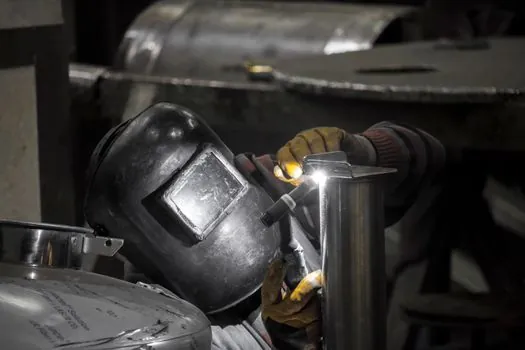
ISO 3691-2:2016 covers self-propelled industrial variable-reach trucks and variable-reach container trucks, which are the telescopic-boom machines often called telehandlers in construction, distinct from counterbalanced forklifts [S7]. ISO 3691-4:2020 was the driverless industrial truck safety standard until ISO 3691-4:2023 superseded it in July 2023, expanding the scope to cover automated industrial trucks and their systems as a connected unit, not just the vehicle [S4][S5].
ISO/TS 3691-8:2012 sits as a Technical Specification covering "Part 1: Self-propelled industrial trucks, other than driverless trucks, variable-reach trucks and burden-carrier trucks" in its title, essentially a regional or pre-standard technical document that was used to bridge revisions while Part 1 was being updated [S2]. For sites running mixed fleets, the practical reading is that one purchase order can pull in three different ISO 3691 parts at once, and the spec sheet should explicitly call out which Part applies to each truck class, not a generic "ISO 3691 compliant" claim. Compliance documentation for adjacent machinery, such as overhead crane signalling or hoist interlocks, often cross-references machine safety standards and safety barrier requirements that interact with truck operating envelopes.
Verification means and what a conformity check actually tests
ISO 3691-1 pairs each safety requirement with a "means for verification," which in practice means the standard lists test methods alongside the design rules, so a manufacturer or notified body can demonstrate conformity by calculation, measurement, or type-test rather than by declaration alone [S1][S8]. Typical verification categories include stability testing on a tilt platform, braking distance measurement on a defined test surface, noise and vibration measurement, operator restraint verification, and visibility checks from the seated position, each with stated load and surface conditions [S8].
For a fleet manager, the practical implication is that "CE-marked under ISO 3691-1" only carries weight if the supplier can produce the type-test report or technical file that maps each clause of the standard to a verified value; without that, the document set is incomplete for a safety certification audit under, for instance, the Machinery Regulation in the EU. Engineering teams that already track related component standards, like the pneumatic cylinder bore series in ISO 15552 bore sizing, will recognise the same clause-by-clause verification pattern that ISO 3691-1 uses.
Comparison: which ISO 3691 part applies to which truck
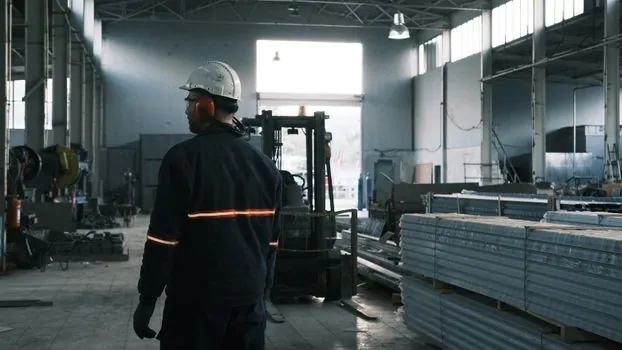
Selecting the correct part is the first decision before any clause-level review. A counterbalanced forklift, electric or diesel, with a vertical mast and a seated or stand-on operator, falls under Part 1 [S1][S8]. A telescopic handler or variable-reach container handler falls under Part 2 (ISO 3691-2:2016) [S7]. A driverless automated truck or AGV falls under Part 4 (ISO 3691-4:2023) [S4][S5]. Rough-terrain forklift variants for construction or yard work may pull in elements of Part 1 plus regional rough-terrain addenda, and the rough-terrain forklift reference covers the equipment distinctions that drive that call.
On four decision criteria, the parts line up as follows: scope (Part 1: counterbalanced ride-on/pedestrian forklifts; Part 2: variable-reach/telehandler; Part 4: driverless/automated), hazard focus (Part 1: stability, mast, pedestrian; Part 2: longitudinal stability with extended load; Part 4: navigation, perception, system-level safety), verification method (Part 1: physical type-test plus calculation; Part 2: stability test with extended boom; Part 4: functional safety per ISO 13849 and system validation), and publication status (Part 1: 2011+A1:2020, FDIS 2025; Part 2: 2016; Part 4: 2023) [S1][S3][S4][S7]. Sites running a mixed fleet should map each asset to its part number before tendering, otherwise the fire safety and egress review and truck operating-clearance analysis can both pull from the wrong clause set.
Limitations and what ISO 3691-1 does not do
ISO 3691-1 covers the truck, not the site: it does not specify aisle widths, floor loading, traffic management, or pedestrian segregation rules, which are typically addressed in EN ISO 3691-7 (the part for "Dangerous situations, safety signs and markings") and in site-specific codes of practice [S1]. It also does not cover the operator: training, licensing, and fitness-to-operate are outside its scope and sit in national regulations and the EN ISO 3691 family of operator-facing parts [S8].
For hazardous-area or flammable-atmosphere operation, ISO 3691-1 defers to IEC 60079-series requirements on equipment, so a forklift destined for a Zone 1 or Zone 2 area must carry ATEX or IECEx certification in addition to ISO 3691-1 conformity; the two are complementary, not alternatives. Procurement specs that say "ATEX forklift, ISO 3691-1 compliant" are correct; specs that say "ISO 3691-1 only" for a Zone 1 site are not. Maintenance tooling, pressure-test procedures on hydraulic lines, and component-level safety reviews often cross-reference adjacent component standards like hose working and burst pressure ratings, which is the same hose spec reading discipline applied at the system level.
Track the ISO/FDIS 3691-1 ballot outcome through the ISO catalogue page and the BSI project 2023-01279 update feed, then watch for the EN ISO 3691-1:2025 or :2026 publication, which will set the next mandatory review date for trucks currently supplied to the 2011+A1:2020 baseline [S3][S6]. Sites should also monitor the ISO 3691-4:2023 implementation date in their jurisdiction, because driverless truck retrofits installed under the older ISO 3691-4:2020 may need a gap analysis against the 2023 text [S4][S5].