Architectural fluorocarbon coatings are formulated with a minimum 70% polyvinylidene fluoride (PVDF) resin by weight, blended with roughly 30% acrylic binder plus inorganic ceramic pigments, and the resin split is the spec that defines the AAMA 2605 high-performance exterior class [S1][S9].
Sherwin-Williams' Fluropon®, Arkema's Kynar 500®, and Solvay's Hylar 5000® all ship to that same 70/30 fluoropolymer-to-acrylic ratio, and the value is not a marketing figure, it is the resin floor written into AAMA 2605 and into US patent claims covering acrylic binders for fluorocarbon compositions [S1][S4][S5][S9].
Why 70% PVDF became the architectural default
PVDF was commercialized in 1965 and over forty years of South-Florida and global exposure testing has shown it delivers the longest weather resistance of any resin family used on metal architecture, with carbon-fluorine bonds that resist UV-initiated degradation far better than polyester or silicone-modified polyester (SMP) [S3][S4].
Conventional PVDF finishes sit in a 70-80% PVDF, 20-30% acrylic copolymer band, and the 70% number is treated as the lower acceptance limit rather than a target, with premium 80% formulations used where maximum color retention is required [S2]. Anything labelled "Kynar-like" or "premium fluorocarbon" without the 70% PVDF resin statement in writing is, in practice, almost always an SMP or polyester system mis-labelled for the architectural market [S4].
Standards, patents, and test gates that enforce the 70% number
AAMA 2605 is the controlling specification for 70% PVDF coil and extrusion coatings, covering South-Florida weathering, humidity, salt-spray, acid-pollution, and color/gloss retention requirements; Fluropon 70% PVDF is published on PaintDocs as meeting or exceeding AAMA 2605 [S9]. The 70% resin rule is also embedded in patent language covering the acrylic binder used to make the system film-form, with US7956144B2 (PPG Industries Ohio, Inc., priority 2006-02-03, granted 2011-06-07) explicitly claiming coating compositions containing "70 weight percent or more fluorocarbon resins and the remainder is the binder resin" [S5].
On the formulation side, 70% PVDF / 30% acrylic is the standard recipe, paired with weather-resistant pigments that are typically inorganic ceramic rather than organic, because organic pigments fade well before the PVDF binder does and would break the AAMA 2605 color-hold requirement [S3][S7]. For an engineering buyer, the practical test gate is the same across all qualified suppliers: confirm "70% PVDF resin" in the PDS, confirm AAMA 2605 compliance, and confirm the pigment set is ceramic-class for exterior color-hold warranty terms.
PVDF versus competing fluorocarbon and non-fluorocarbon resin options
Three fluorocarbon resins compete in the coating market, PVDF, polyvinyl fluoride (PVF), and polytetrafluoroethylene (PTFE), and the 70% rule is specific to PVDF systems, not to fluorocarbon coatings generically [S3]. PTFE has the highest fluorine content and the best thermal/chemical resistance, but its melt temperature is too high for conventional coil-coating lines, so it is used almost exclusively for non-stick and high-temperature industrial coatings, not architectural metal [S3]. PVF is a thermoset that can cure at room or elevated temperature and is used on steel and cement-based substrates, while PVDF, with higher fluorine content than PVF, is treated as the premier metal-architecture choice and is the only one of the three where the 70% resin rule is the industry default [S3].
Against non-fluorocarbon finishes, the gap is large: 70% PVDF coil coatings hold gloss and color, resist chalking, and shrug off acid rain and salt atmosphere, where entry-level polyester paints chalk and fade within a few years and SMP sits in the middle on cost and UV stability but never matches PVDF on long-term color hold [S4]. For reference points on adjacent spec-driven selection problems that also hinge on a single written number, see this spec-anchored guide to mold-base plate steels and the steel-plastic composite pipe selection for cleanroom process lines, both of which use the same "written number in the datasheet" gate.
Who 70% PVDF is for, and where it is the wrong choice
The 70% PVDF specification fits exterior architectural metal: metal roofing, wall panels, aluminum curtain-wall framing, window and skylight framing, soffits, fascia, louvers, column covers, and similar components where the building owner expects decades of color and gloss retention with minimal maintenance [S1]. It is also the right pick for coastal and high-UV environments where salt atmosphere and solar load would chew through SMP or polyester in a fraction of the time, and for cool-roof / ENERGY STAR formulations where IR-reflective ceramic pigments need a stable binder to keep their solar reflectance over the roof's service life [S1][S4].
It is the wrong choice for interior architectural metal (over-spec, no UV to fight), for field-applied restoration over aged PVDF (where a water-based PVDF-acrylic hybrid latex in the 100 g/L VOC range is the engineered solution, not a new full 70% PVDF build-up), and for high-temperature or non-stick industrial service where PTFE, not PVDF, is the correct resin family [S2][S3]. Buyers who only need a color change on an existing PVDF roof should not re-quote a full 70% PVDF coil-coating system; the correct product is a compatible restoration paint designed to bond to aged PVDF.
System build, application route, and field-proven track record
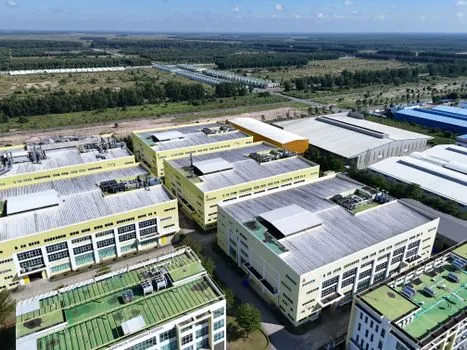
Qualified 70% PVDF systems are two- to four-coat builds on properly pretreated metal, applied and oven-baked at the coil-coating line so the film is uniform in a way that field-applied painting cannot replicate, with common substrates being aluminum, galvanized steel, and Galvalume® coils plus aluminum extrusions [S1][S4]. End-use examples documented for Fluropon include 930 Poydras (New Orleans), the Sunnyvale Town Center Target store, Central Arizona College's Maricopa Campus, Dallas Cowboys' Stadium, the Exploration Tower at Port Canaveral, and the Aria Resort in Las Vegas, covering high-UV desert, coastal salt, and humid subtropical exposures within a single product line [S1].
Liquid 70% PVDF is applied by roller (coil-coated steel, rolled aluminum for aluminum-plastic composite panels) or by spray (aluminum veneers, aluminum profiles), and powder 70% PVDF has grown in parallel as a lower-VOC alternative, with liquid forms under environmental pressure in Europe and powder forms gaining share where emission rules are tight [S3]. For adjacent industrial spec-anchored guidance, this spec-anchored field guide for pulp-and-paper universal joints uses the same project-experience logic of matching the material to the documented service environment.
Quoting language and what to verify in writing
When a 70% PVDF coating is being purchased, the contract language should require the resin ratio, not the brand, because the resin ratio is the chemistry, and the brand is just one qualified source of that chemistry [S4]. The minimum written spec is: PVDF resin content of at least 70% by weight of the binder system, balance acrylic, AAMA 2605 compliance documented on the PDS, and ceramic-class weather-resistant pigments for any exterior color-hold warranty term [S1][S3][S9].
Acceptable supply paths include Kynar 500®-based, Hylar 5000®-based, and Fluropon 70% PVDF-based coating lines, all of which conform to the same 70/30 fluoropolymer-to-acrylic rule; a line that uses Kynar 500® or Hylar 5000® resin in a 70% PVDF formulation, applied over a qualified primer, baked on a coil-coating line, and supported by an AAMA 2605 PDS, is the engineering baseline [S1][S4][S9]. For more on how a written spec gate drives adjacent industrial buys, see the 2026 spec-anchored force-gauge selection for food and beverage and the safety-shoe spec anchors for industrial buyers, which use the same written-spec discipline.
Limits, failure modes, and the 80% PVDF upgrade path
Two practical limits sit on top of the 70% rule. First, the 30% acrylic binder is the UV-weak phase, so the coating still chalks eventually; the 70% rule only sets the rate, it does not stop it, and a 30-year chalk rating still means a noticeable gloss drop in decades 20-30 on dark colors in high-UV exposures [S2][S3]. Second, organic pigments will fail the AAMA 2605 color-hold requirement regardless of how much PVDF is in the binder, which is why 70% PVDF systems are paired with inorganic ceramic pigments and not the cheaper organic alternatives used in polyester systems [S3].
Where 70% PVDF is not enough, the documented upgrade is to push resin content into the 70-80% PVDF band, or to a true 80% PVDF formulation, accepting higher cost and tighter application windows for a measurable jump in color retention [S2]. Where 70% PVDF is too much, a SMP system is the common downgrade, and the cost saving should be weighed against the expected re-paint cycle on the same exposure, since SMP will chalk and fade in a fraction of the time on a south-facing coastal wall.
Track, over the next two quarters, any new AAMA 2605 revision commentary on pigment-restriction language and any movement on powder 70% PVDF share in European architectural coil lines, both of which would shift the practical 70% PVDF supply map for 2026-2027 projects.
For the relevant spec sheets and selection criteria, see synthetic resin, peek, and pom.