
For food and beverage QC on bottles, pouches, jars, and cartons, the spec-sound pick is a digital force gauge or motorized test stand with a load cell in the 2 N to 2,500 N range, an IP65 or better enclosure, and food-grade stainless fixtures; Mark-10 Series 5 and 7 testers, Cooper Instruments' Mark-10 distribution line, CSC's Opening Force Fixture Set, and the Industrial Physics Torus Z603 sit in this envelope [S2][S5][S6][S7].
These instruments cover the four most common beverage and packaged-food tests: cap torque on PET and glass, cap pull-off on sport and crown closures, top-load crush on stacked cartons, and peel/burst on flexible pouches, all of which a mechanical analog gauge cannot sample, log, or export [S3][S5][S8].
What a Food-Line Force Gauge Has to Measure
Forced-measurement in food and beverage is dominated by four forces, all documented in vendor application notes: opening torque on a threaded cap, axial pull-off force on a pull-tab or sports cap, compressive top-load on a filled bottle or carton, and tensile peel or burst on a pouch seal [S5][S8]. A push-pull gauge alone is not enough for torque; the test method determines whether you need a force gauge on a test stand, a torque gauge, or a motorized force tester with force-vs-distance plotting [S2].
For torque on a 28 mm PET soda cap, typical release values fall in the 1.0 to 2.5 N·m band, which sits inside the Mark-10 TT01 to TT05 series range and below the 0.3 in·oz to 200 in·lb Mark-10 torque gauge line [S2]. For top-load on a 500 ml PET bottle, the calibrated load cell is normally a 1,000 N (≈100 kgf) S-type or compression cell, and WIKA lists compression, tension/compression, and S-type cells in its force-measurement family aimed at hygienic duty [S1].
Mechanical vs Digital: Why Digital Wins on a Beverage Line
Mechanical (analog) force gauges use a spring or load cell to drive a dial pointer; they are robust but cannot hold peak, sample at a defined rate, or export CSV to a QA system, and you typically need one gauge per unit (kgf, lbf, N) you want to read directly [S3]. Digital force gauges translate strain-gauge or load-cell output into an electrical signal that is calibrated, sampled at kHz rates, peak-held, and exported over USB or RS-232, which is what most ISO 9001 food QA databases expect on a 2026 audit [S3].
The retail price spread reflects this: a sub-$30 analog stylus gauge lists on the Walmart best-seller page, while a 1,000 N digital S-cell hand-held with LCD lists around $640, and a 5,000 kg wireless dynamometer with peak-hold and kg/lb/kN switching lists near $492, illustrating the cost of going from go/no-go dial to logged data [S4]. For most food and beverage applications, the digital premium pays back in audit-ready data, not in accuracy alone.
Capacity, Resolution, and Accuracy Targets by Test
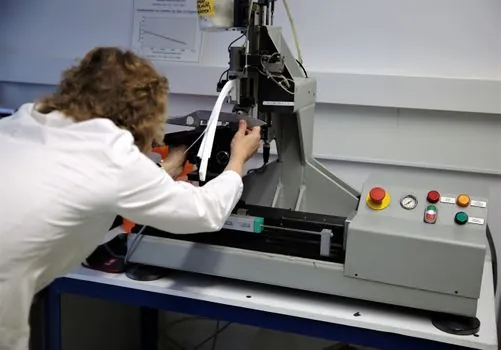
For cap torque, pick a digital torque gauge that covers 1 to 25 in·lb (≈0.1 to 2.8 N·m) with ±0.5% full-scale accuracy, which is the working band for PET and HDPE beverage closures [S2][S5]. For pull-off, a 100 N to 500 N force gauge with 0.1 N resolution and a minimum sample rate of 1,000 Hz captures the snap of a sports-cap tab without aliasing [S2].
For top-load, a 1,000 N to 2,500 N S-type load cell with a TSA750 or TSA750H manual test stand, or an F1505 motorized test stand for repeatable cross-head speed, is the spec-safe combo; the F755/F1505 frames cover 750 N to 1,500 N, and the F1505S adds a longer stroke for taller PET bottles [S2]. For peel and burst on pouches, a Model 5-2-COF coefficient-of-friction fixture plus a Series 5 force gauge (Mark-10) handles both 90° peel and 180° peel at controlled rates, and the same frame backs a burst test on a sealed film [S2][S8].
Hygienic Design, IP Rating, and Washdown
Process-side force measurement in food and beverage generally routes through a WIKA-style hygienic transducer: stainless body, IP65 or IP67 ingress, EHEDG-style cleanable surface, and a 3-A compliant finish, even when the bench QC gauge itself is an industrial plastic-housed unit [S1]. Bench and line QC instruments do not always need 3-A, but they do need a wipe-down enclosure, low-crevice grips, and stainless load buttons, which is why the CSC Opening Force Fixture Set is sold specifically into food and beverage, medical device, and consumer product plants [S6].
For higher-tier specs, look for a load cell body in 17-4 PH or 316L stainless, an environmental seal rated to IP65 minimum, and a cable exit sealed against hose-down; WIKA's F1811 hygienic compression load cell and similar EHEDG-type cells are typical line-side choices, while bench-side Mark-10 indicators (M3I/M5I/M7I) are typically IP-rated only for splash resistance and should be wiped, not hosed [S1][S2].
Standards, Calibration, and Audit Trail
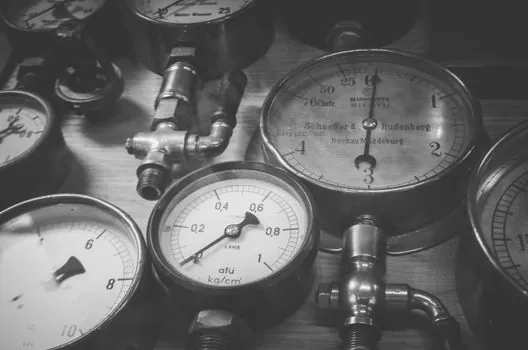
Calibration of any force or torque gauge used for release testing in food and beverage should be NIST-traceable and re-verified on a defined interval, which is the explicit language Cooper Instruments uses for its Mark-10 distribution and in-house service contracts [S5]. For a deeper view on selecting a load cell, including accuracy class, material, and the 2026 buyer workflow, the pharmaceutical load cell selection guide maps directly onto sanitary and washdown force measurement, and the broader load cell spec workflow covers the same decision tree for food plants. Accuracy is commonly stated as a percentage of full scale (e.g. ±0.5% FS), and a 1,000 N cell on a 5 N cap pull-off is the wrong resolution; match capacity to roughly 5x the expected peak [S2][S3].
Decision Matrix: Manual vs Motorized, Hand-Held vs Bench
Hand-held digital push-pull gauges in the 50 N to 500 N range, retail $40 to $650, suit spot-check and field-audit duty; CSC opening-force fixtures pair with these for repeatable bottle-cap ergonomics [S4][S6]. Manual test stands (ES05, ES10/ES20, TSA750, TSC1000) plus a force gauge give consistent crosshead speed by hand and are the lowest-cost bench option for labs that can accept operator-dependent rates [S2].
Motorized test stands (F105/F305/F505/F755/F1505, or the F series with EasyMESUR or IntelliMESUR software) are the right call when the test is a 90° peel, a top-load crush, or a release-torque-vs-angle trace, because the standard demands a fixed crosshead speed and a logged curve; Torus Z603 specifically automates opening-force on pull-tab, peel, and tear with semi-automatic action for higher throughput [S2][S7]. On this matrix, the trade-off is budget and operator skill against repeatability and audit-grade data: under $1,000 buys a credible manual bench; $5,000 to $15,000 buys a motorized stand with software-exportable curves.
Where Standard Force Gauges Fail in Food and Beverage

A consumer-grade stylus force gauge (Neoteck 0.01 g to 5.00 g, sub-$30) is a turntable tool, not a bottle-cap or top-load tool, and its load cell body is not rated for repeated 100 N class load events [S4]. A spring-only mechanical force gauge cannot peak-hold a snap-cap release and will read off-low on a fast event; a digital force gauge is required for any test where the peak is shorter than the operator's reaction time [S3].
Hand-held gauges in plastic housings without IP65 will fail washdown, so a bench tester that lives next to a filler must either be shielded, wiped-only, or specified with an IP65 enclosure and stainless load fixtures; the CSC Opening Force Fixture Set is one of the few accessory kits explicitly packaged for food, beverage, medical device, and consumer-product lines [S6]. Finally, a load cell sized too high (e.g. 5,000 kg for a 50 N cap pull) loses both resolution and signal-to-noise and will pass audit on a calibrated trace while still being unfit for purpose, which is why Mark-10 publishes an FS05 to R55 sensor family with overlapping 0.5 N to 10,000 N ranges rather than a single cell [S2].
Verifiable Next Signals and Trackers
On the bench side, watch for F1505H-class motorized stands extending to higher capacity for 5 L PET and bag-in-box formats, and for opening-force fixtures (CSC, Torus Z603) gaining force-vs-distance software export so QA stops relying on a peak number alone [S2][S6][S7].
Detailed specification references: weighing force, and construction machinery and equipment.